How to Drive in Heavy Rain

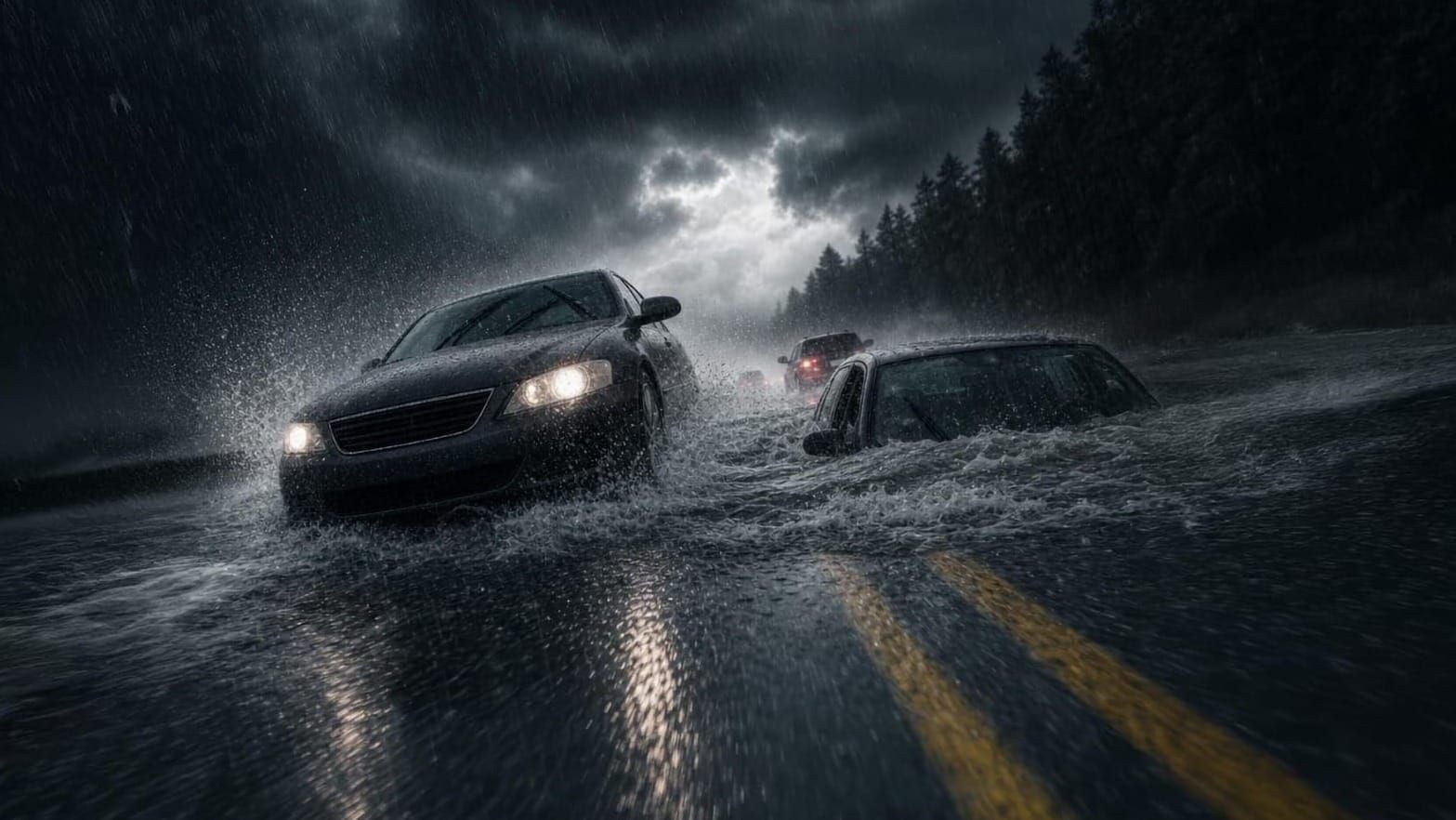
Rain causes more crashes than snow every year in the United States. According to the FHWA, 75% of all weather-related crashes happen on wet pavement, and 47% occur during active rainfall. Wet roads contribute to nearly 1.2 million traffic crashes annually.
Here is how you can be prepared.
Before You Leave
Check your tires. This is the one thing that matters most. AAA found that tires worn to 4/32 inches of tread stop up to 90 feet later on wet pavement than new tires.
Do the penny test: insert a penny into a tread groove with Lincoln's head pointing down. If you can see the top of his head, your tires need replacing. Be sure to check your tire pressure too. Underinflated tires disperse water less effectively and reach the hydroplaning threshold sooner.
Check your wipers. If they streak or skip, replace them. Your ability to see in a downpour depends entirely on them working.
While You Are Driving
The road is most dangerous in the first 10 to 20 minutes of rain
When rain first hits dry pavement, it mixes with oil and road debris before washing it away. During that period, the road can be more dangerous than during a heavy downpour, increasing the risk of losing traction or control.
Slow down and do one thing at a time
In rain, reduce your speed to match the conditions. When you need to maneuver, according to AAA, follow this order:
- Brake first.
- Then turn.
- Then accelerate.
Doing any two of those at the same time on wet pavement reduces your control.
Turn your headlights on
Many states require it when wipers are in use. More importantly, it makes you visible before other drivers can see you clearly.
Turn OFF cruise control
AAA warns that cruise control increases the risk of losing control in wet conditions. To reduce speed safely, you need to lift off the accelerator, which you cannot do with cruise engaged. Turn it off any time it is raining.
Increase your following distance
Move from the standard 2 to 3 seconds to at least 4 or more. Begin braking for intersections and turns earlier than you normally would. Try your best to keep a safe distance from other vehicles on the road.
Drive in the tire tracks of the vehicle ahead
Water in those tracks has already been displaced. It gives your tires a better surface to grip.
Avoid puddles where possible
It is difficult to judge the depth of standing water by sight. Potholes and other road damage can be hidden beneath the surface. If you cannot avoid a large puddle, reduce speed as much as possible and drive through it slowly.
If visibility drops to near zero, exit the highway and wait it out
A rest area, gas station, or parking lot is the safest place to stop. Do not casually pull onto the shoulder and sit there. A stopped vehicle on the shoulder in a downpour is a target that other drivers cannot see, and rear-end crashes in those conditions are common.
If you have no option but to stop on the roadside, pull as far off the road as possible, turn your hazard lights on, and stay in the vehicle with your seatbelt on. Only continue driving if you can do so safely.
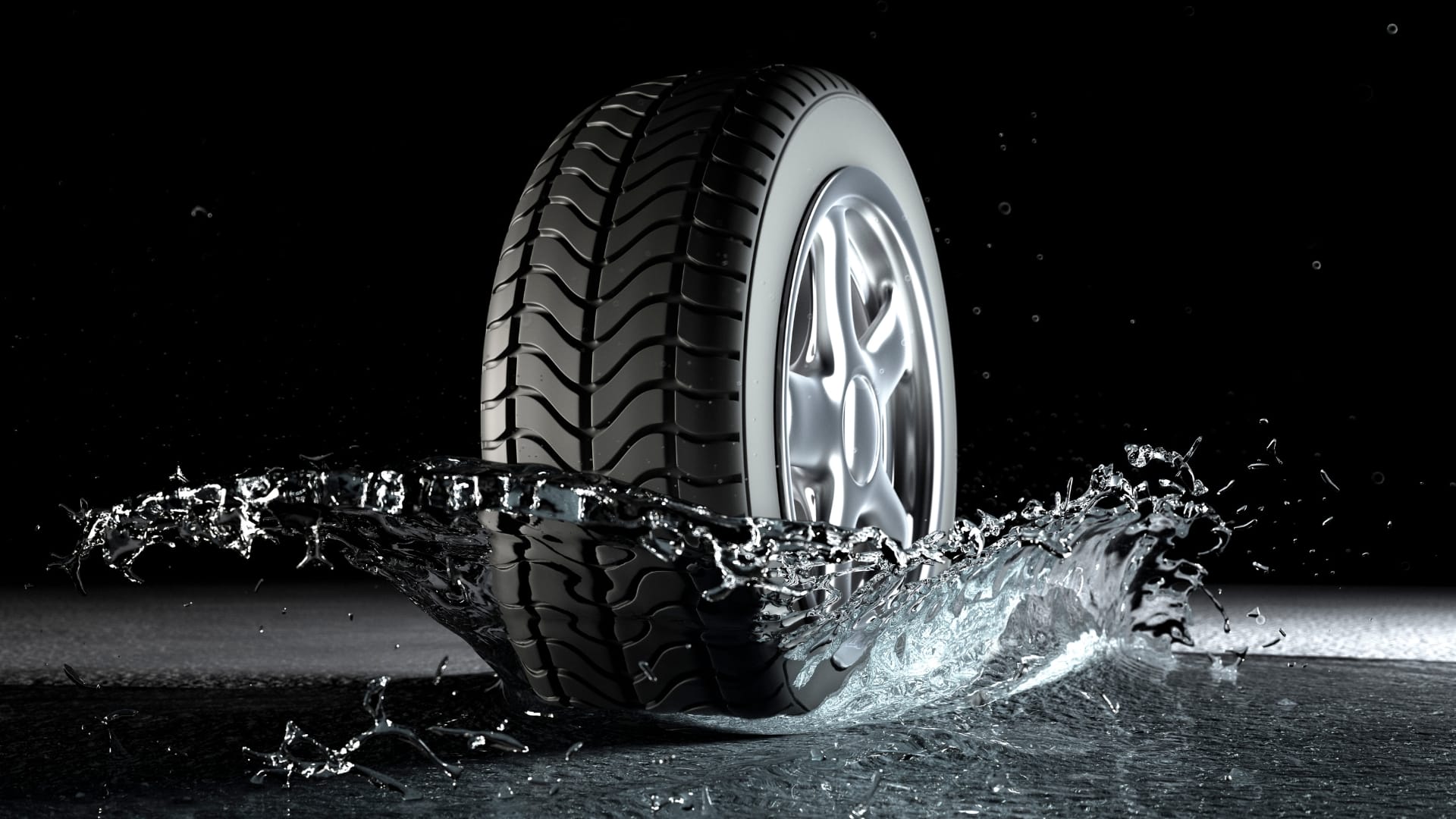
Hydroplaning: What It Is and What To Do
Hydroplaning happens when water builds up under your tires faster than they can push it away. It only takes 1/12 inch of water on the road for your tires to lose contact with the pavement entirely. At that point, you have no steering, no braking, and no control until they reconnect.
It can happen at speeds as low as 35 mph. Worn tires get there even faster.
One thing most drivers do not know is that AWD does not help when this happens. Once all four tires are off the road surface, there is nothing for the drivetrain to grip. The only things that prevent hydroplaning are your tire condition and your speed.
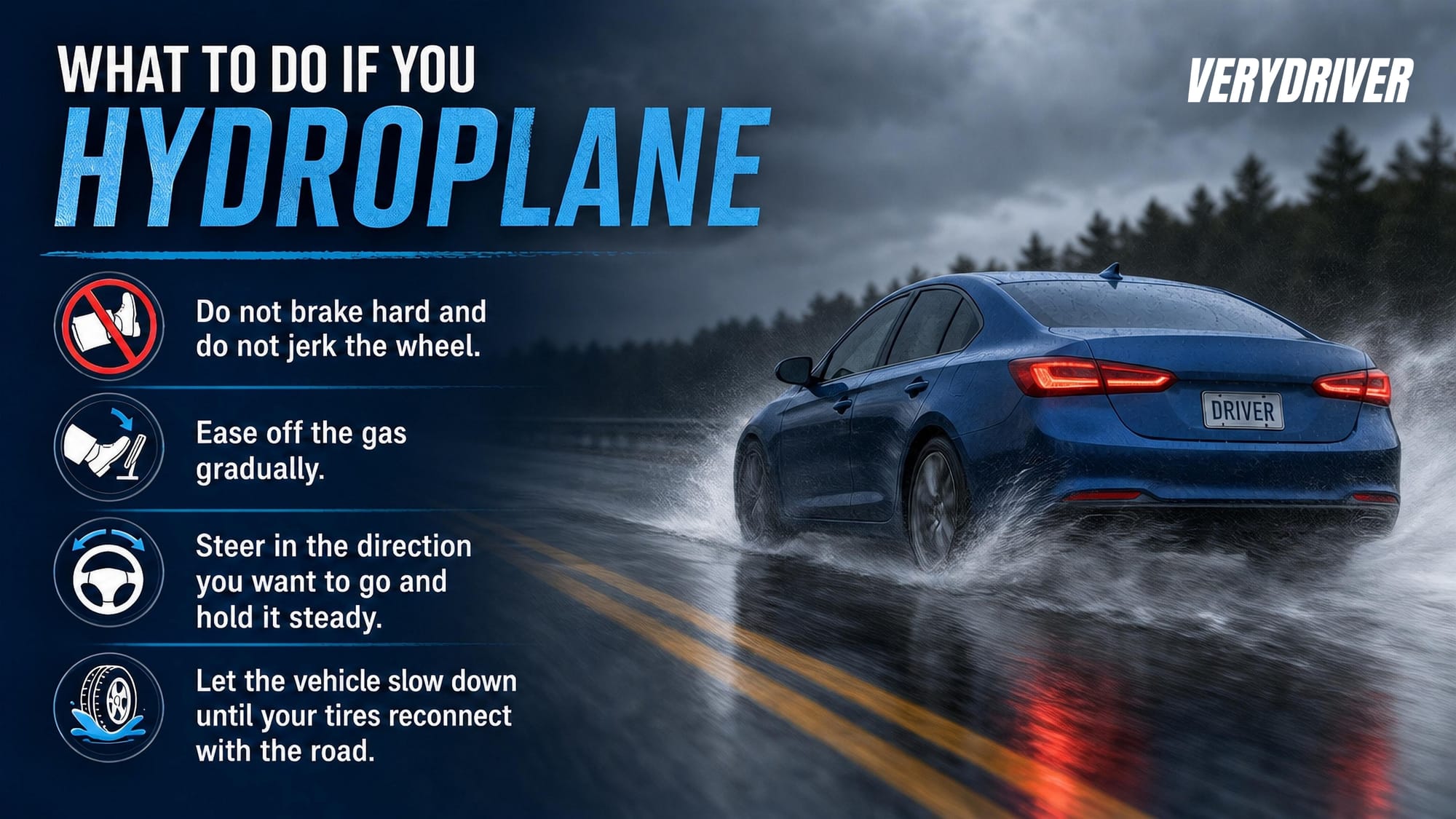
If you start to hydroplane:
- Do not brake hard.
- Ease off the gas gradually.
- Steer in the direction you want to go and hold it steady.
- Let the vehicle slow down until your tires reconnect with the road.
Flooded Roads: Never Drive Through Them
The National Weather Service guidance is simple: Turn Around, Don't Drown. The depth of floodwater on a road is nearly impossible to judge from behind the wheel. What looks like a few inches can be far deeper, and the road beneath may be completely washed away with no visible sign from above.
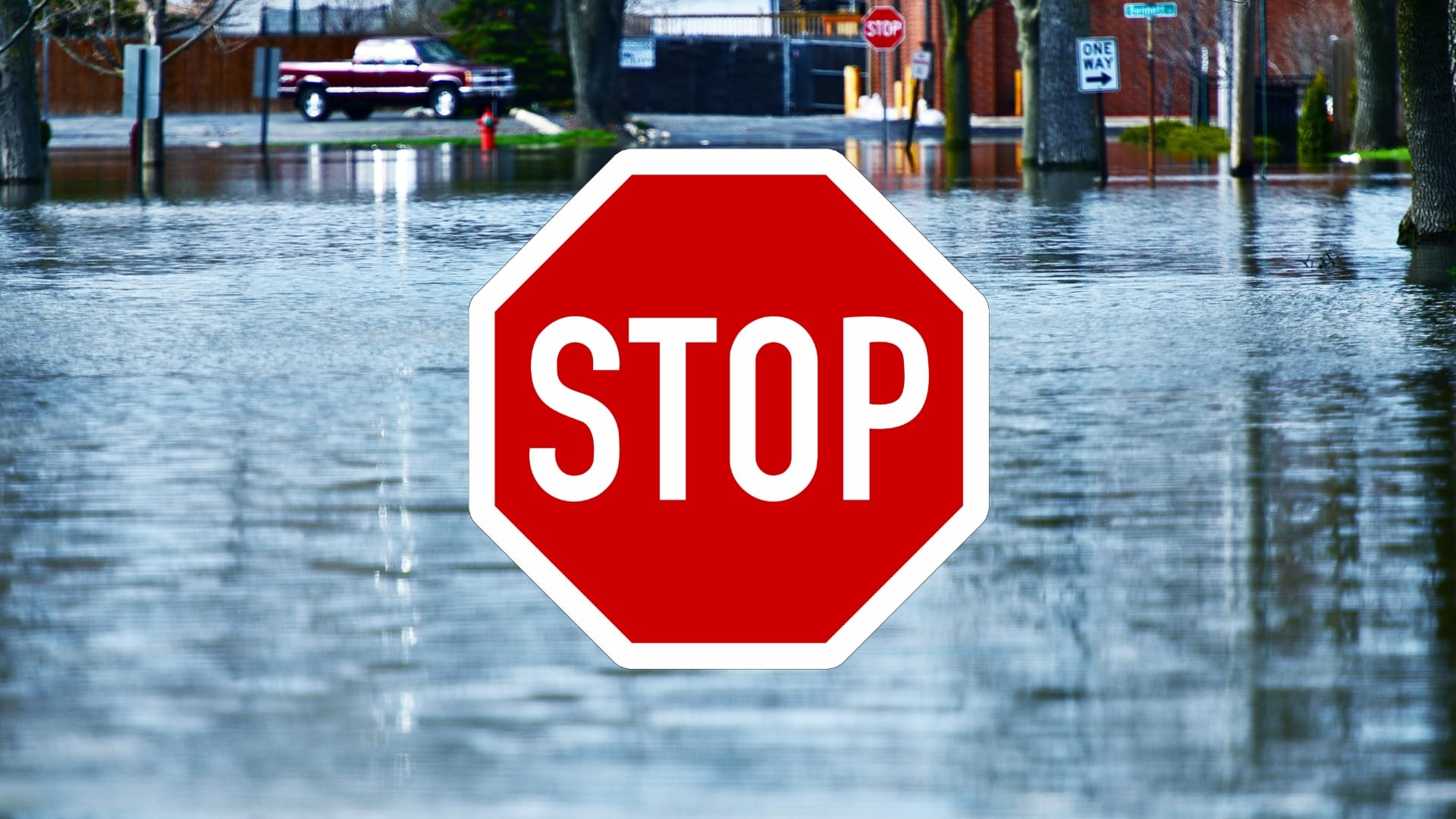
Just 6 inches of moving water can cause a vehicle to lose control. One foot can float most passenger cars. Two feet can carry away an SUV or truck.
According to FEMA, almost half of all flash flood deaths occur in vehicles, and most are preventable. Never drive around barriers blocking a flooded road. They are there for a reason.
If your vehicle becomes caught in rising floodwater:
- Do not panic.
- Call 911 immediately if possible.
- Roll your window down before electrical systems fail.
- If water begins entering the vehicle, exit through the window and get to the roof.
- Signal for help and wait for rescue rather than attempting to swim in fast-moving water.
Additional Resources