
41% of Drivers Will Get a Flat Tire, Here's How to Be Prepared

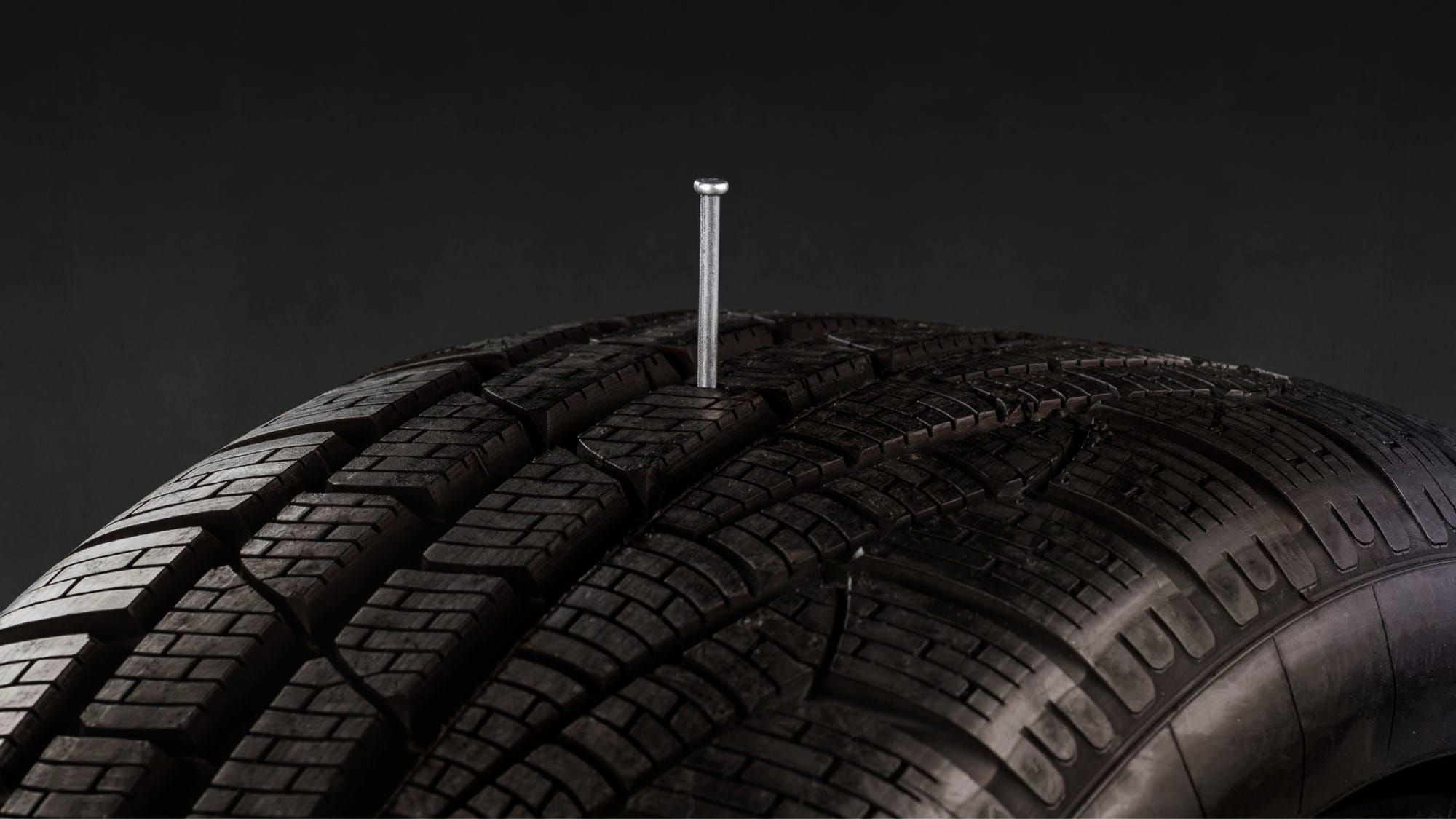
Flat tires are more common than drivers realize. A recent survey found about 41% of drivers reported experiencing at least one flat tire or blowout in the past 12 months. Another 29% discovered a slow puncture or leak they hadn't even noticed while driving.
When a flat happens, about 28% change the tire themselves and 24% call roadside assistance, with age being a factor in that decision. Gen Z reaches for their phones first, while Millennials are most likely to handle it themselves.
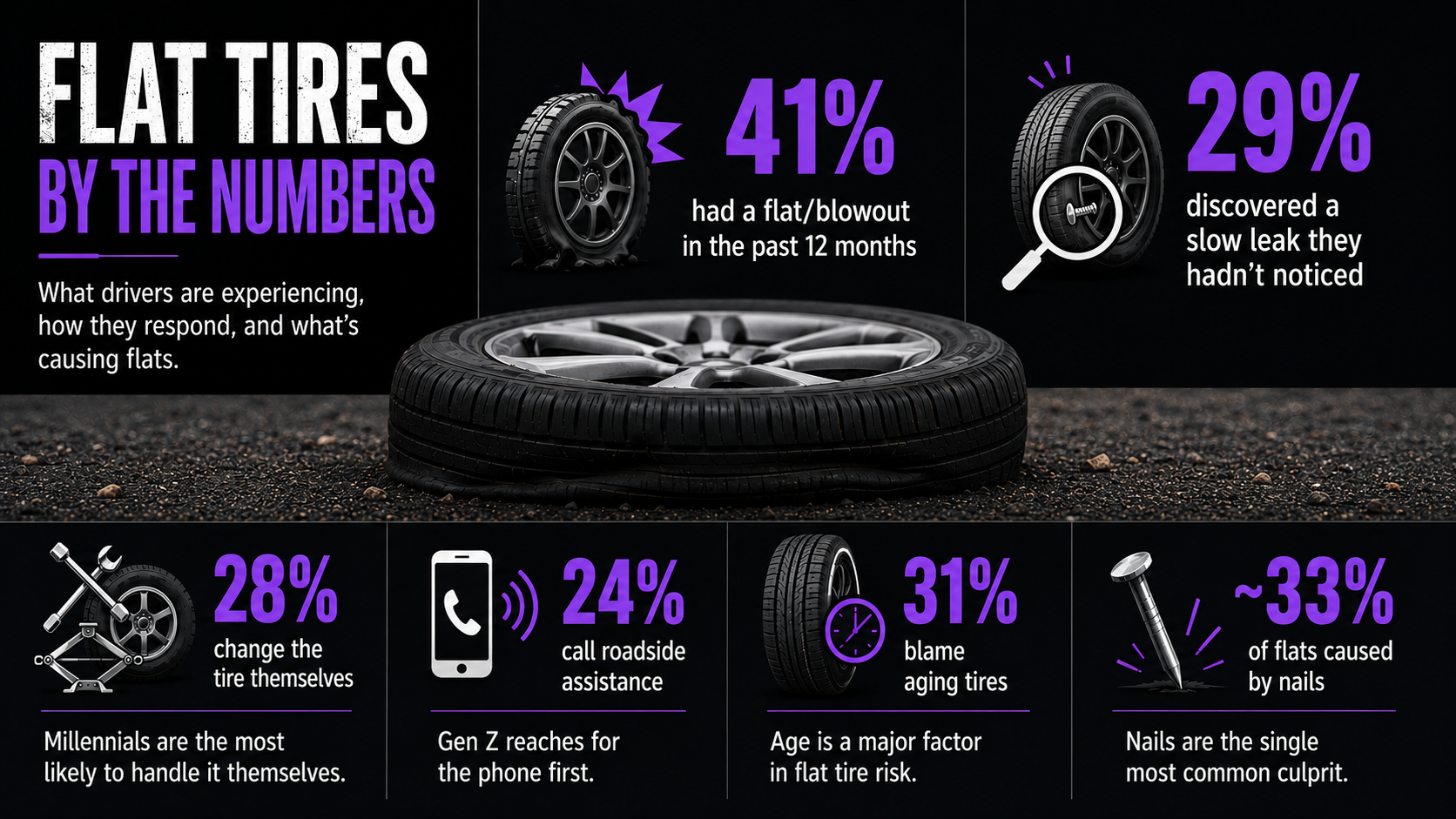
Perhaps not surprisingly, nails account for one in three flats, making them the single most common culprit. Potholes and road debris were listed as other primary causes in the study, although aging tires were also a reason drivers found themselves on the side of the road. In the study, over 30 percent of flats were attributed to old tires.
Like the gallon of milk in your refrigerator, tires have expiration dates. This applies even if the tread depth is still “in the green.”
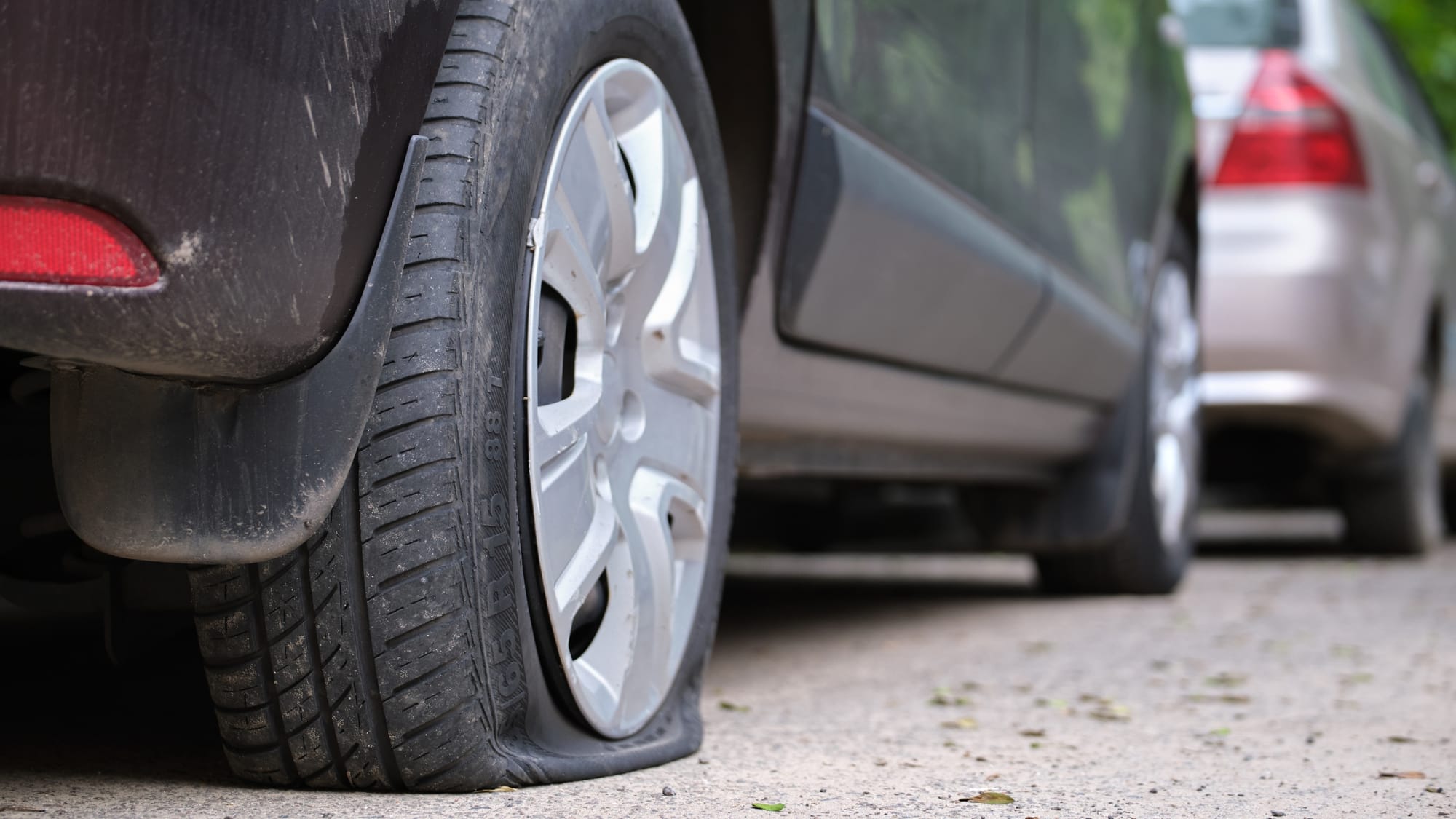
How to Be Prepared for a Flat Tire
Flat tire situations can be avoidable or at least manageable with a little preparation. When they aren't, knowing what to do and being ready makes it easier to handle.
Watch your tires and where you drive
A quick visual inspection of your tires before you drive can also help you spot issues early. When possible, avoid construction zones and debris-heavy roads, where most nail punctures happen. However, if road work is part of your daily commute, there might be nothing you can do.
Check your tire pressure regularly
Underinflated tires wear faster and are more vulnerable to punctures and blowouts. Most gas stations have air pumps, and many modern cars have a built-in tire pressure monitoring system (TPMS) that alerts you when your tire pressure is low.

Know your TPMS warning light
Most cars built after 2008 have a tire pressure monitoring system that alerts you when a tire is significantly low. It looks like a cross-section of a tire with an exclamation point. If it comes on, don't ignore it and don't assume it will sort itself out.
Inspect your tread regularly
A tire with worn tread has less ability to handle road debris and wet conditions. Inspect with the penny test: stick a penny into the tread with Lincoln's head facing down. If you can see the top of his head, it's time to replace your tires.
Know if your car has a spare
A surprising number of newer vehicles don't come with a spare tire at all. Around 40% of new cars skip the spare entirely and include a sealant kit instead. If you've never checked, now is the time to find out what you're actually working with.
Learn the basics of changing a tire
Knowing how to safely pull over, set up a jack, and swap a tire is a skill that pays off fast when you're stranded on the shoulder of a highway.
Invest in a portable tire inflator
A portable tire inflator plugs into your car and can reinflate a tire with a slow leak on the spot. It won't fix a blowout, but it can get you to a shop without needing a tow.
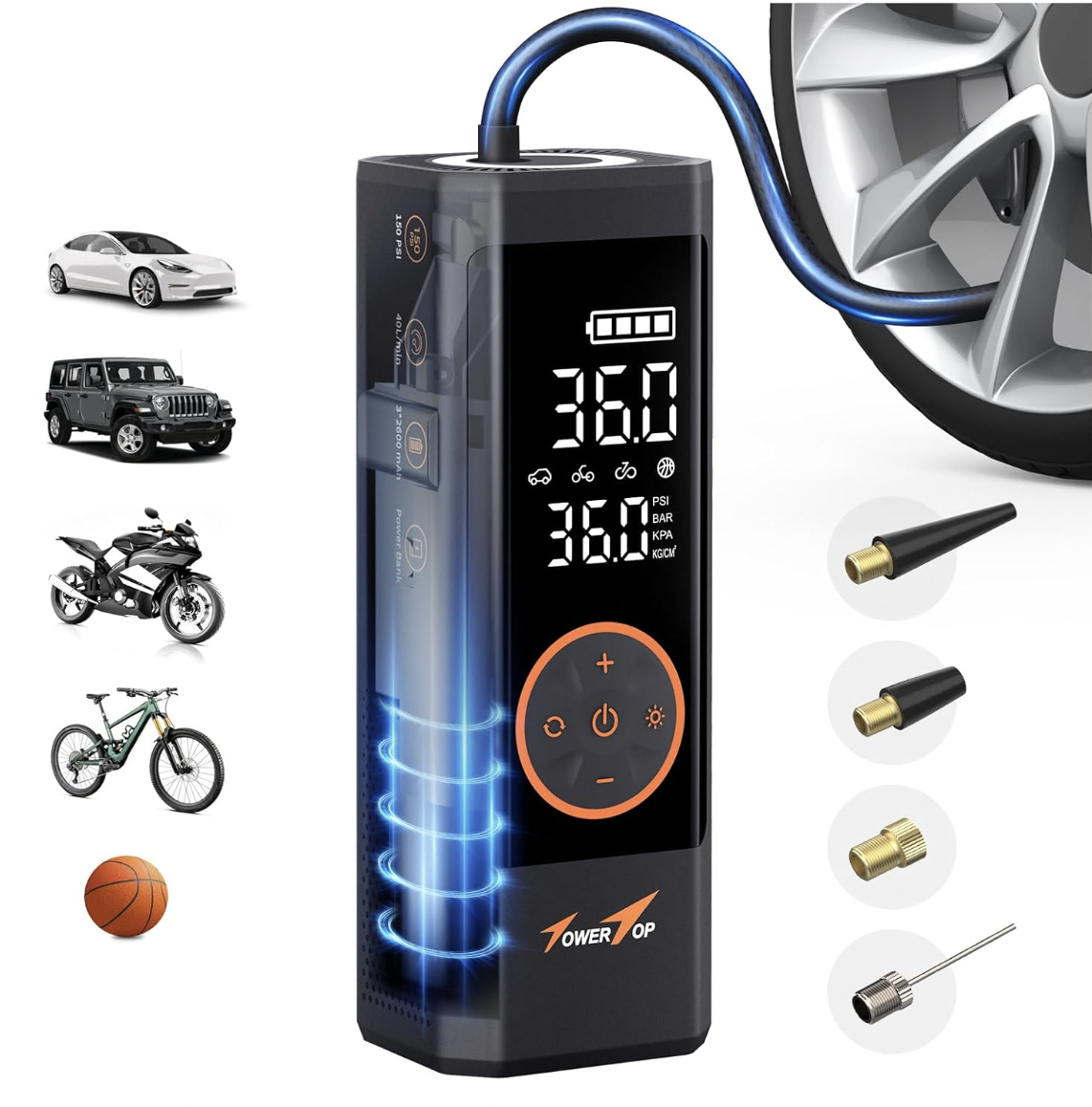
TowerTop Portable Tire Inflator with 2.5X faster inflation, 7800mAh rechargeable battery, dual LCD display, and 3X longer lifespan.
As an Amazon Associate, Very Driver earns from qualifying purchases. Terms
Consider roadside assistance coverage
Whether it's through your insurance, AAA, or a service like your automaker's roadside program, having a number to call takes a lot of stress out of the situation, especially at night or in bad weather.
Keep an emergency kit in your car
A flashlight, a set of reflective triangles, and a pair of gloves don't take up much space but make a big difference when you're on the side of the road at night. Most drivers don't think about it until they need it.
Know if your car has run-flat tires
Some vehicles come equipped with run-flat tires from the factory, which allow you to keep driving at reduced speed for up to 50 miles after a puncture. If your car has them, you can drive straight to a shop without stopping roadside. If it doesn't, you need to pull over immediately. Check your owner's manual so you know which situation you're in before it happens.

Stay on top of general tire maintenance
Tires should be rotated every 5,000 to 7,500 miles and replaced after 6 years regardless of tread wear. Rubber degrades over time, even if a tire looks fine on the surface. Check your owner's manual for the manufacturer's recommendation for your specific vehicle.

Don't drive on a flat
Even a short distance on a flat can destroy the tire completely and damage your rim, turning a repair into a full replacement. If you feel or hear something wrong, pull over safely and assess it before going any further.