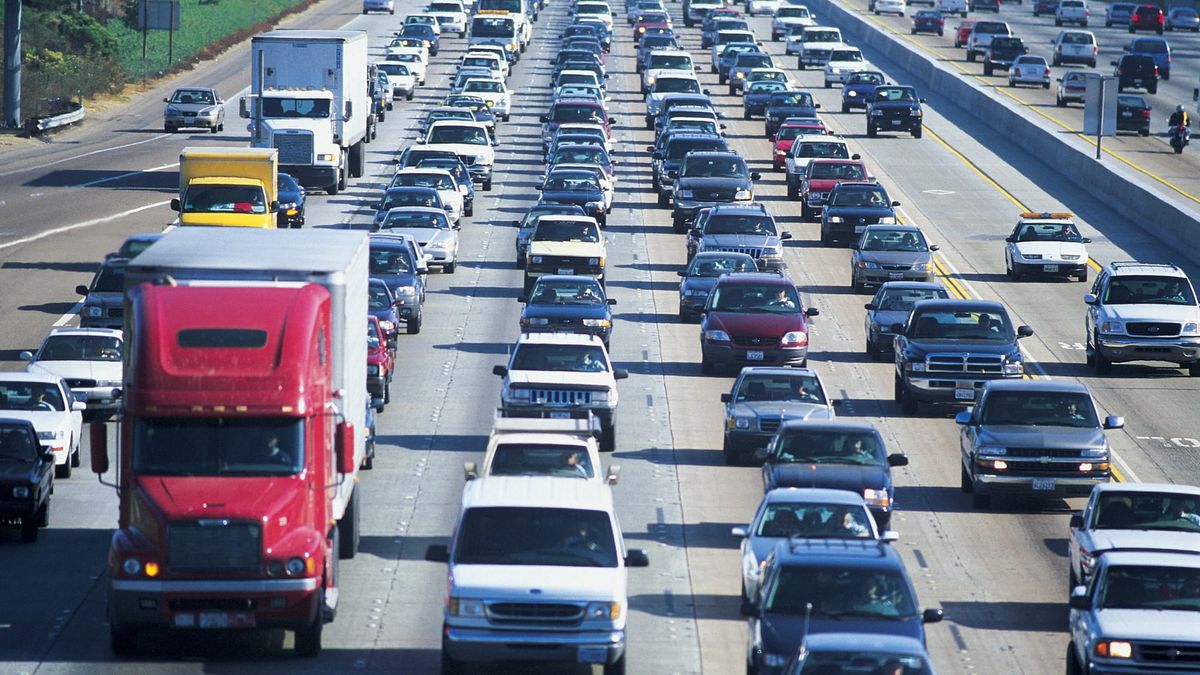
30 Years of IIHS Crash Testing and 48,352 Lives Saved

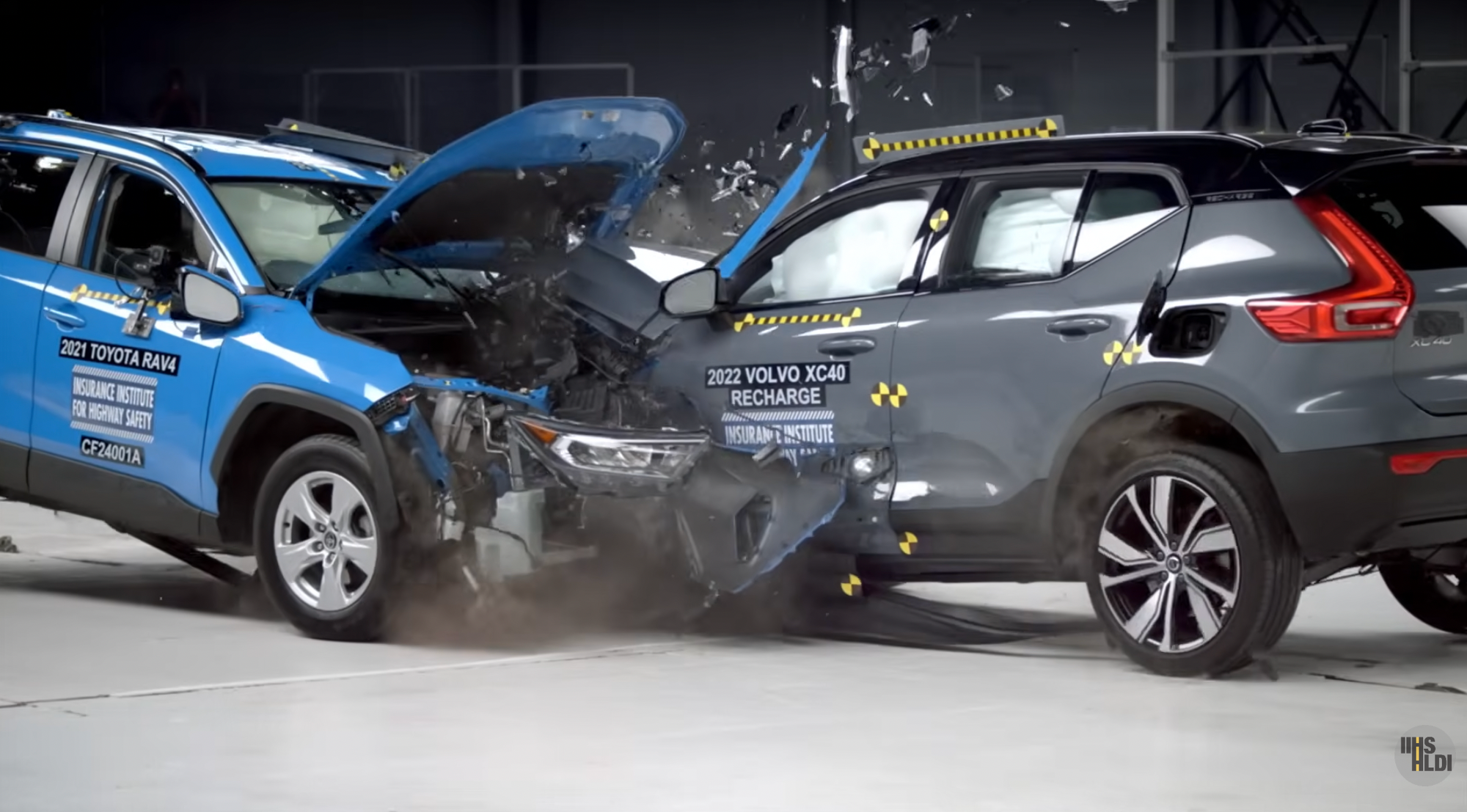
The Insurance Institute for Highway Safety (IIHS) launched its first crashworthiness evaluation in 1995. The goal was to push automakers past federal minimums and build cars that protect people in real crashes.
Smashing Impact
Between 1999 and 2024, IIHS tests led to vehicle improvements that saved an estimated 48,352 lives. An estimated $538 billion in societal benefits followed, based on the roughly $13.7 million the Department of Transportation assigns to each life saved. Over the same period, IIHS received about $600 million from its insurance company members. That works out to a return of nearly 900 times what was spent.
IIHS-HLDI is Two Institutes With One Mission
IIHS works alongside a sister organization, the Highway Loss Data Institute, which is why you often see them paired as IIHS-HLDI. IIHS runs the crash tests. HLDI studies real insurance data, tracking claims, losses, and repair costs by make and model. One shows how safe a car should be. The other shows how they perform on the road. Both are nonprofits funded by auto insurers, aiming to cut deaths, injuries, and property loss.
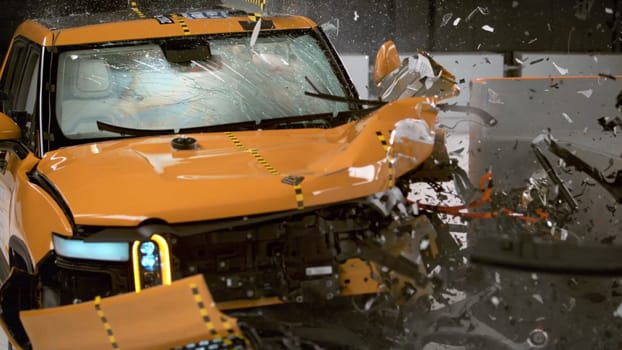
What Are the Different IIHS Crash Tests?
Crashworthiness is how well a vehicle protects the people inside during a crash. IIHS grades this by running cars into barriers and other vehicles, then measuring the damage to the cabin and the forces recorded on crash test dummies. A vehicle earns one of four ratings in each test: good, acceptable, marginal, or poor.
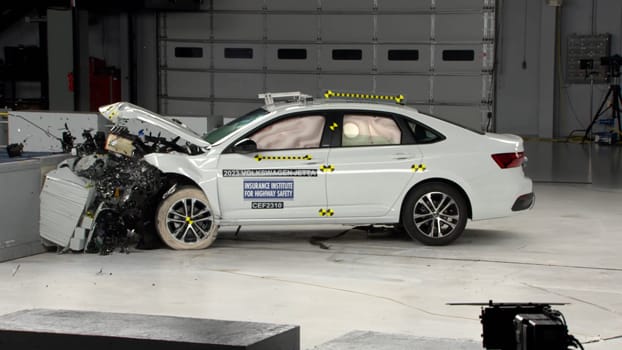
Moderate Overlap Front Crash
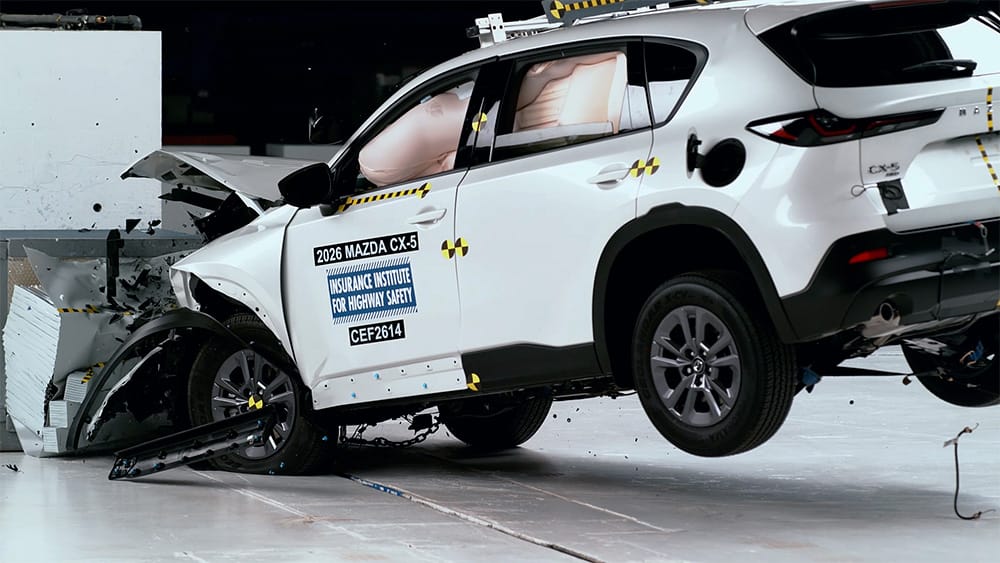
The Moderate Overlap Front test crash was launched in 1995 and is the oldest test IIHS performs. A vehicle hits an immovable barrier at 40 mph, with 40% of its width striking the barrier on the driver's side. The forces match what you'd see in a head-on crash between two equal-weight vehicles. It copies a crash where one car drifts across the center line. IIHS updated it in 2022 to grade back seat protection after data showed rear passengers were falling behind those up front.
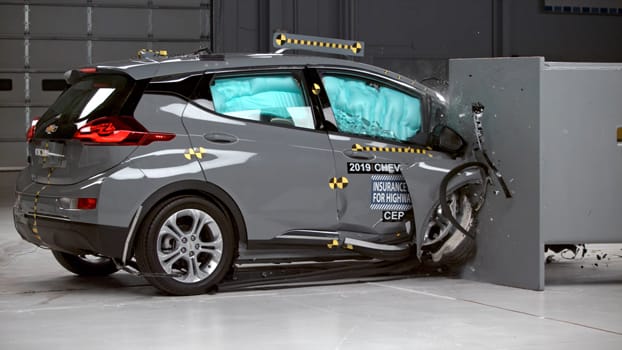
Small Overlap Front Crash
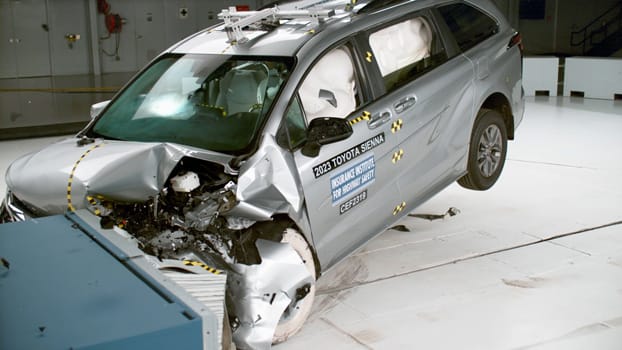
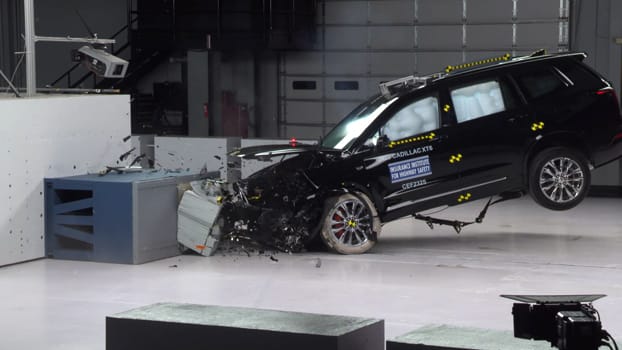
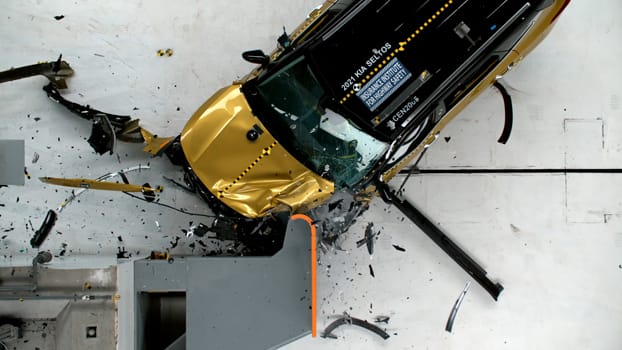
Small Overlap Front recreates what happens when a front corner clips another vehicle or a fixed object like a tree or utility pole. The car hits a rigid barrier at 40 mph with just 25% of its width making contact. These crashes are dangerous because the vehicle parts built to absorb a hit often sit outside the impact zone. That leaves the cabin itself to take the force. IIHS added the driver-side test in 2012, added the passenger-side in 2017, then merged the two into a single rating in 2024.
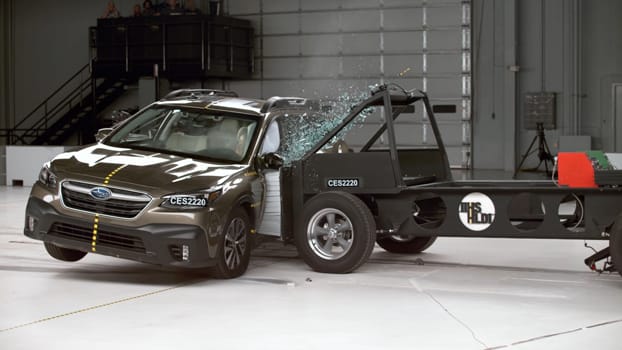
Side Impact Crash
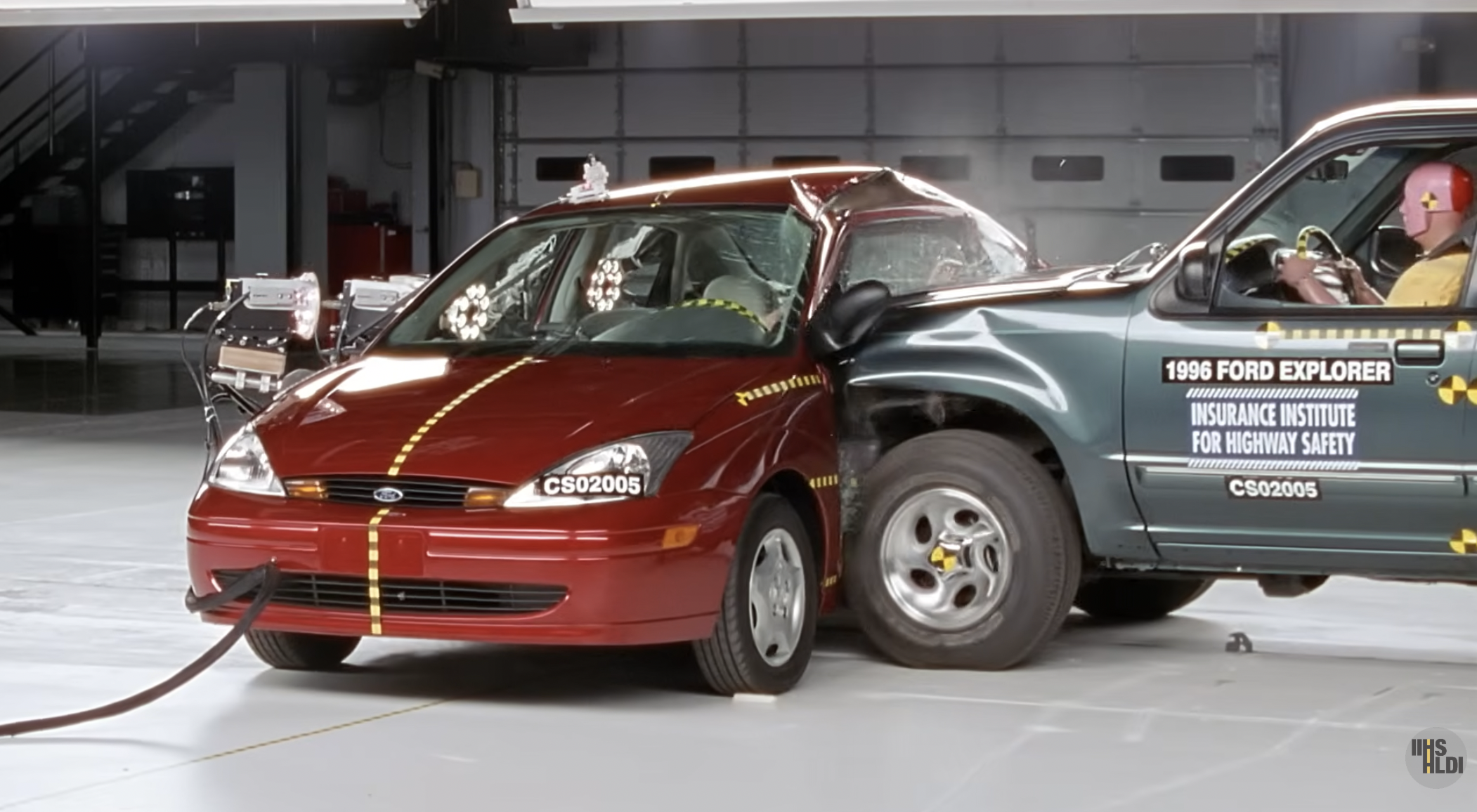
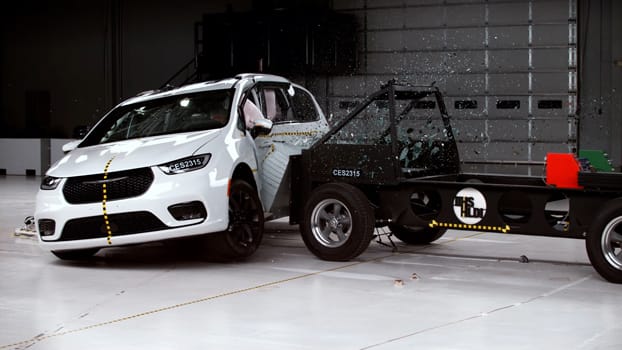
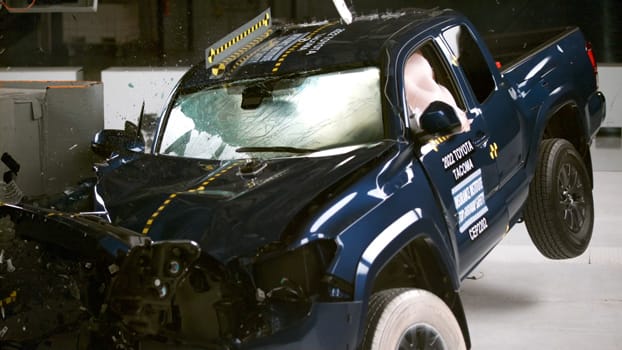
The IIHS Side Impact test recreates a T-bone crash, like when a vehicle runs a red light and strikes another in an intersection. A moving deformable barrier (MDB) shaped as the front of an SUV slams into the side of the test car. IIHS toughened the test in 2021, raising the barrier weight to 4,200 pounds and the speed to 37 mph to reflect today's heavier SUVs and pickups, which hit harder and higher than the cars of years past.
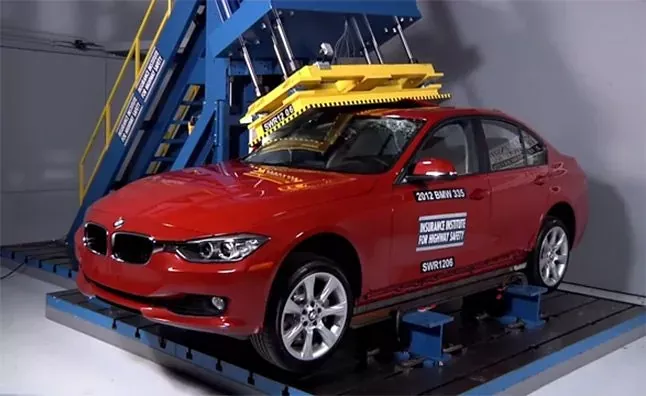
Roof Strength (Retired Test)
The roof strength test measured how well a roof held up in a rollover. A machine pressed a plate onto the roof and recorded the force needed to crush it. A strong roof keeps the cabin from caving in and people inside. IIHS ran the test from 2009 to 2022, then retired it once nearly every new car passed and federal rules caught up.
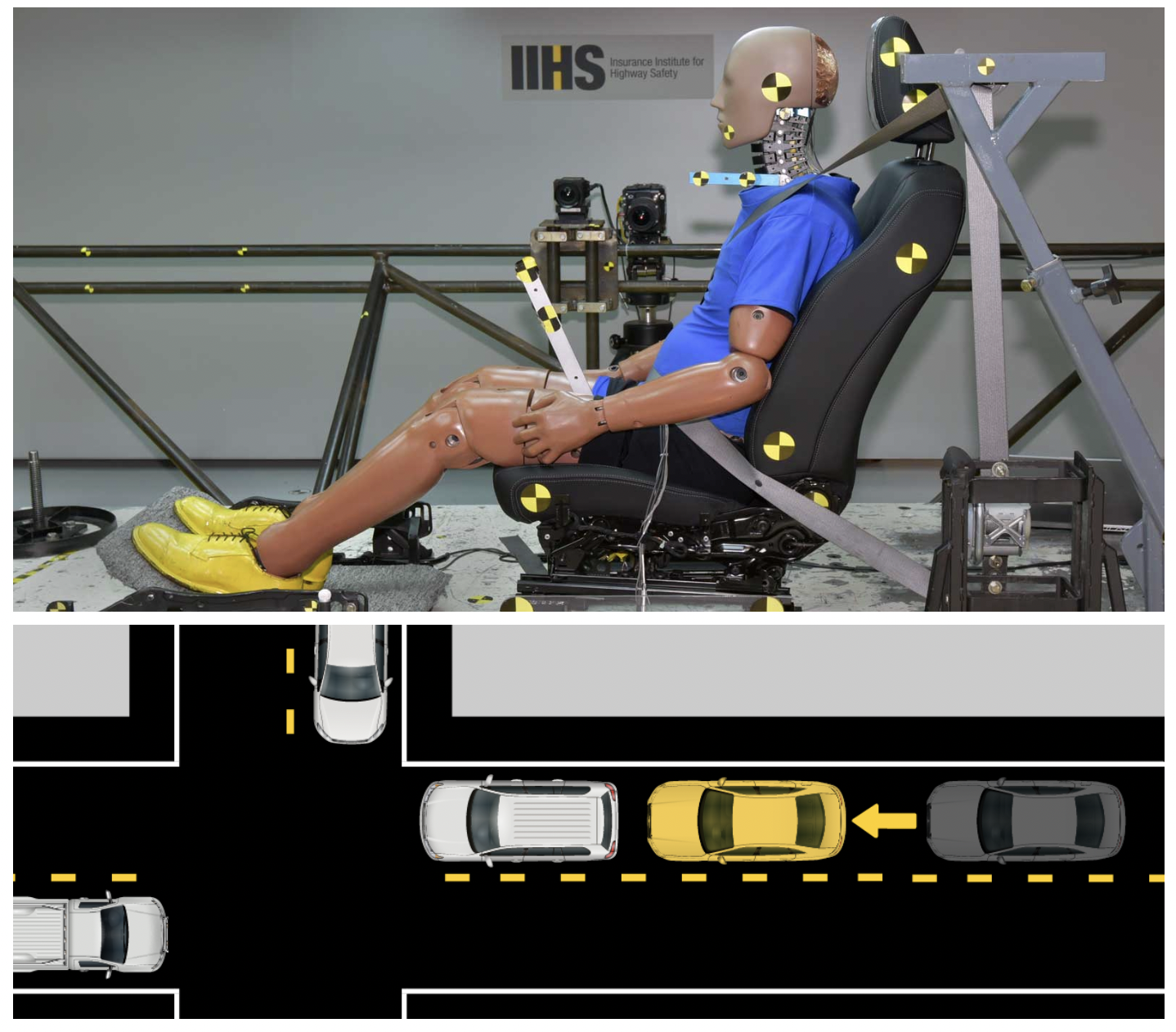
Whiplash Prevention
The whiplash prevention test rates how well a seat and head restraint protect the neck in a rear-end hit. The seat is removed from the car and bolted to a sled, then hit with a sudden jolt to mimic being struck from behind. Neck sprains are the most common injury in U.S. auto insurance claims. IIHS retired its older head restraint test in 2022 once nearly every car passed, then launched this tougher version in January 2026, adding a second, harder hit at 30 mph.
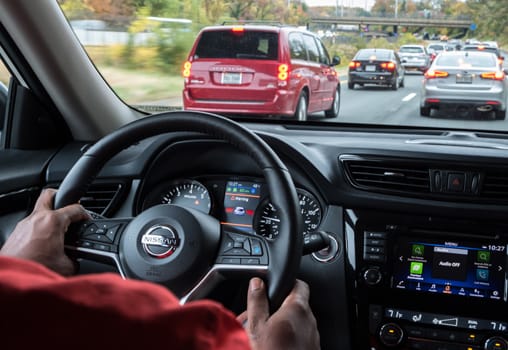
Crash Avoidance Tests
Crash avoidance and mitigation technology works to stop a crash before it happens or reduce the harm when it does. Examples include automatic emergency braking and headlights that light the road better at night. IIHS tests these systems on a closed track under controlled conditions.
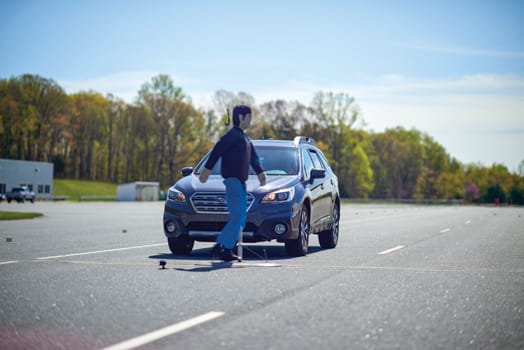
Pedestrian Front Crash Prevention
IIHS checks whether a vehicle's automatic braking can spot a pedestrian and stop in time. The test uses adult and child dummies crossing the road, and since 2024, a single rating covers both daytime and nighttime trials. Nighttime matters because that is when most fatal pedestrian crashes happen.
Vehicle-to-Vehicle Front Crash Prevention
Vehicle-to-Vehicle Front Crash Prevention tests whether a car's automatic braking can stop it from rear-ending the vehicle ahead. IIHS introduced a tougher version in 2024 with trials at 31, 37, and 43 mph, and it now also checks how a system reacts to a motorcycle or a semitrailer stopped ahead.
Rear Crash Prevention
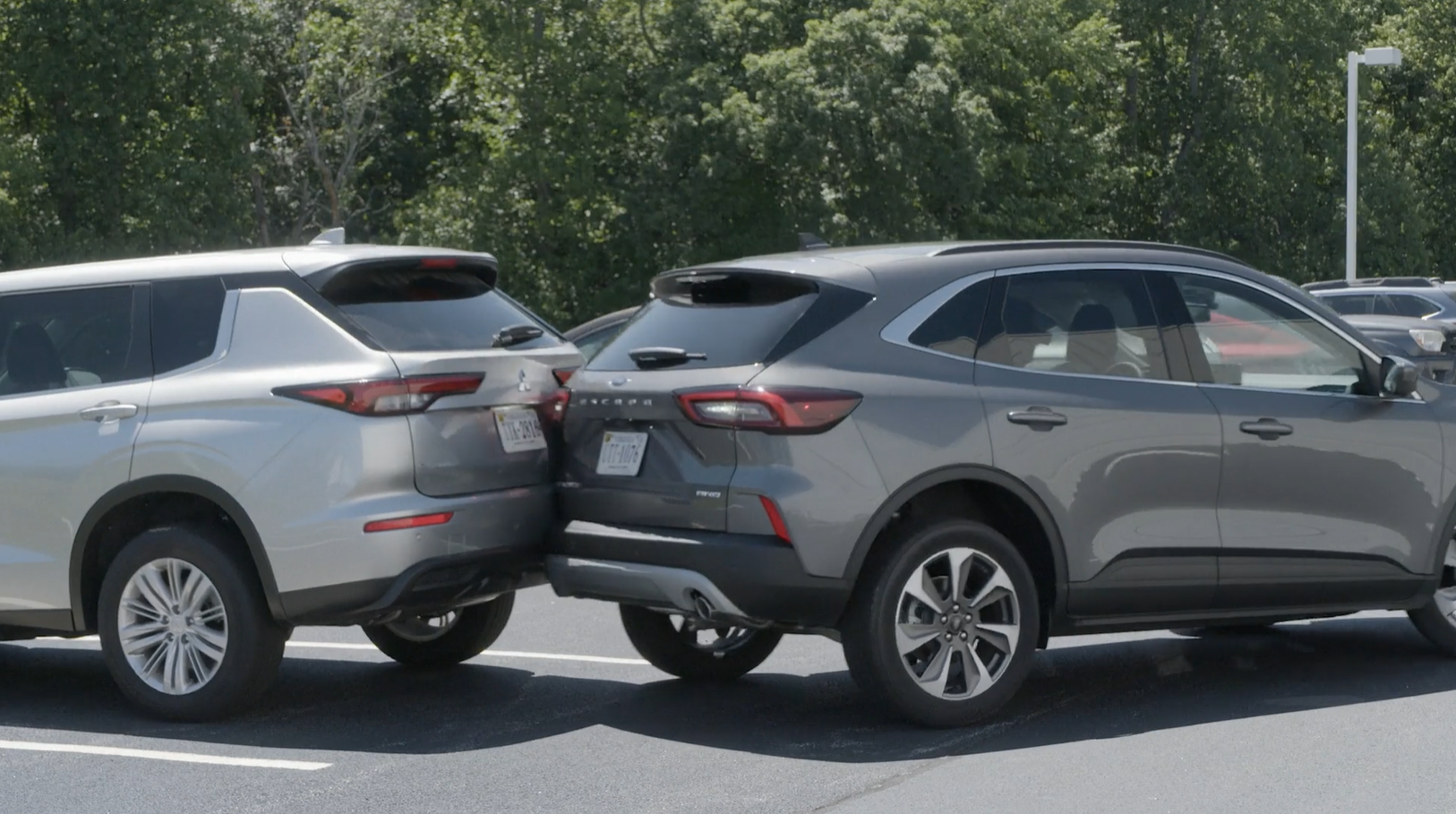
Rear Crash Prevention rates the systems that help you avoid a fender bender while backing up. IIHS tests rear automatic braking by reversing toward a parked car and a pole at 4 mph. Backing crashes rarely hurt anyone, but they drive a big share of insurance claims. IIHS started rating these systems in 2018.
Headlights
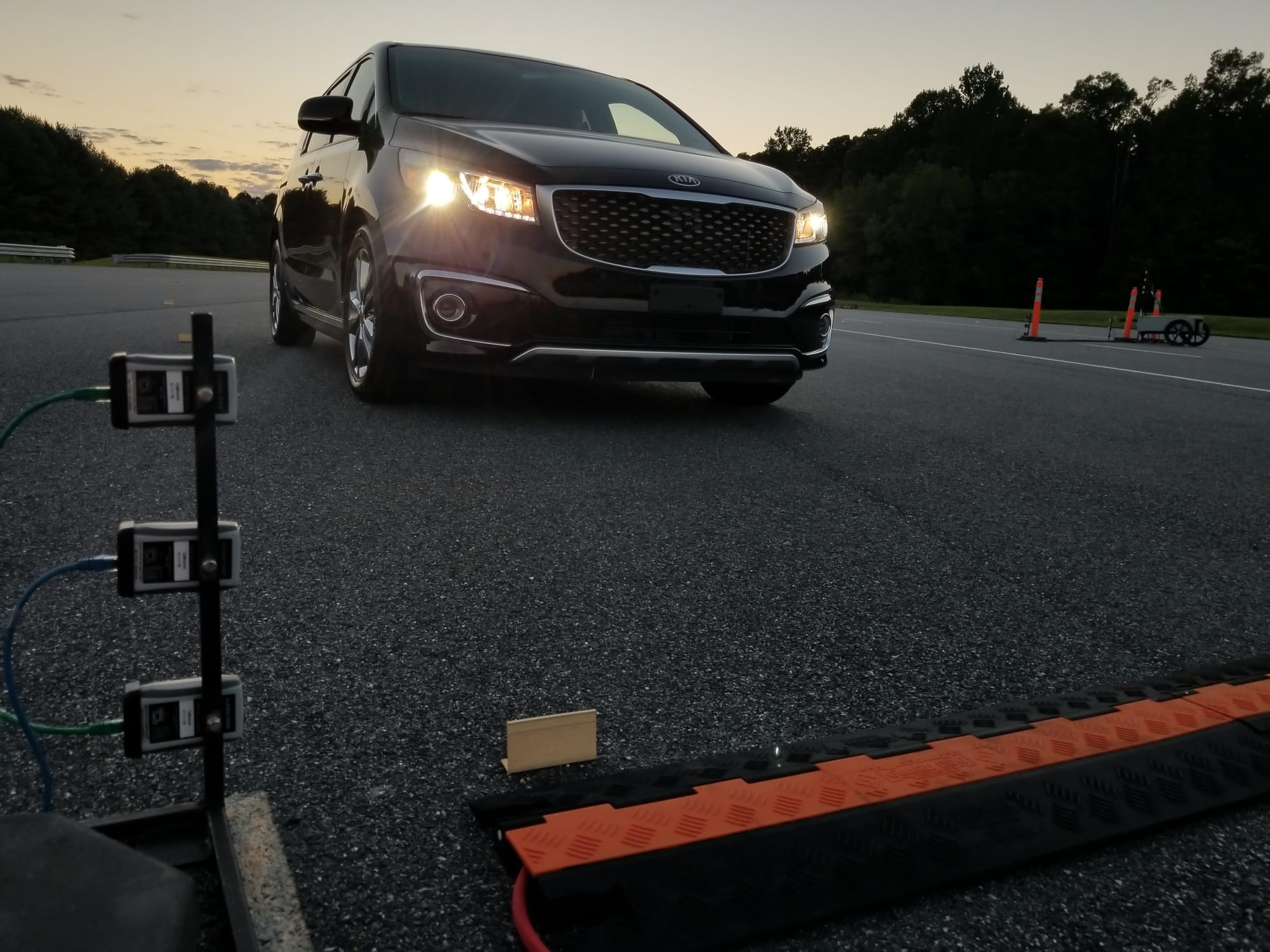
IIHS pushed automakers to offer quality headlights across an entire model lineup, not just top trims. Headlight tests rate how well standard headlights light the road without blinding oncoming drivers.
Seat Belt Reminders and LATCH
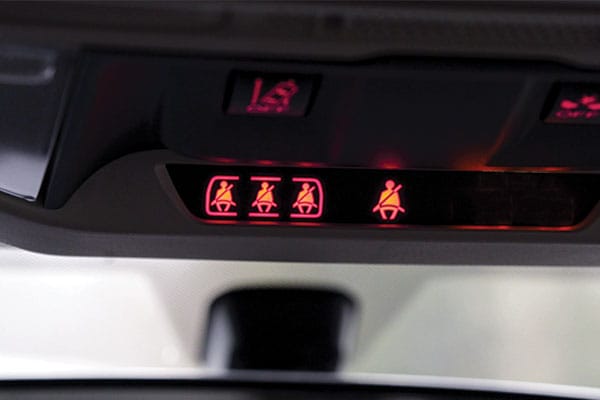
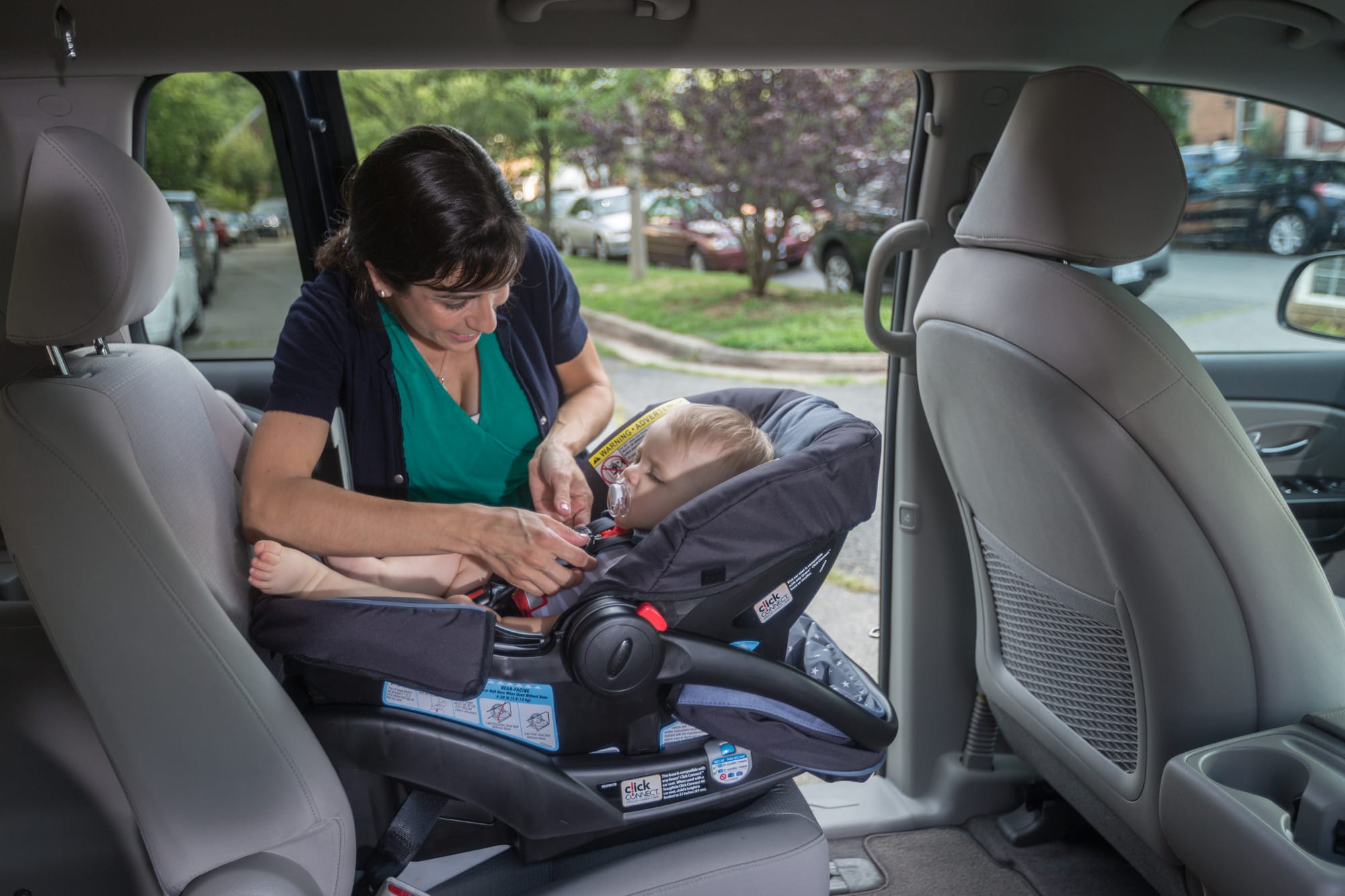
Two smaller, yet still important evaluations. One grades how well seat belt reminder chimes and warnings get occupants buckled. The other rates how easy a vehicle's LATCH child-seat anchors are to find and use.
Booster Seat Ratings (Retired Test)
Booster seat ratings measured how well a booster positioned an adult seat belt across a child's body, since a proper belt fit is what keeps a child safe in a crash. IIHS ran the program from 2008 to 2024, then retired it once nearly every booster on the market earned a good rating.
30 Years of Progress
To mark the 30th anniversary, IIHS crashed a 1996 Chevrolet Blazer head-on into a 2026 model. The old truck's cabin collapsed, and the dashboard and steering column hurled into the dummy's lap. The 2026 Blazer held its shape, and nearly every injury measurement read low.
Where Does IIHS Crash Test Cars
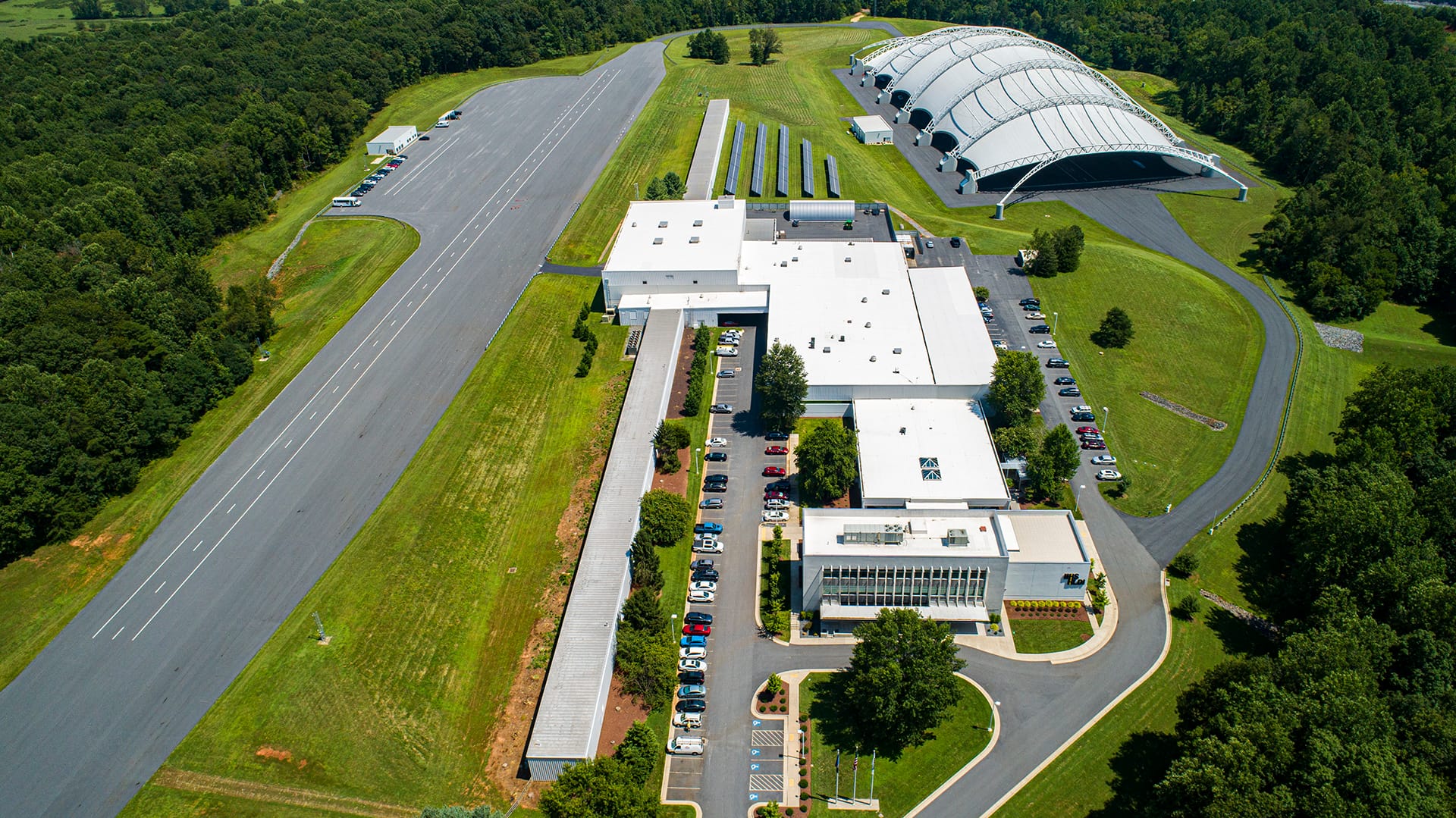
IIHS runs all its crash tests at a single facility, the Vehicle Research Center, on a 90-acre site in Ruckersville, central Virginia. The center opened in 1992, and its crash hall's three runways handle both front and side impacts. IIHS can't test every model itself, so it also accepts verification tests that automakers run at outside labs, then uses that data to assign ratings.
 Very Driver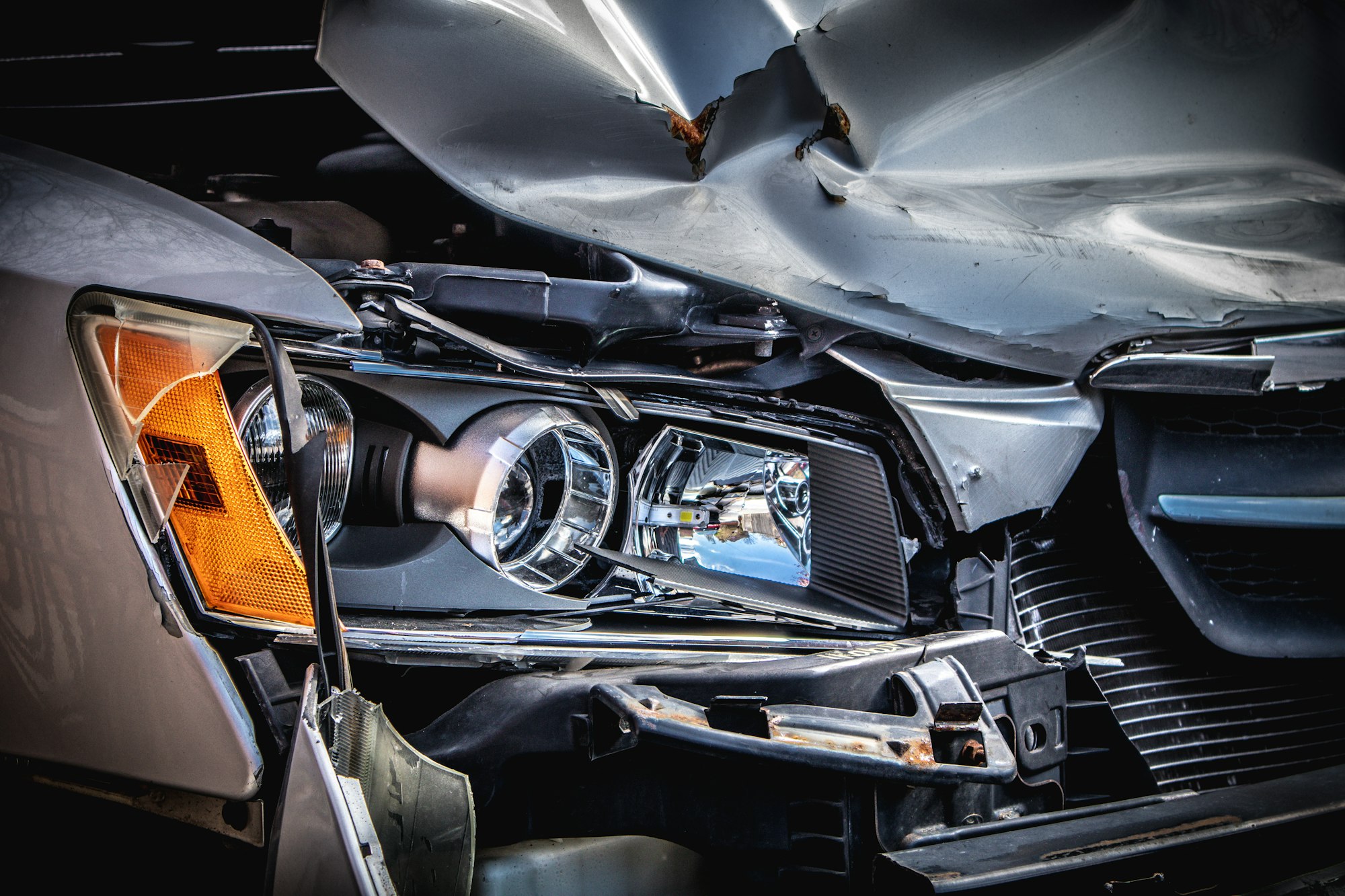
 Very Driver