
Pagani Huayra Codalunga Speedster

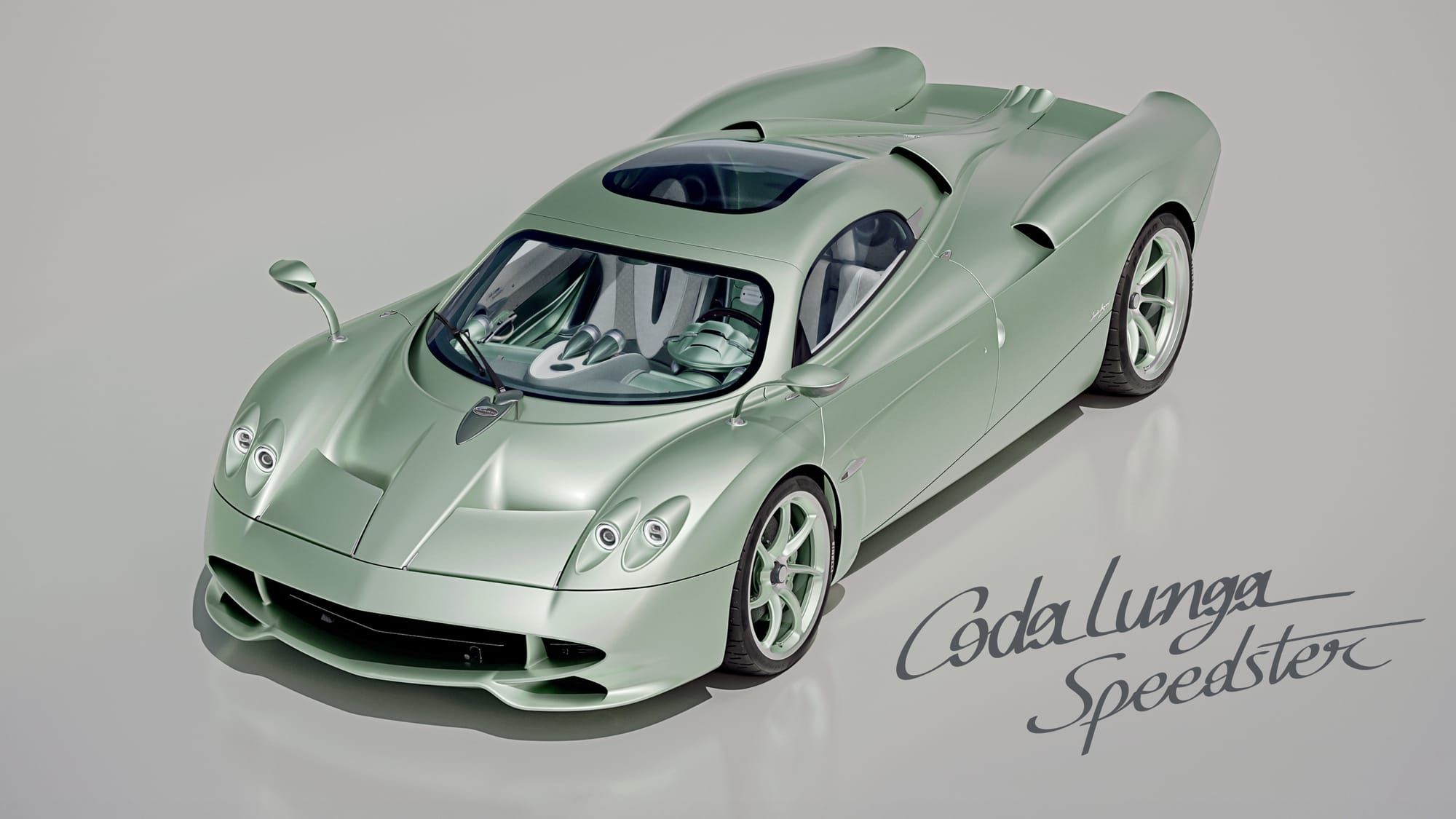
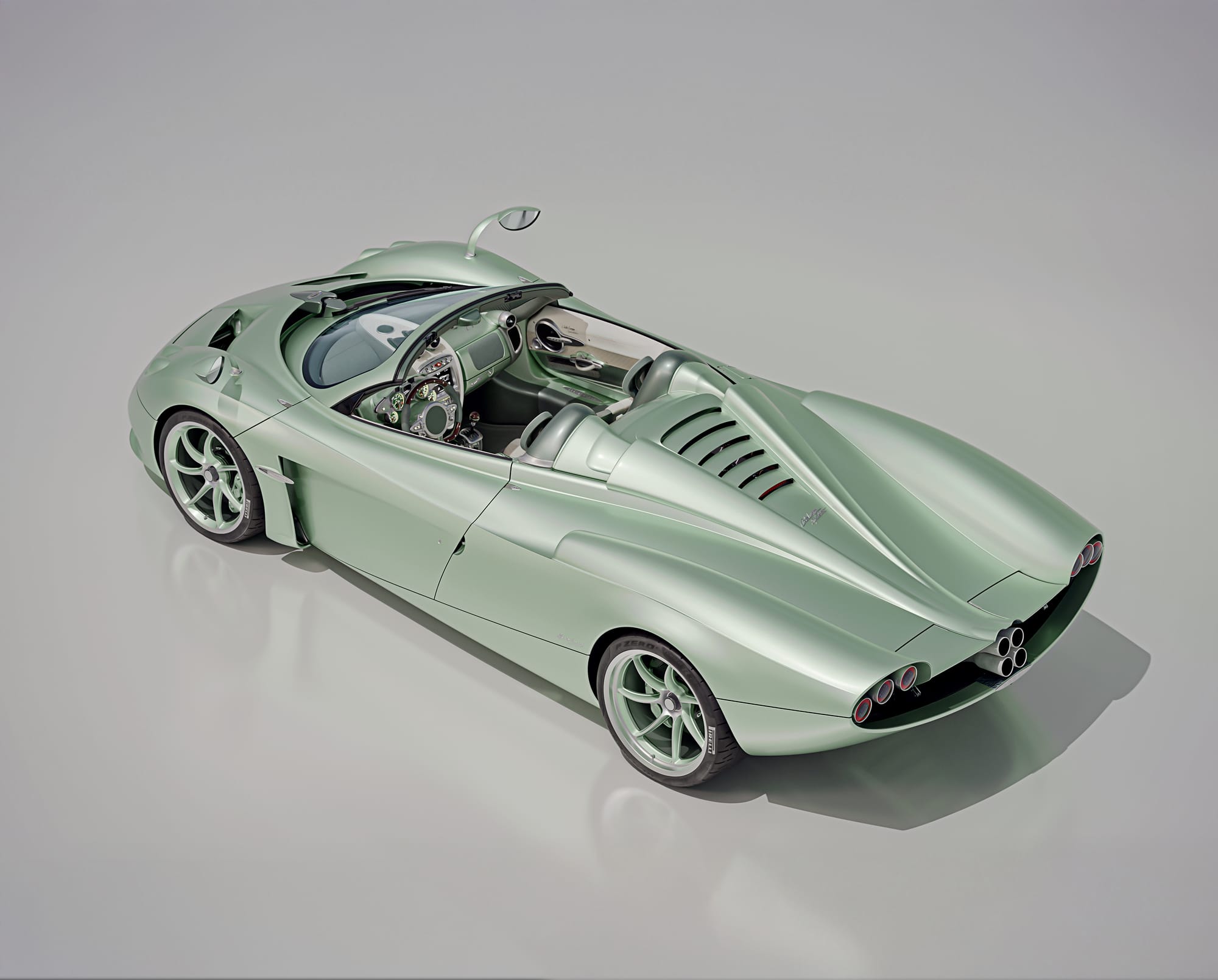
Pagani revealed the Huayra Codalunga Speedster on July 8, 2025. Just 10 examples will be built, each produced by the Grandi Complicazioni division and sketched personally by Horacio Pagani.
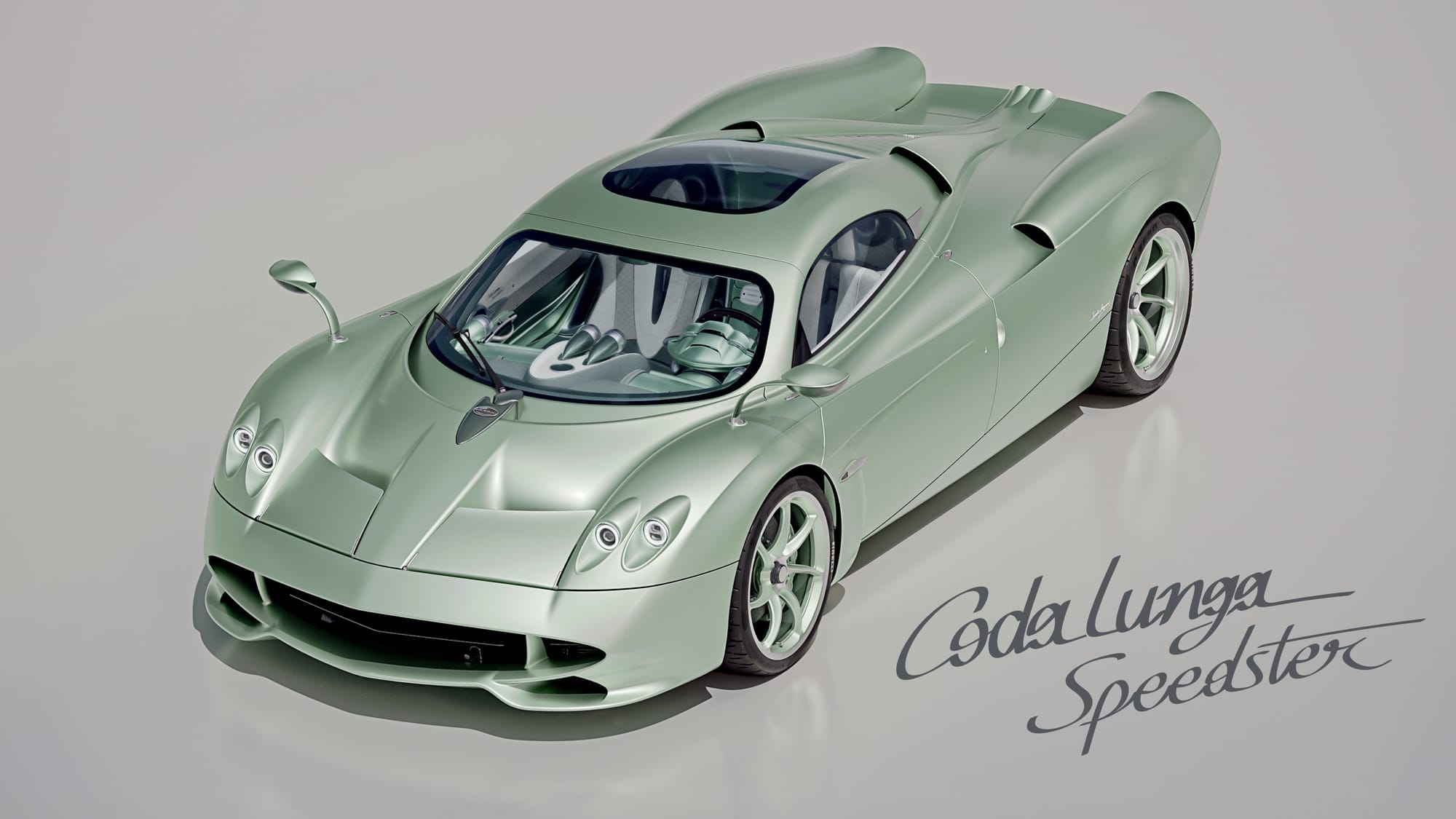
The Codalunga Speedster is an open-air interpretation of the coupé version that won the Design Award at the 2023 Concorso d'Eleganza Villa d'Este.
The Origin
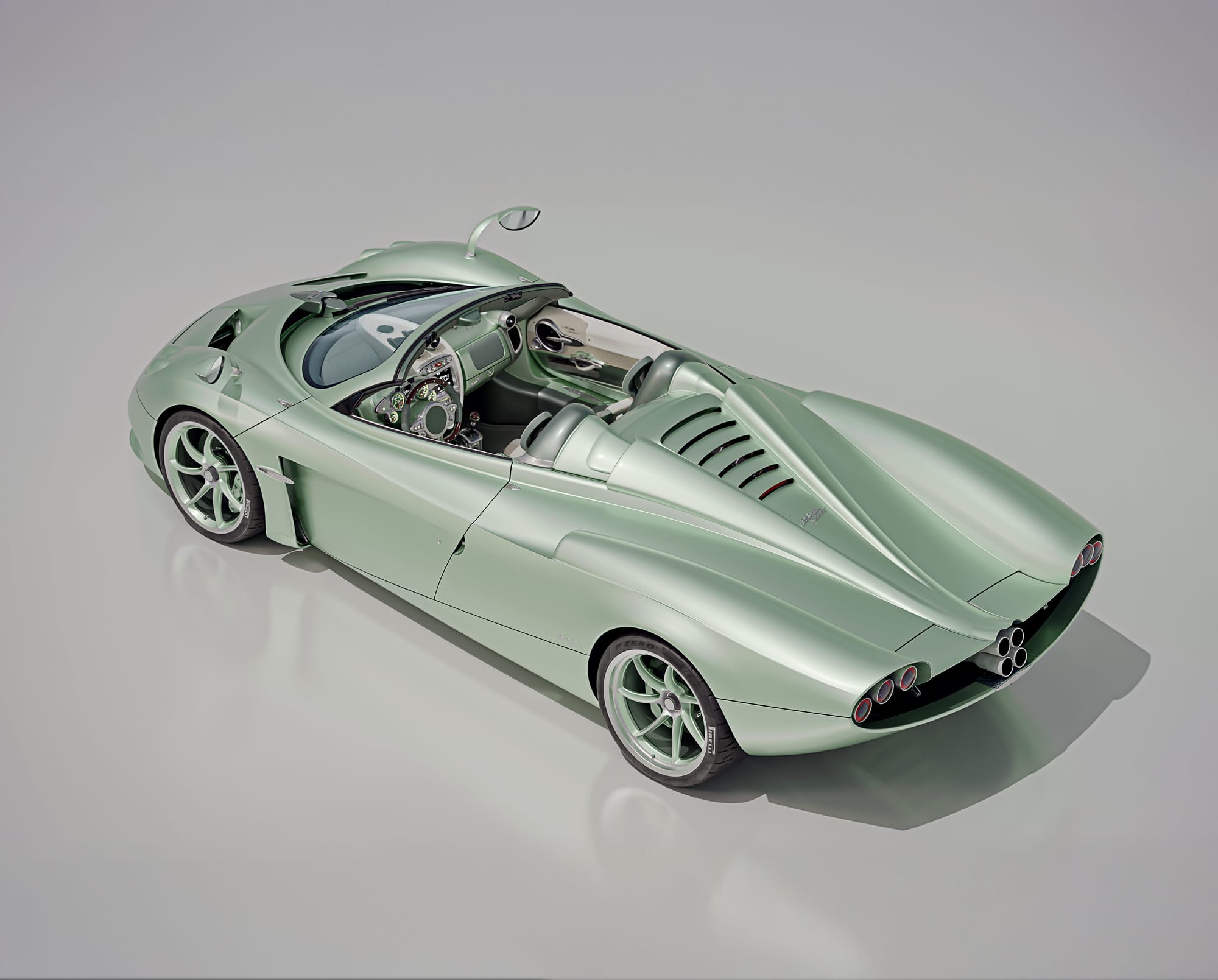
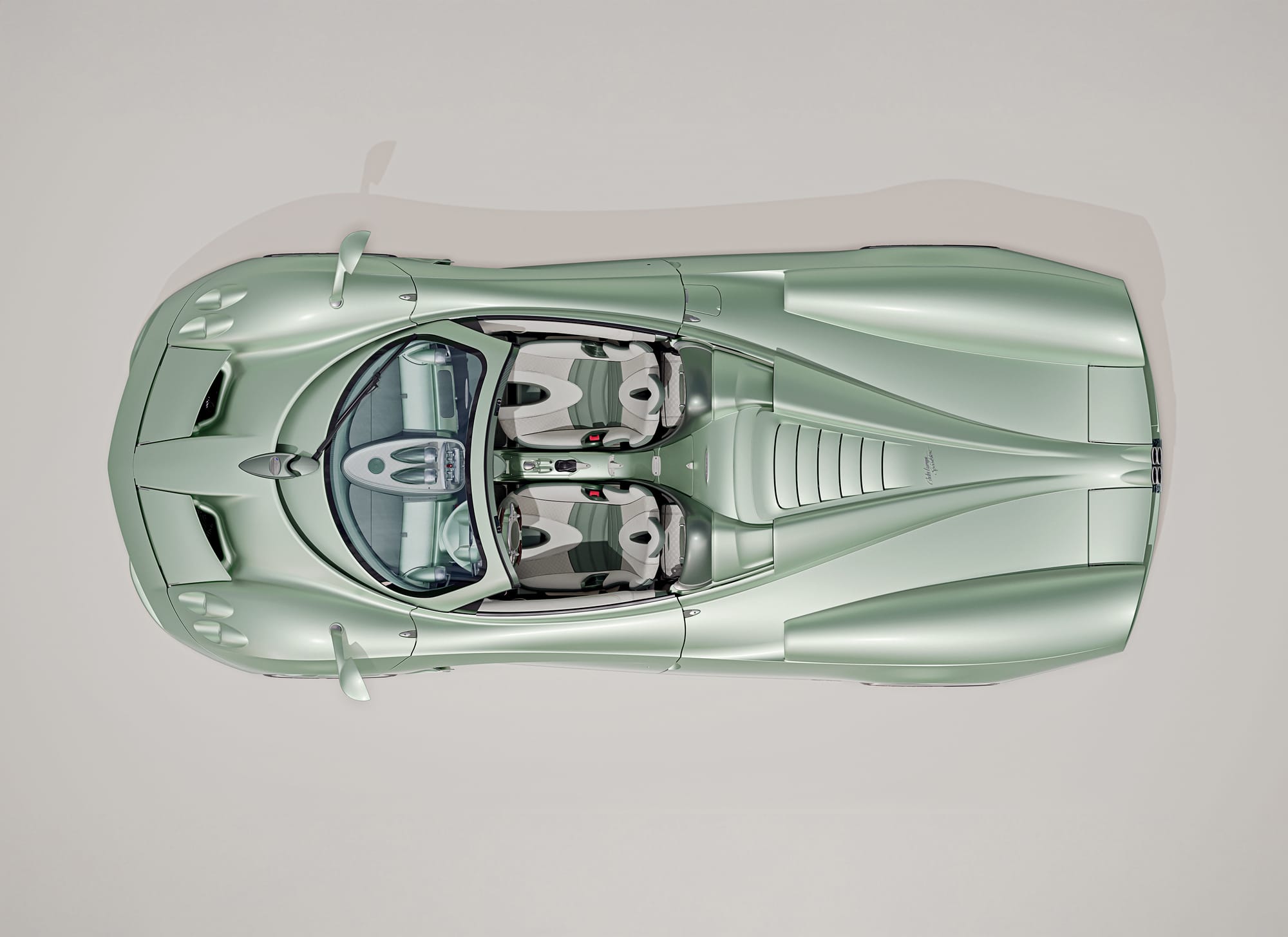
The design of the Huayra Codalunga Speedster was inspired by 1950s and '60s racing cars. Aerodynamic appendages and side air intakes were removed in favor of clean, tapered bodywork. The Codalunga Speedster rides on an entirely new monocoque, making it structurally distinct from every other open-top Pagani.
Exterior Design
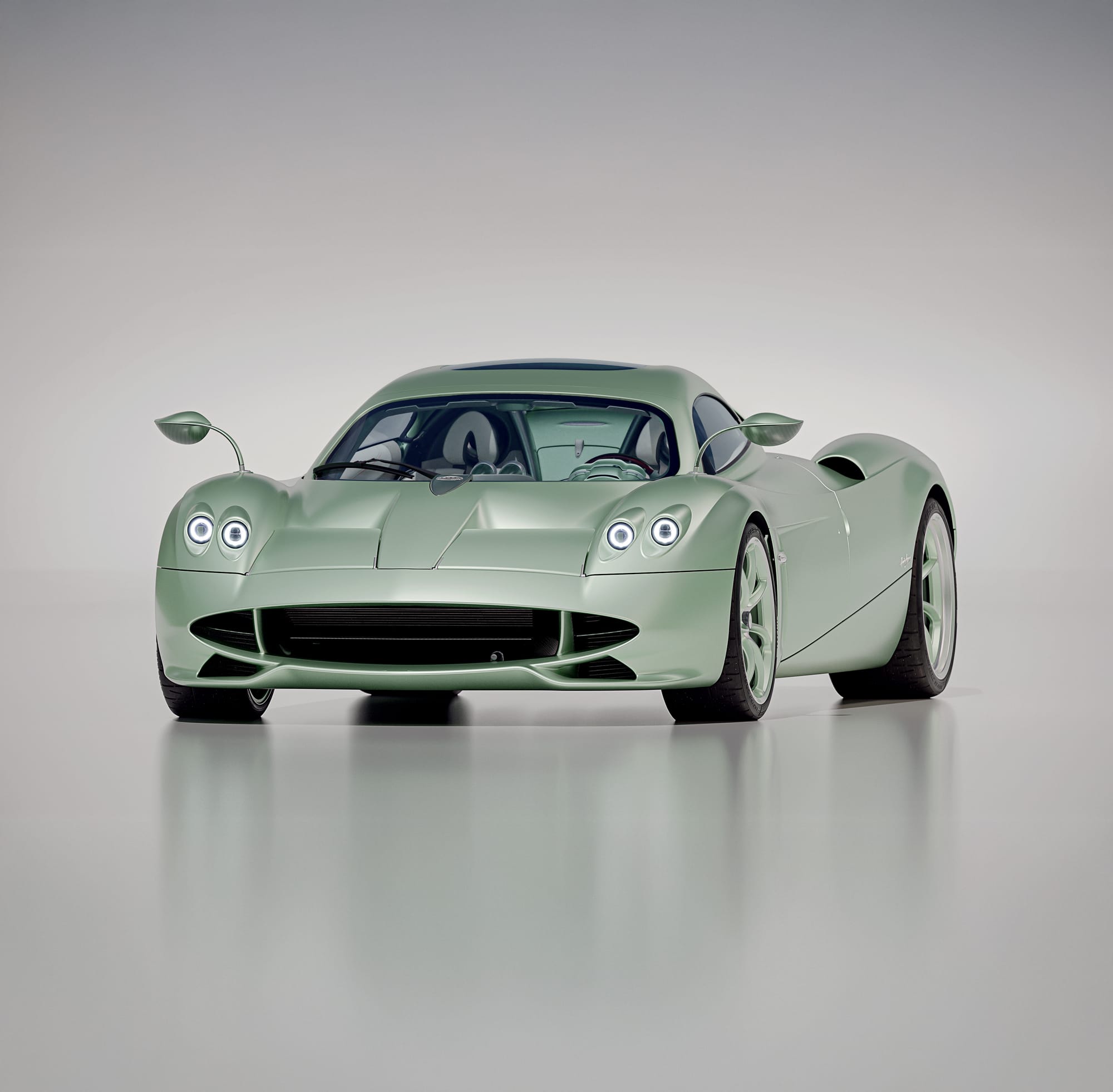
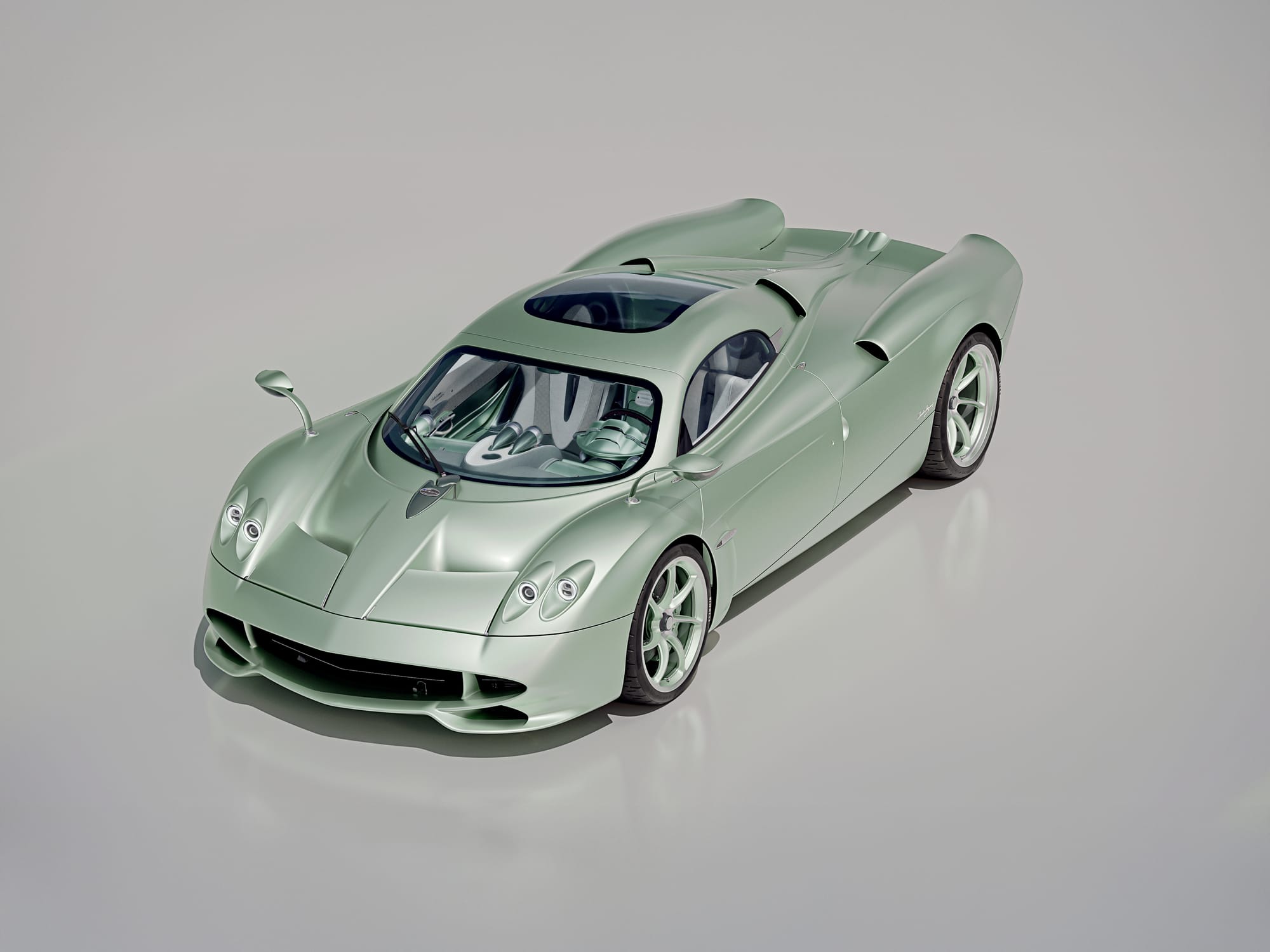
The headlights are flush with the bodywork. The windshield sits lower than in a standard car and tapers into a slimmer profile. Side windows take their shape from post-war racing prototypes, shorter and rounded at the rear edge.
An optional panoramic hardtop creates a continuous line from windshield to tail. Viewed from above, the roof traces a teardrop shape. The transparent section is polycarbonate, reducing weight without sacrificing rigidity.
The external sills flow into the doors and rear hood without visible openings. Air is channeled through hidden NACA ducts in the flat underbody. At the rear, the bumper integrates a diffuser and two aerodynamic fins. Taillights appear to float above the bodywork. The six-outlet exhaust system uses lower titanium pipes and upper ceramic-coated outlets.
CFD simulations shaped the wheel-arch curvature and hood fluidity to balance aerodynamic loads between the axles.
Interior
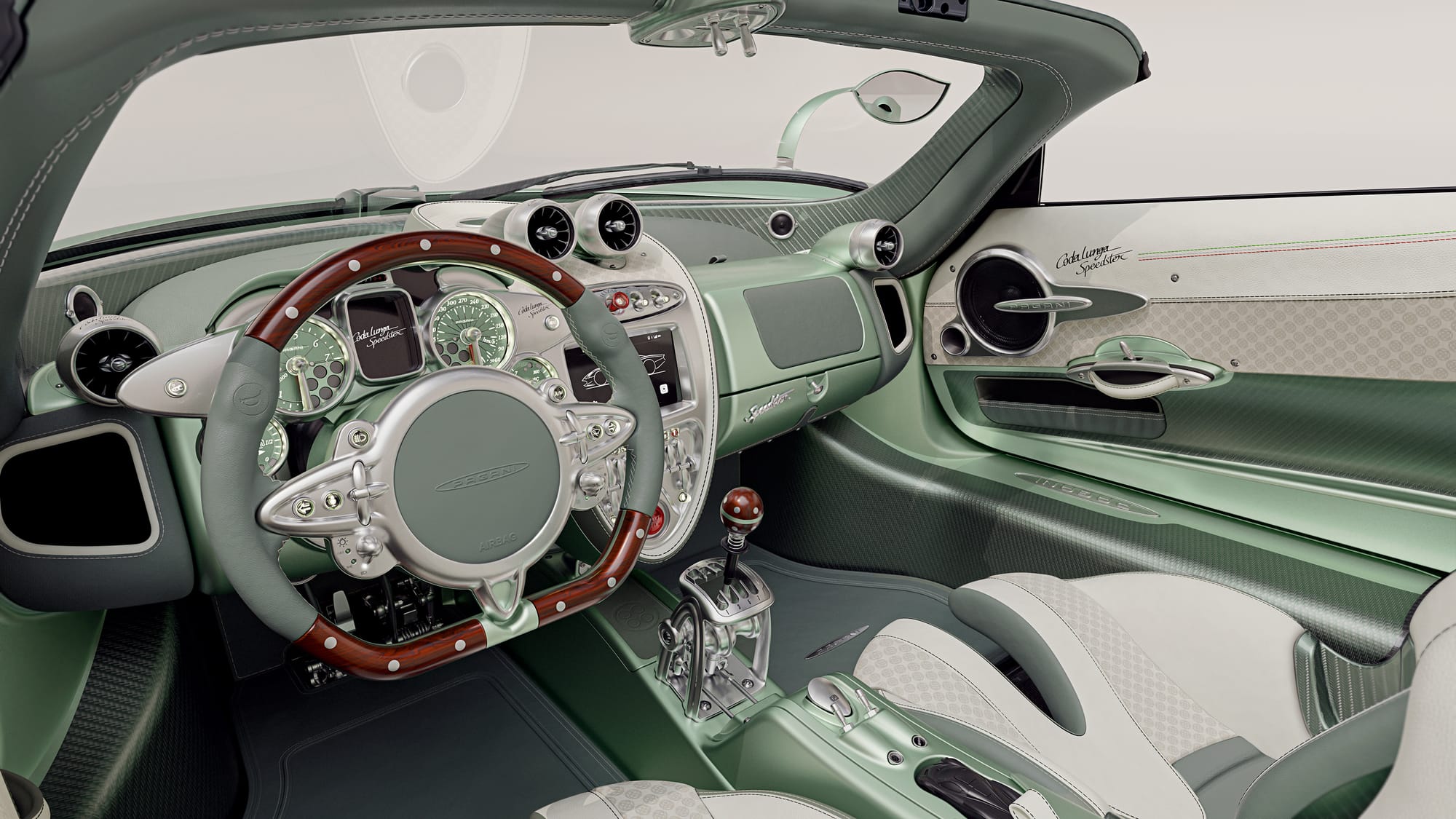
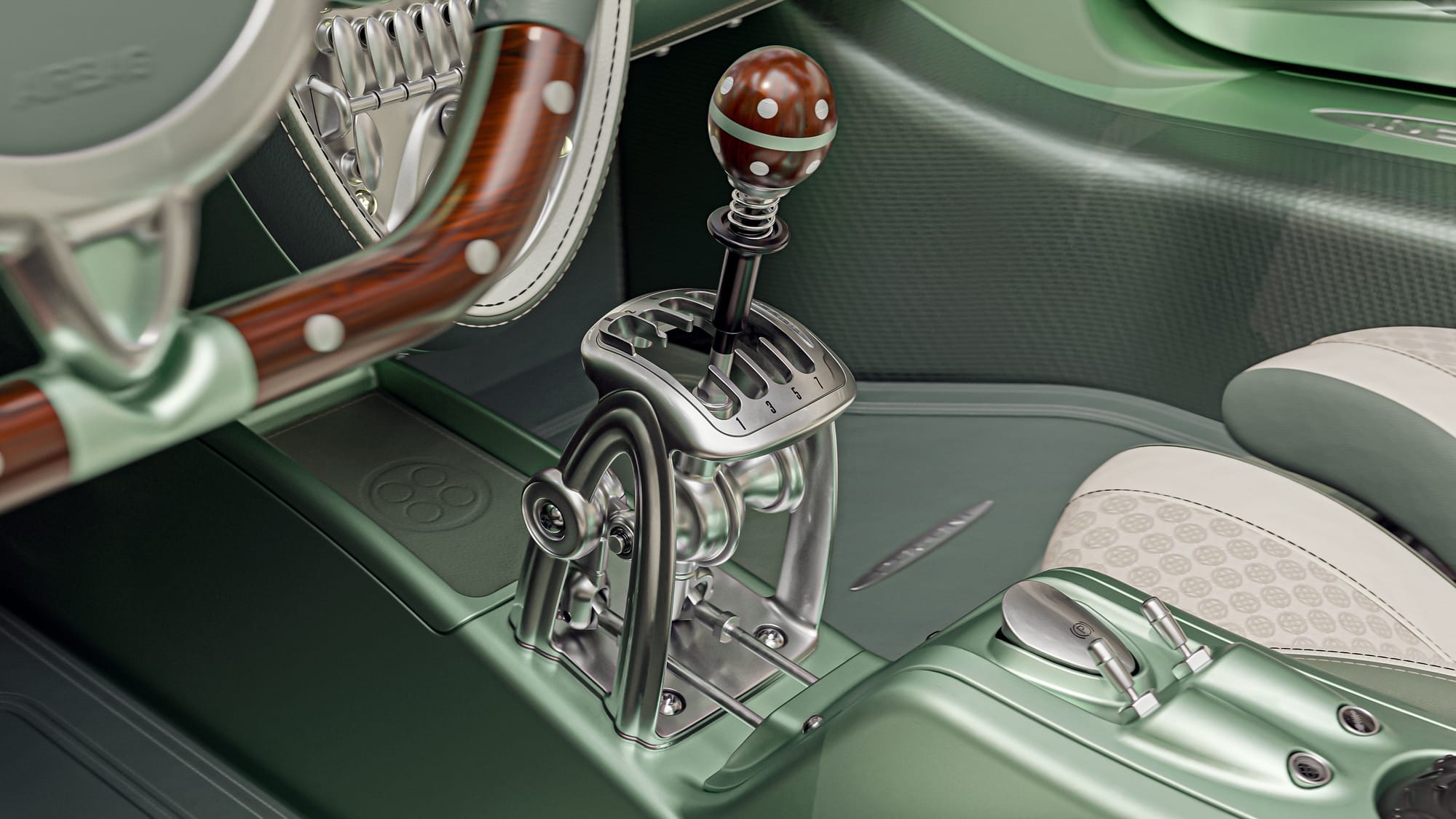
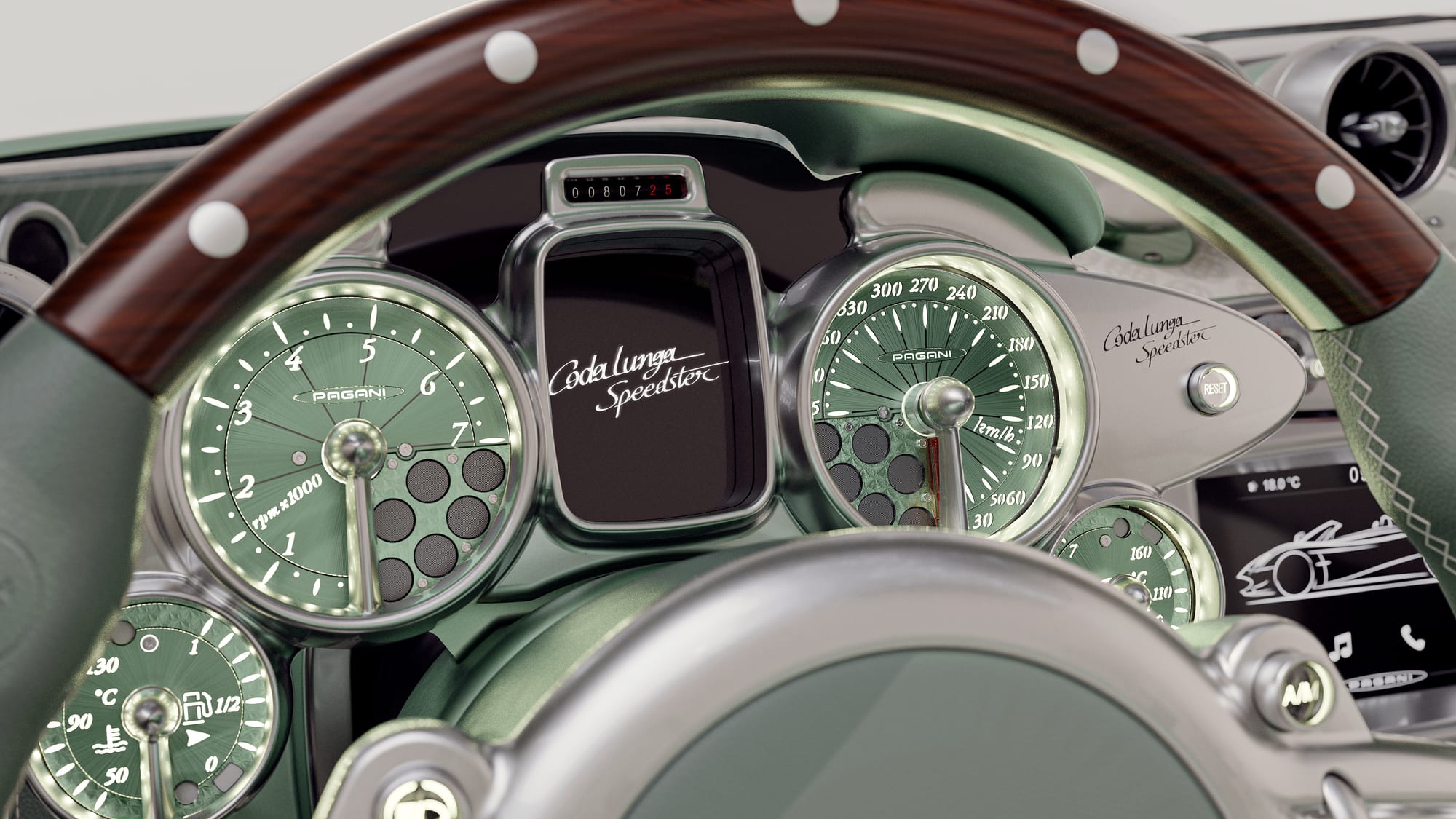
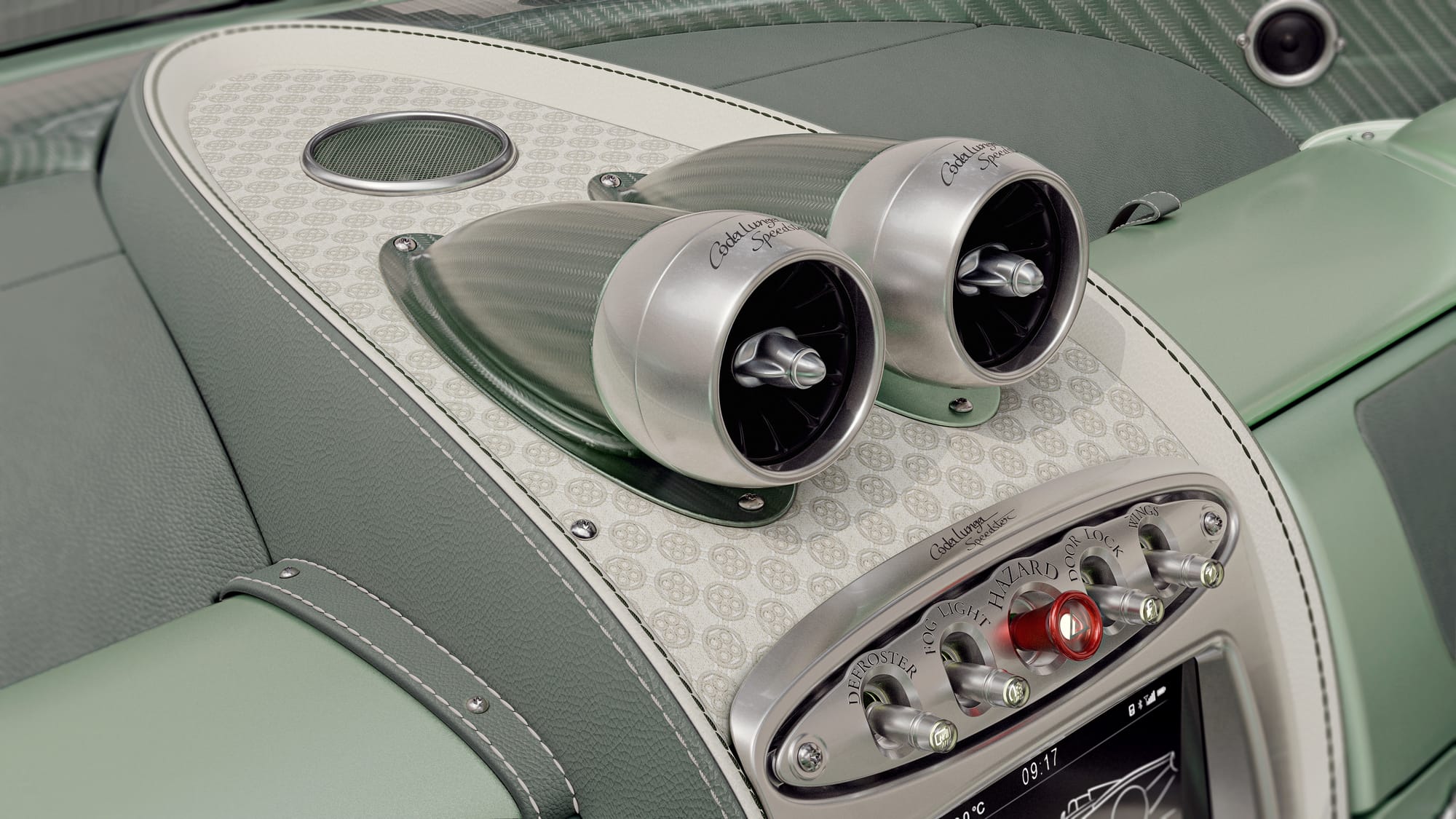
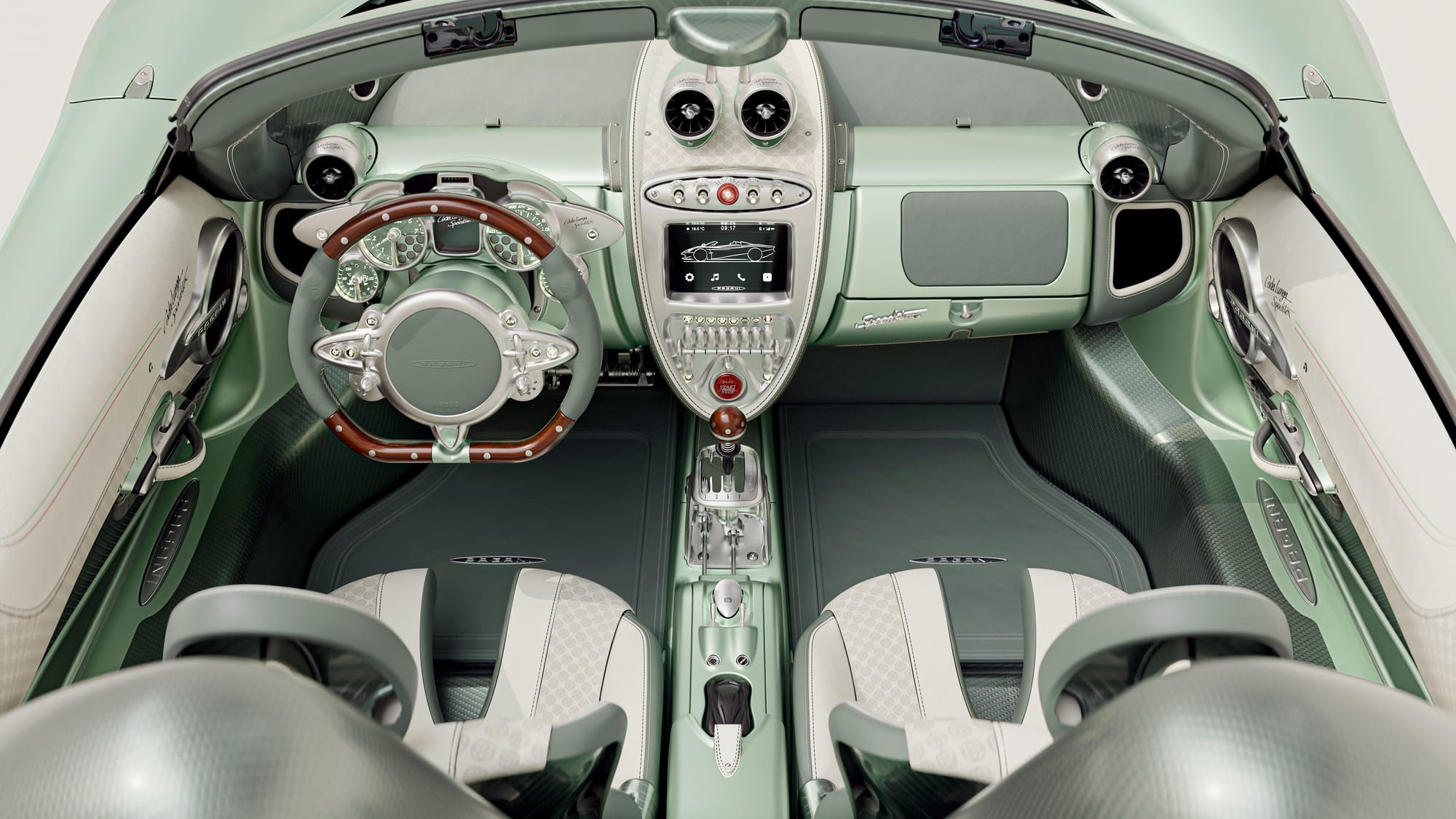
Semi-matte finishes and hammered, hand-stitched leathers define the cabin. Solid-milled metal components are machined to resemble hand-chiseled work. The steering wheel features a carbon fiber frame with mahogany inserts and hand-polished aluminum rivets, a nod to the Nardi steering wheels that defined Italian sports cars throughout the 1950s and '60s.
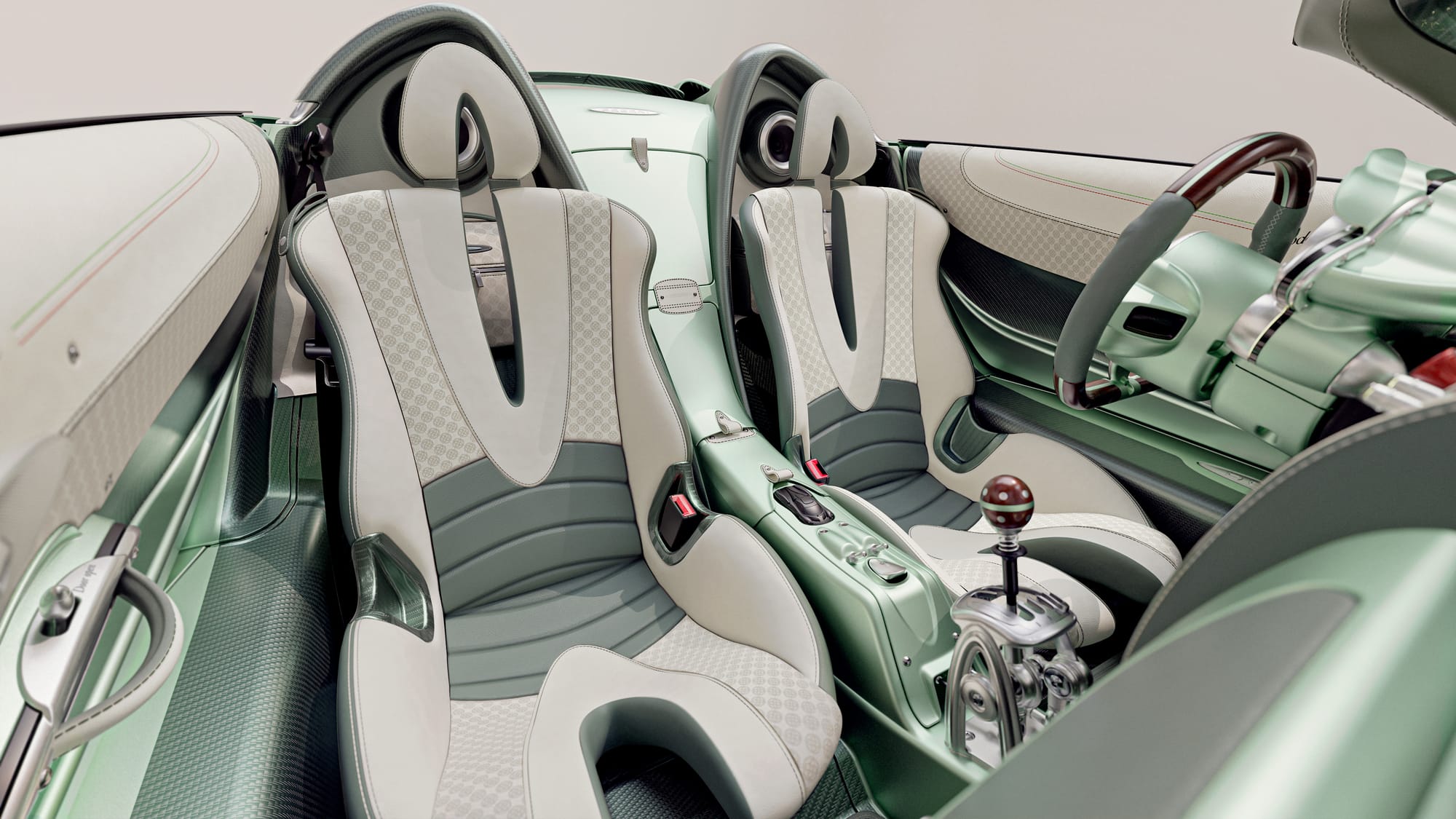
The seats, door panels, and center console are covered in an embroidered fabric developed exclusively for this car. Each embroidered element contains over 450,000 individual hand-placed stitches. The pattern is derived from Pagani's four-exhaust motif, which has appeared on every Pagani since the original Zonda.
Powertrain
The engine is a 60-degree, 5,980 cc twin-turbo V12 developed with Mercedes-AMG. Output is 864 HP (635 kW) at 6,000 rpm and 1,100 Nm of torque from 2,800 rpm. A 7-speed Pagani by Xtrac transverse gearbox is available in both AMT and pure manual configurations.
Technical Specifications
Engine: 60° V12, 5,980 cc, twin-turbo, developed with Mercedes-AMG
Power: 864 HP at 6,000 rpm
Torque: 811 lb-ft from 2,800 rpm
Gearbox: 7-speed Pagani by Xtrac, AMT or pure manual
Drivetrain: Rear-wheel drive
Chassis: Carbo-Titanium HP62-G2 and Carbo-Triax HP62 monocoque
Suspension: Double wishbone, forged aluminum, variable-rate springs, coaxial active shock absorbers
Brakes: Pagani by Brembo carbon-ceramic; 410x38mm front, 390x34mm rear
Wheels: Monolithic Avional, 20" front, 21" rear
Tires: Pirelli Trofeo R, 265/30 R20 front, 355/25 R21 rear
Length: 193.3 in
Width: 80.7 in
Height: 46.2 in
Wheelbase: 110.0 in
Dry Weight: 2,800 lb
Top Speed: 217 mph (electronically limited)
Production: 10 units
Huayra Codalunga Speedster Media: Pagani Automobili S.p.A.