2027 Audi Q9 and SQ9 Debut With Matrix Headlights, 4D Sound, and a 591 HP V8

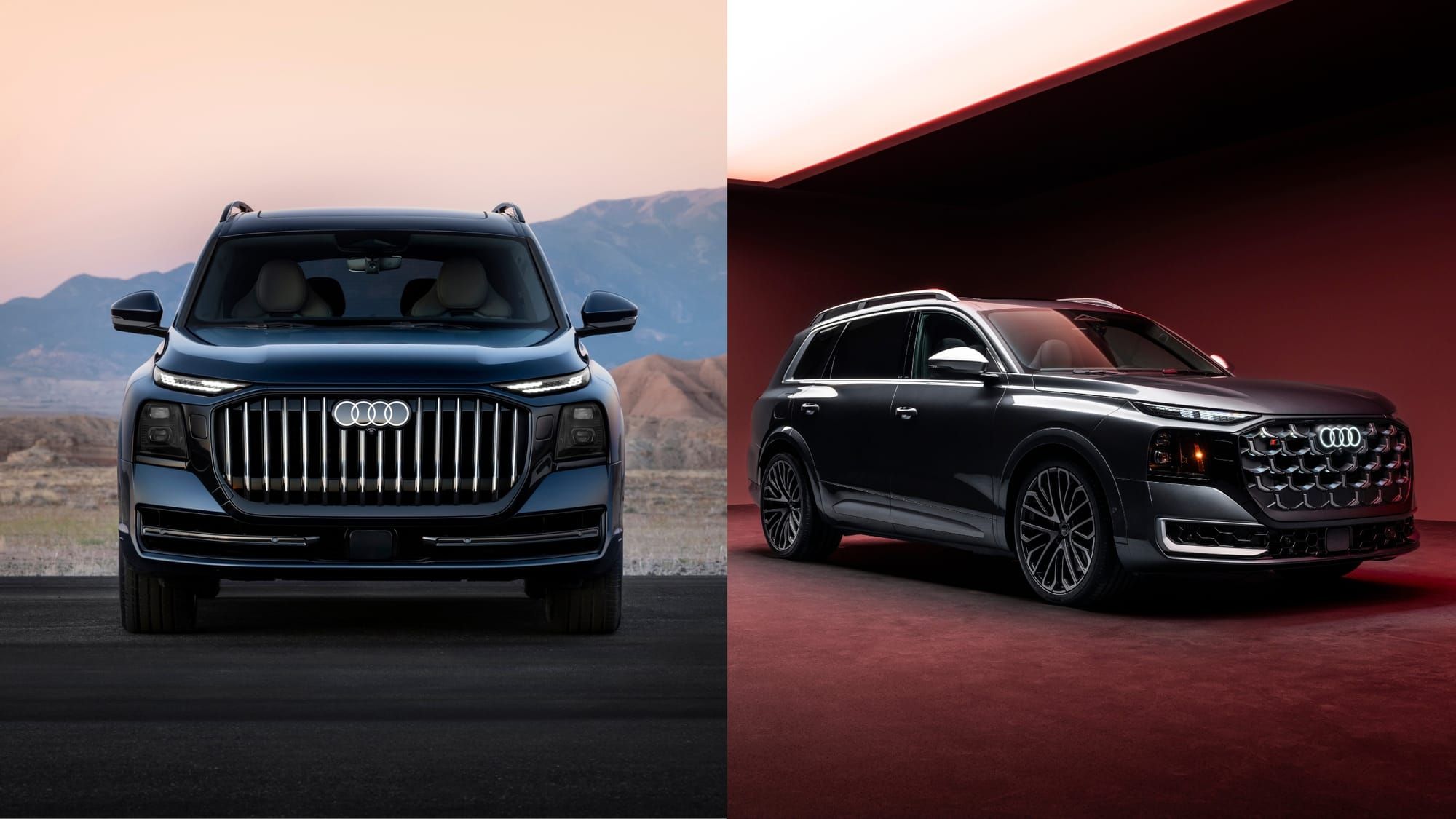
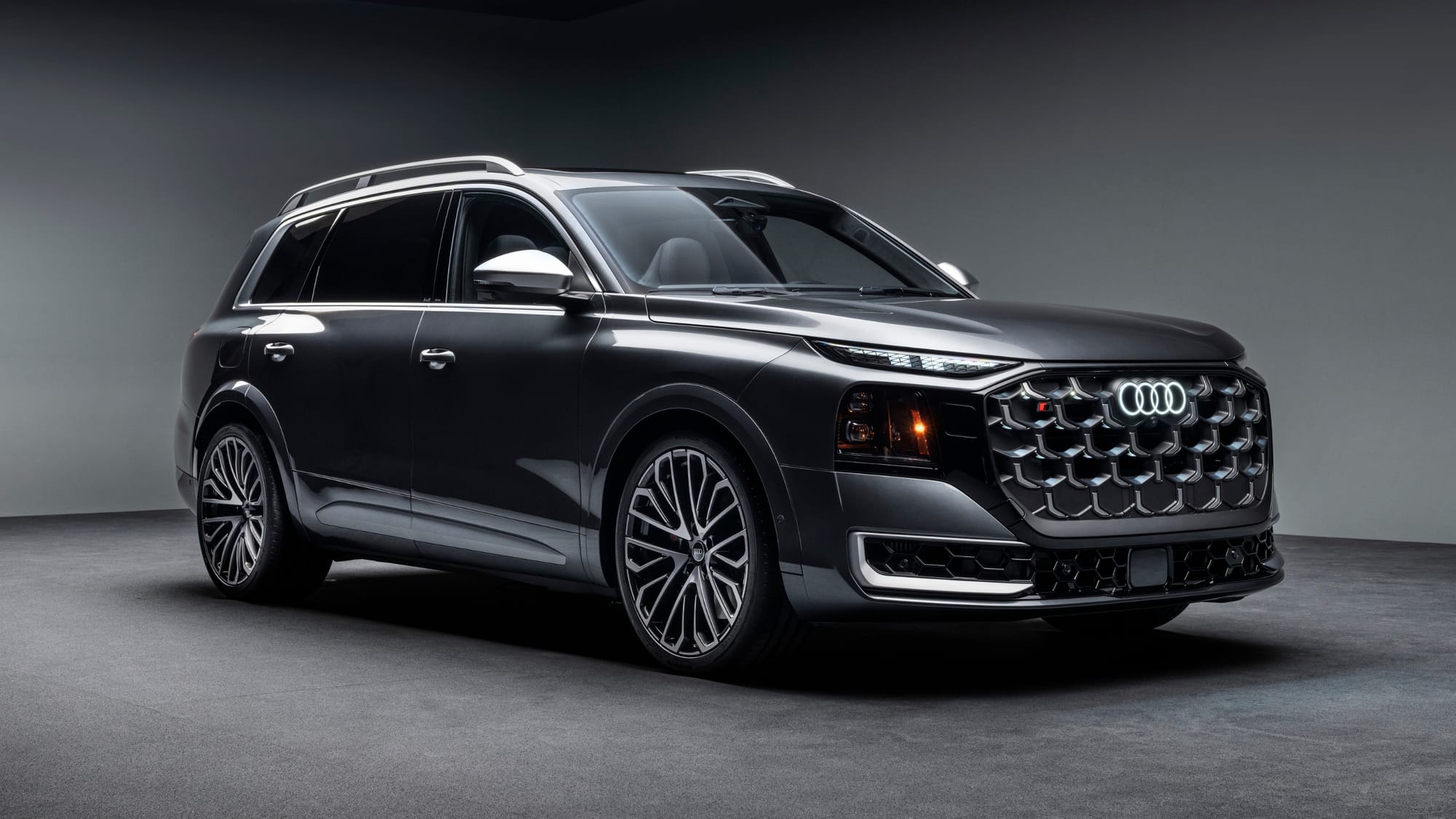
The 2027 Audi Q9 and SQ9 are Audi's new flagship models. The Q9 and SQ9 sit at the top of the lineup above the Q7 and SQ7, and are the largest vehicles Audi has ever built. The SQ9 is the performance halo, swapping the Q9 V6 for a 591 horsepower V8.
Audi positions their new flagship family to compete with the BMW X7, Mercedes-Benz GLS, Cadillac Escalade, and Range Rover. The Q9 and SQ9 were built with the US market in mind, with CEO Gernot Döllner saying American requirements sat at the center of development, and that a full-size SUV was the loudest request from the brand's US dealers. North America is expected to take about two-thirds of Q9 production from the plant in Bratislava.
Audi says the Q9 redefines the comfort and elegance expected from a flagship SUV, and it builds that case around the cabin. Döllner has framed it as part of a shift toward the in-car experience, calling modern cars mobile living spaces rather than just transportation. According to Audi, the Q9 and SQ9 are built for buyers who want a prestigious flagship SUV with effortless performance.
The Lineup
The Q9 comes in Premium, Premium Plus, and Prestige trims, all powered by the 2.9-liter V6. The SQ9 is powered by a 4.0-liter V8 and offered in a single loaded specification. Both share the same platform, cabin, and most of the technology, with the SQ9 adding performance hardware and its own trim.
A Bigger, Smoother Design
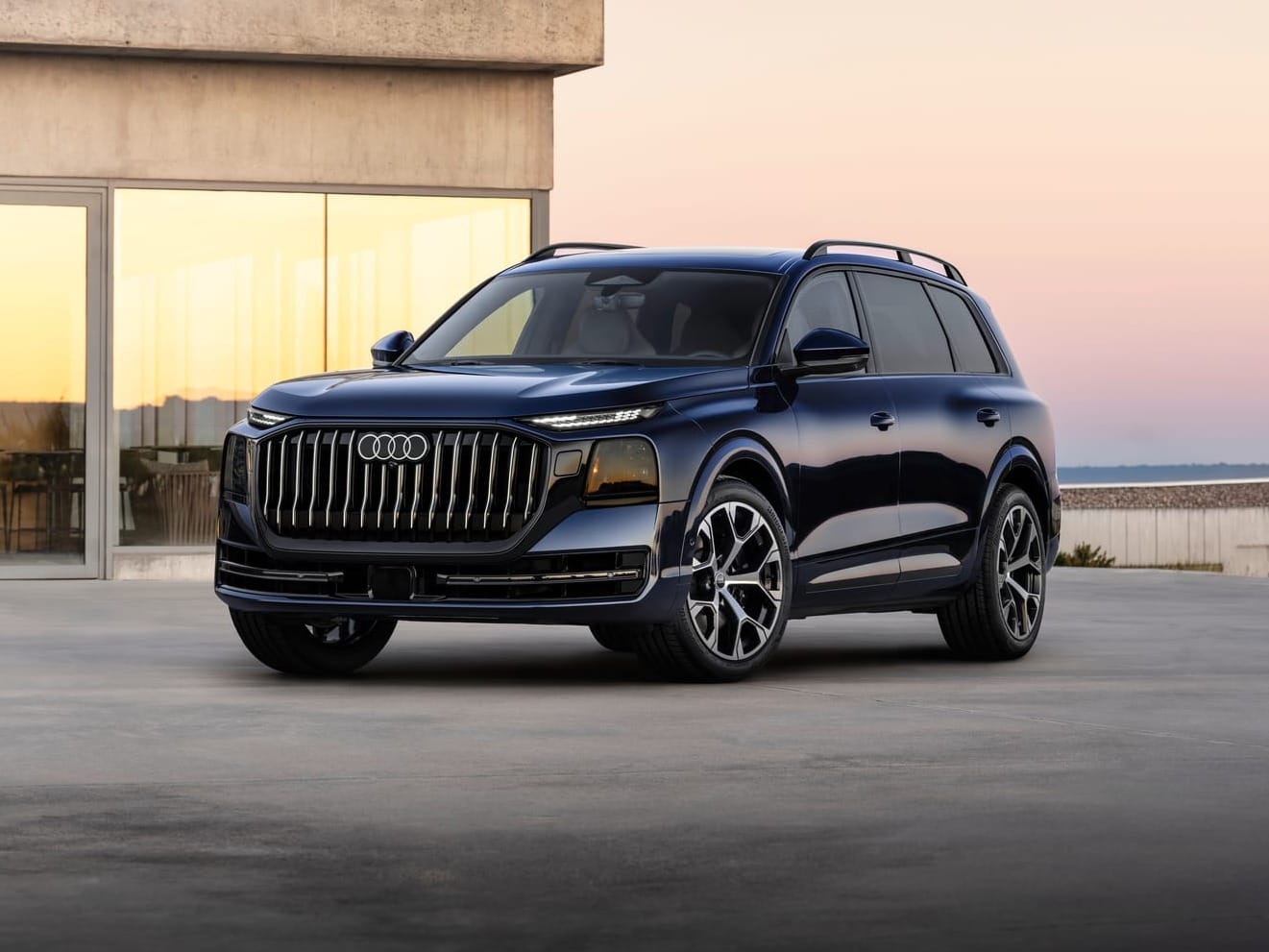
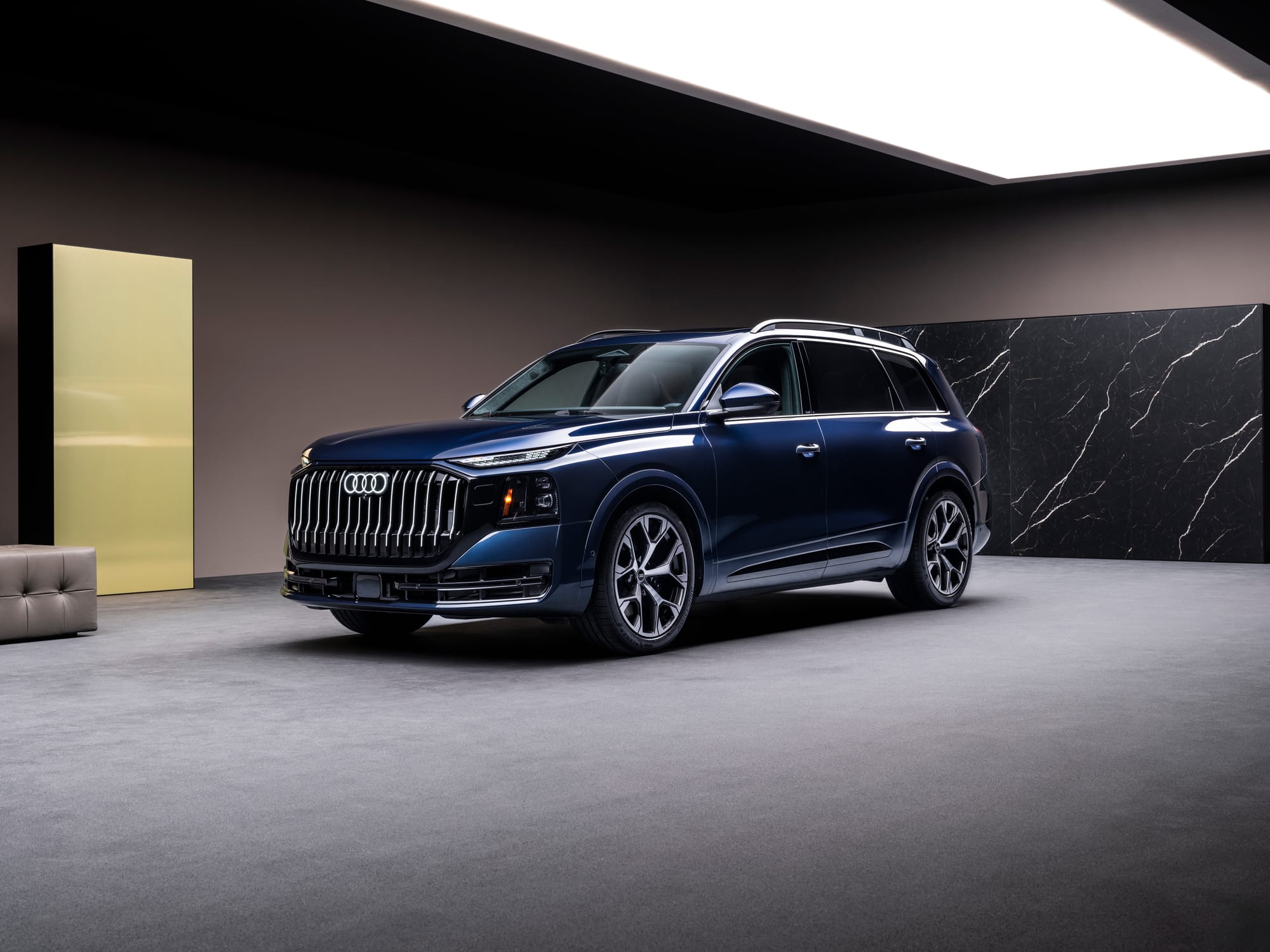
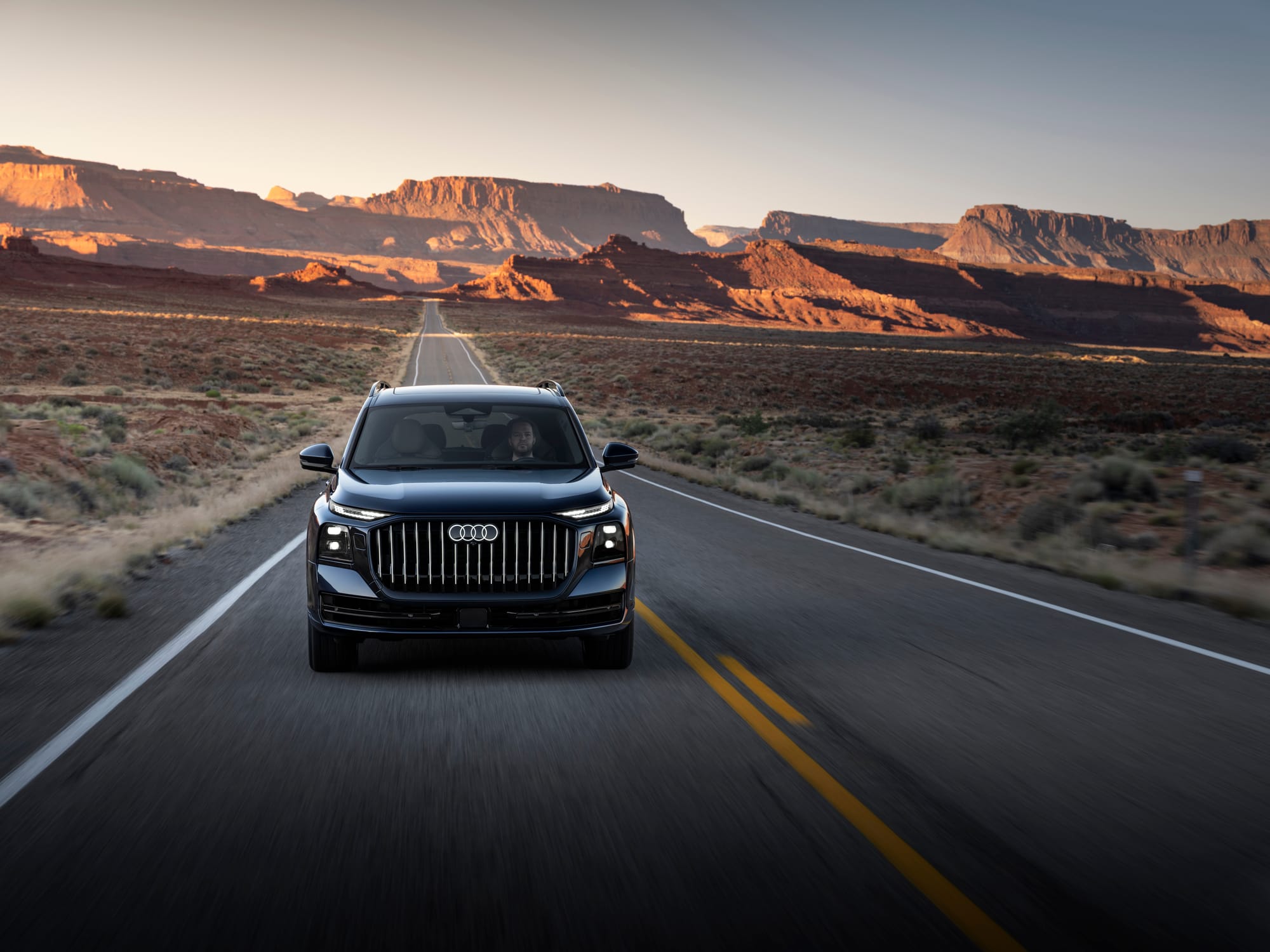
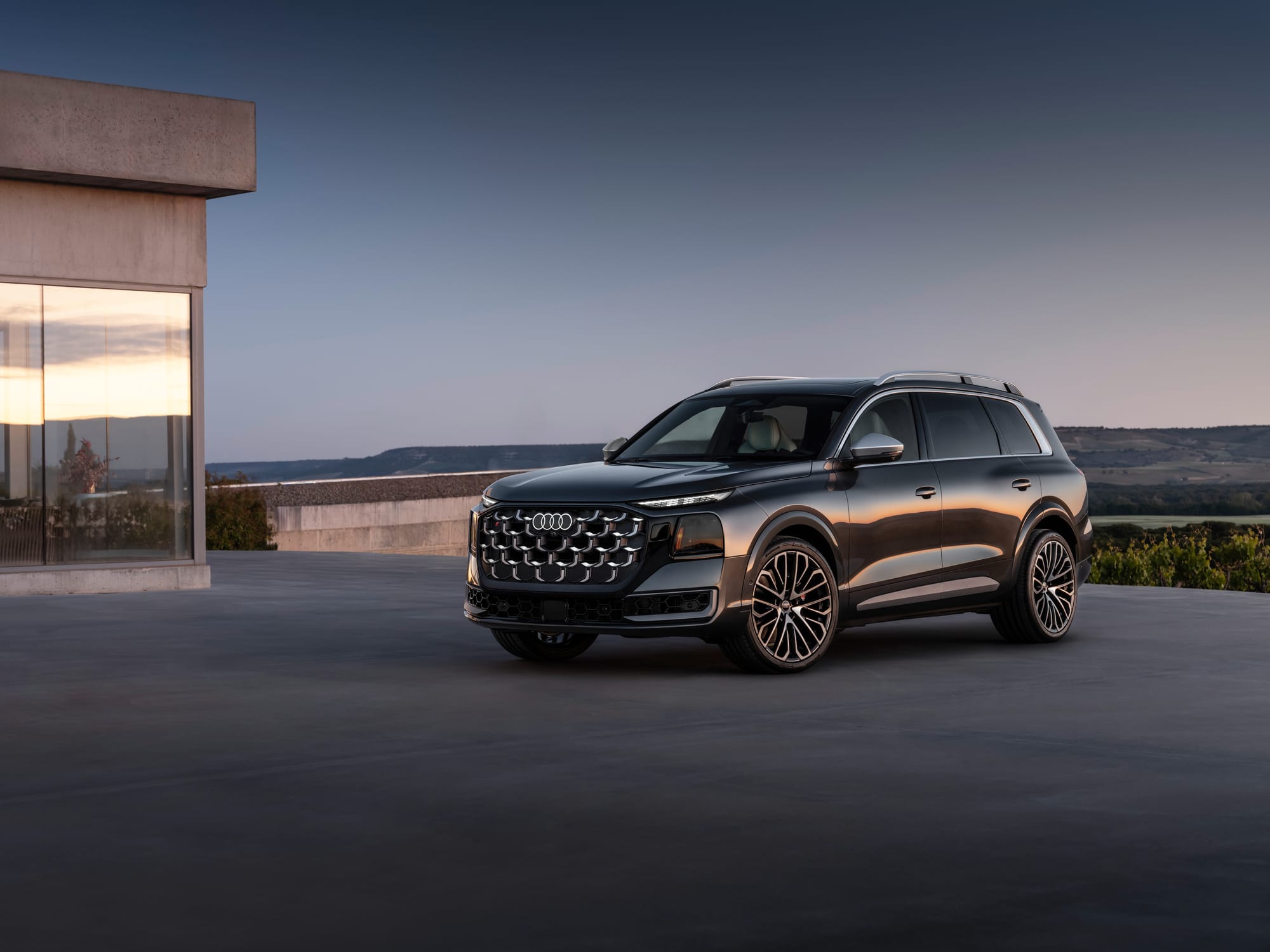
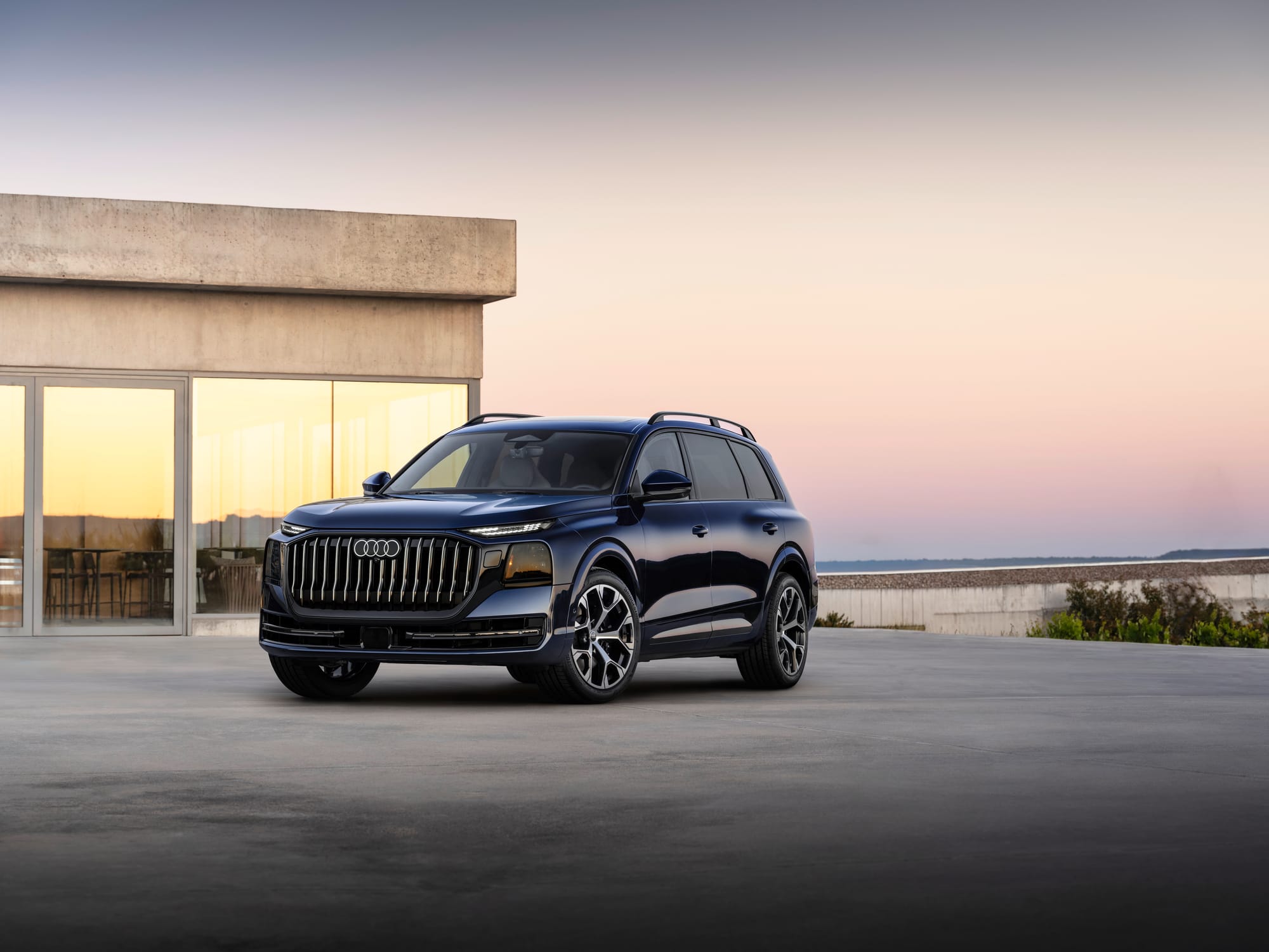
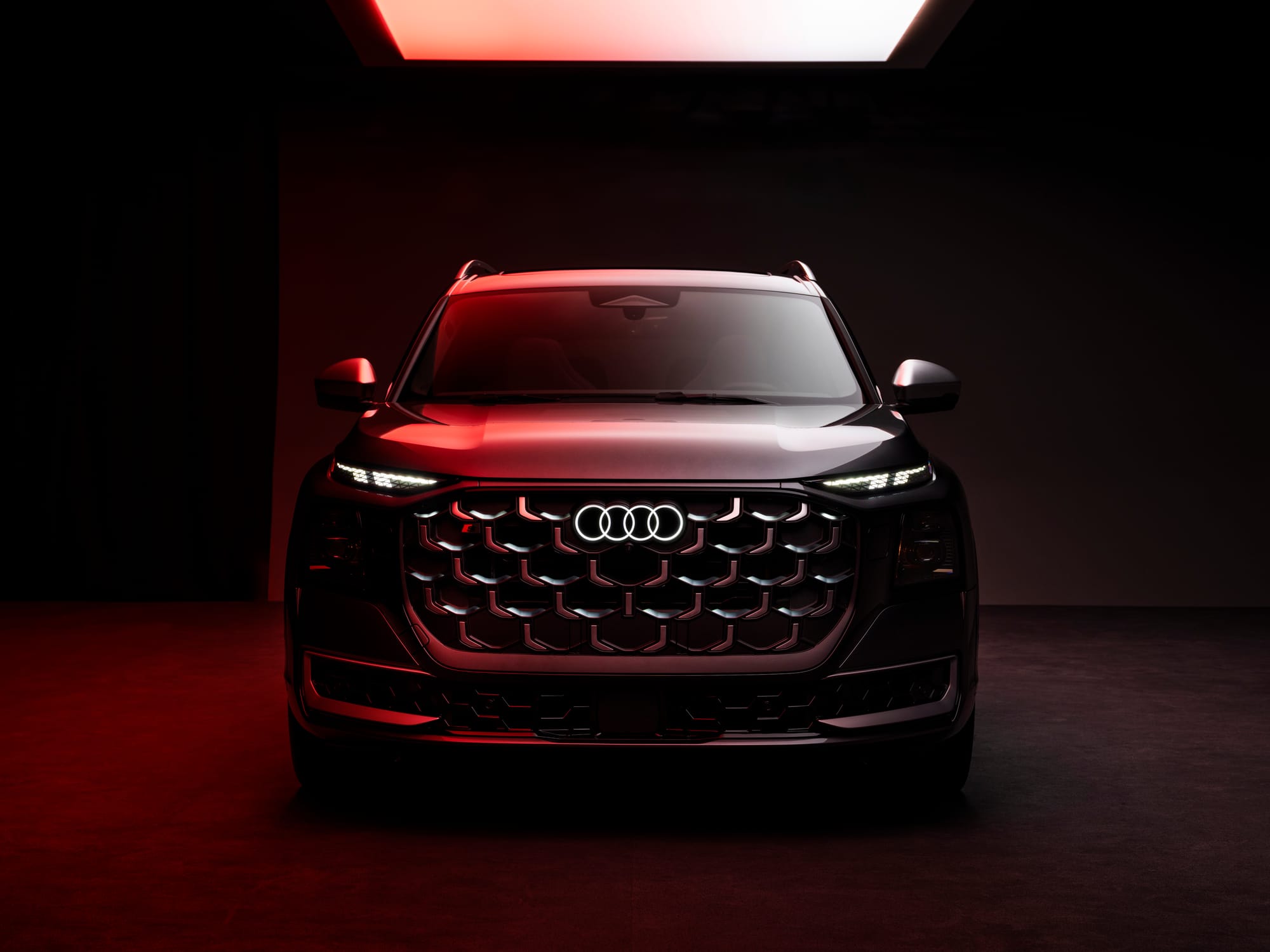
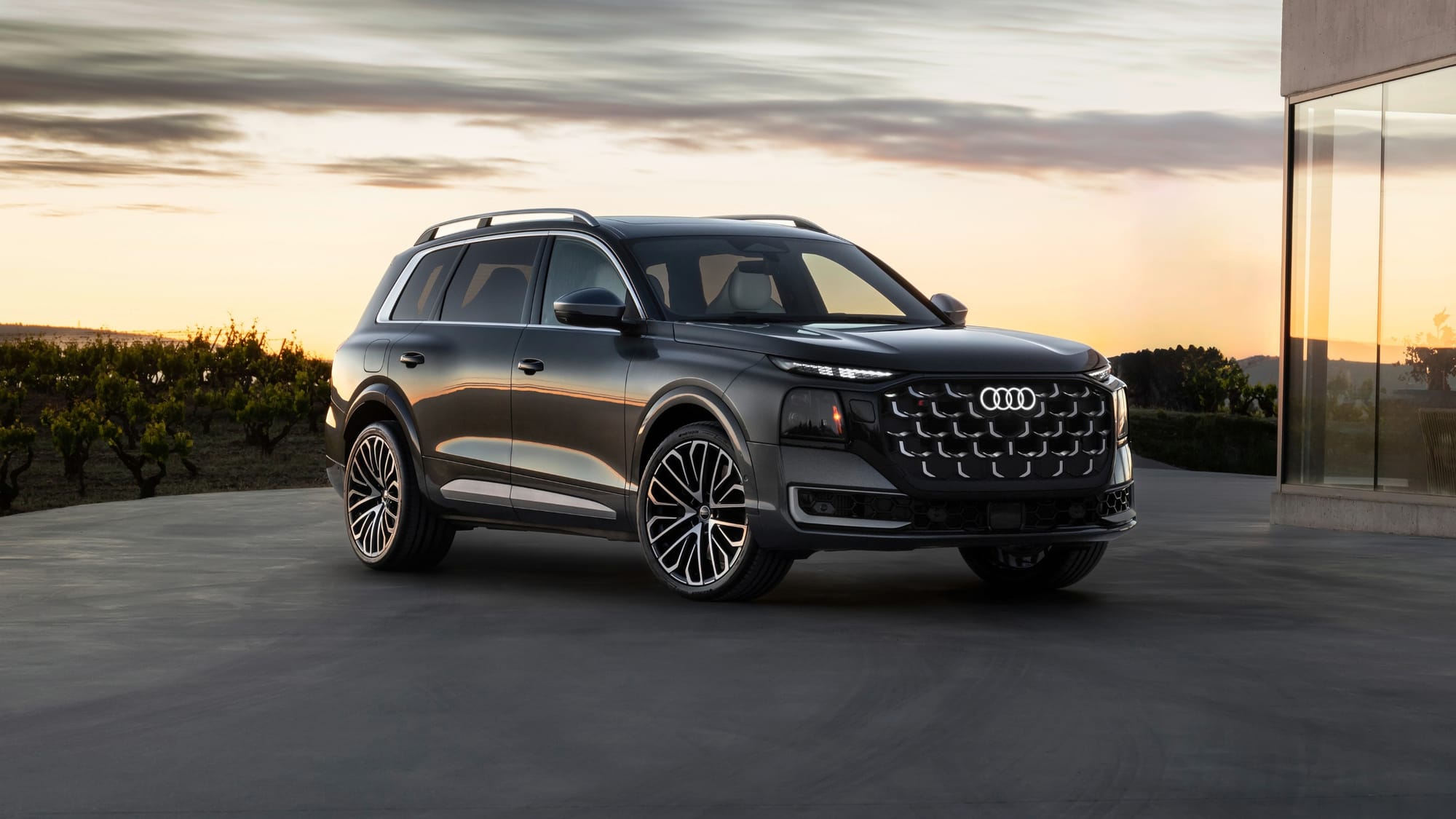
The Q9 is 208.9 inches long, nearly 10 inches longer than the Q7 it sits above. Its 123.5-inch wheelbase is almost 6 inches longer, and it stands 2.8 inches taller. Audi went with calm, muscular surfaces instead of its usual sharp creases. The front fascia blends the Singleframe grille and headlights into a single black mask, and the grille sits lower than on smaller Audi SUVs to add height and presence.
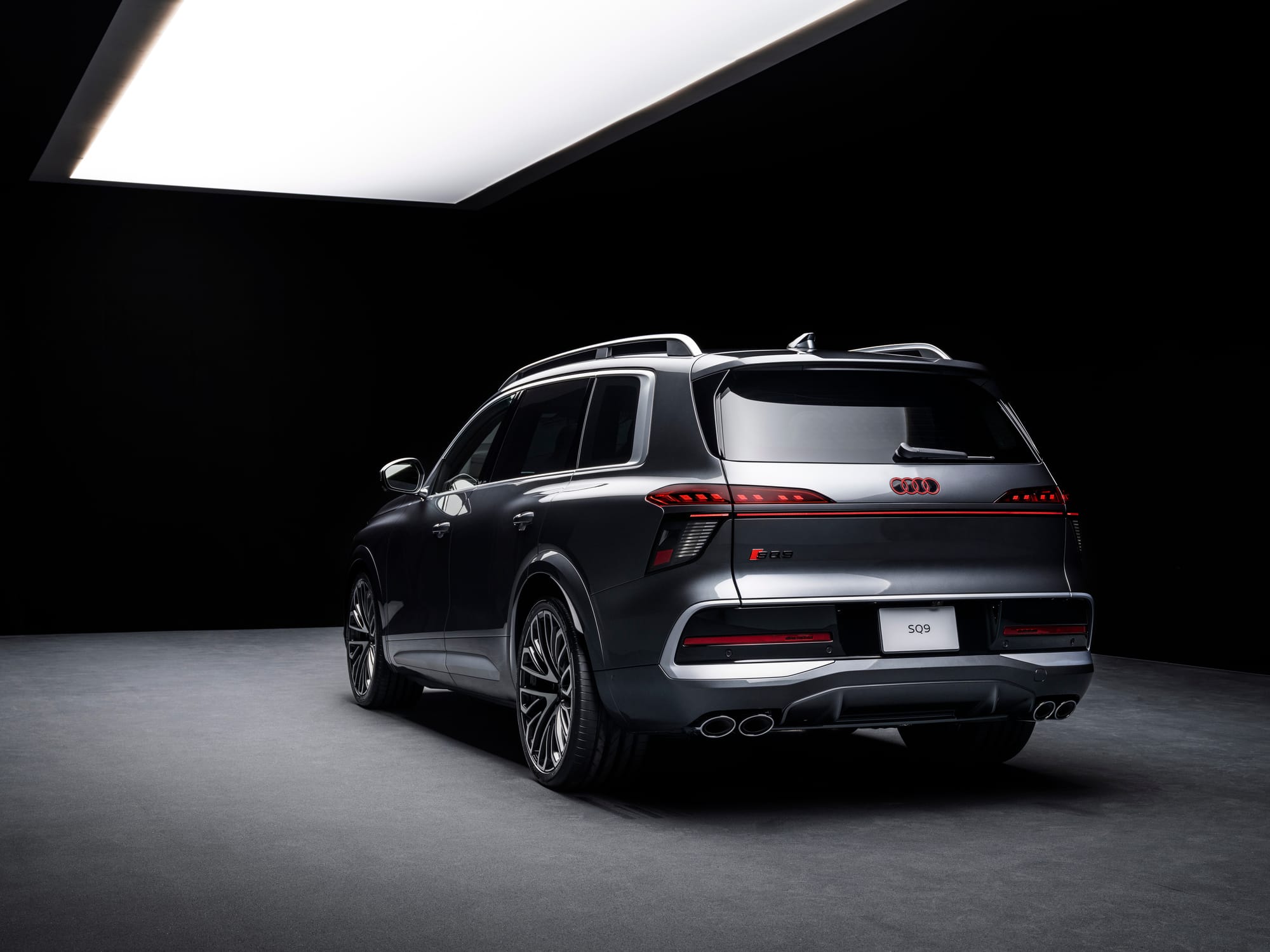
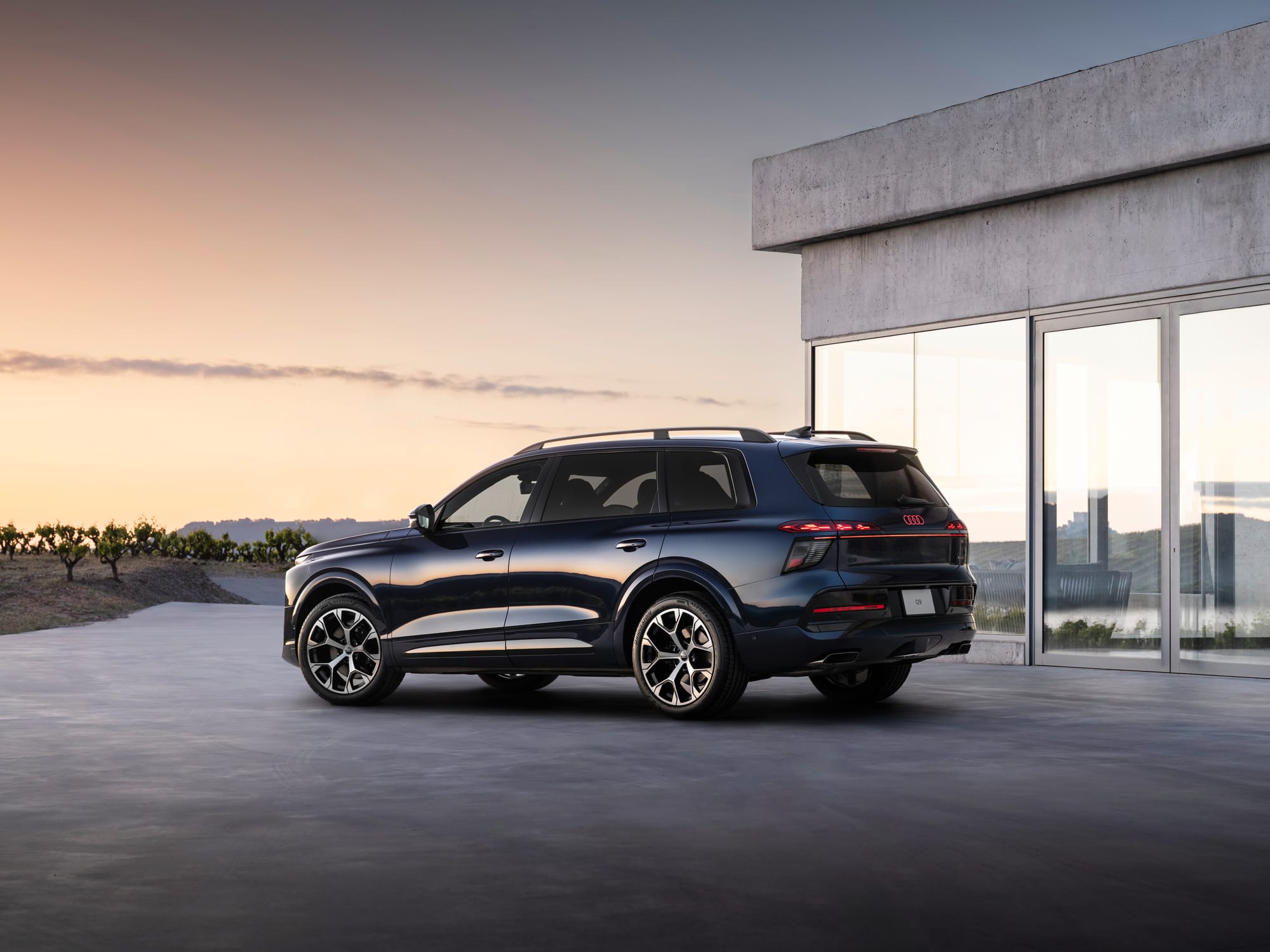
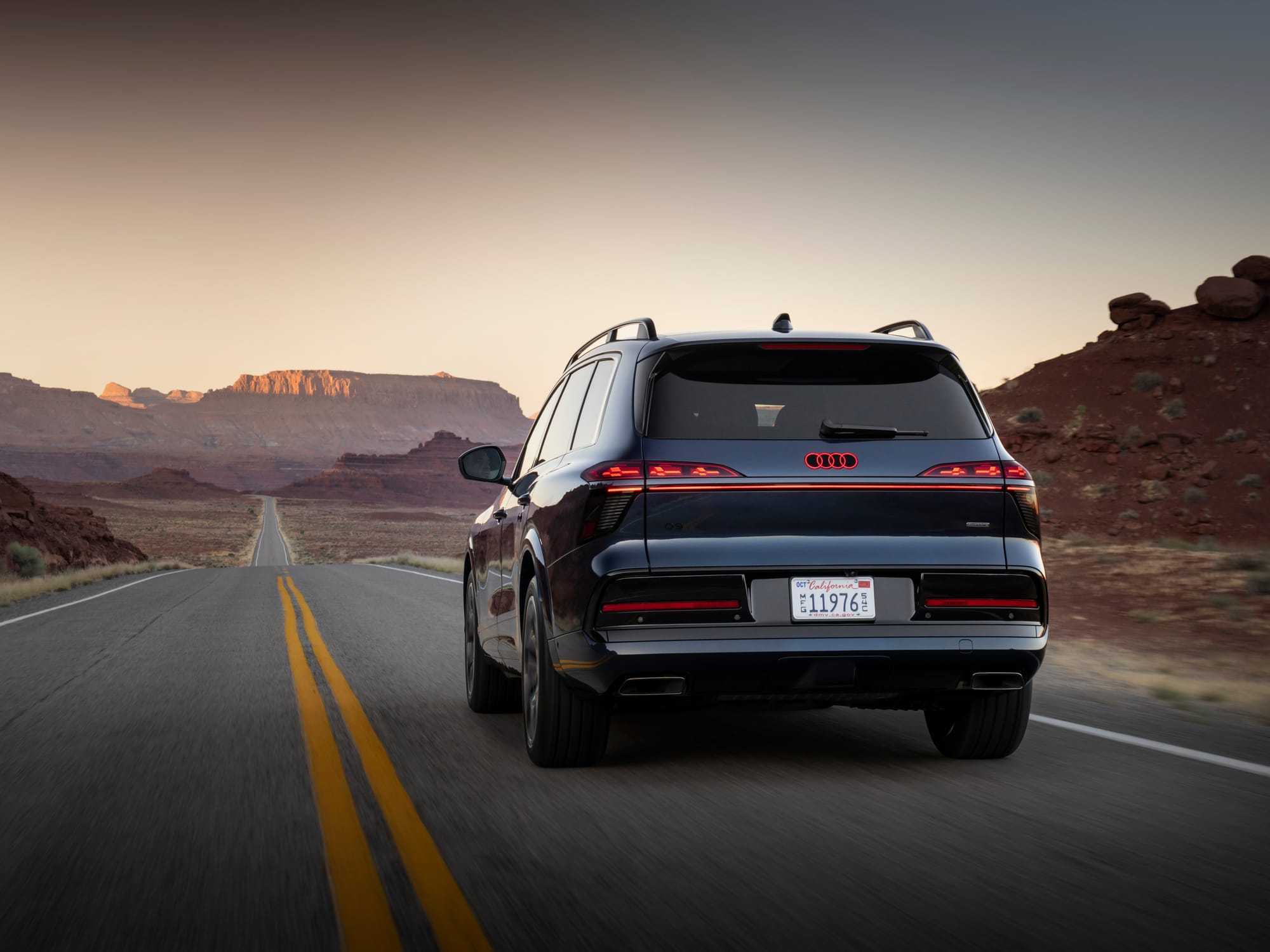
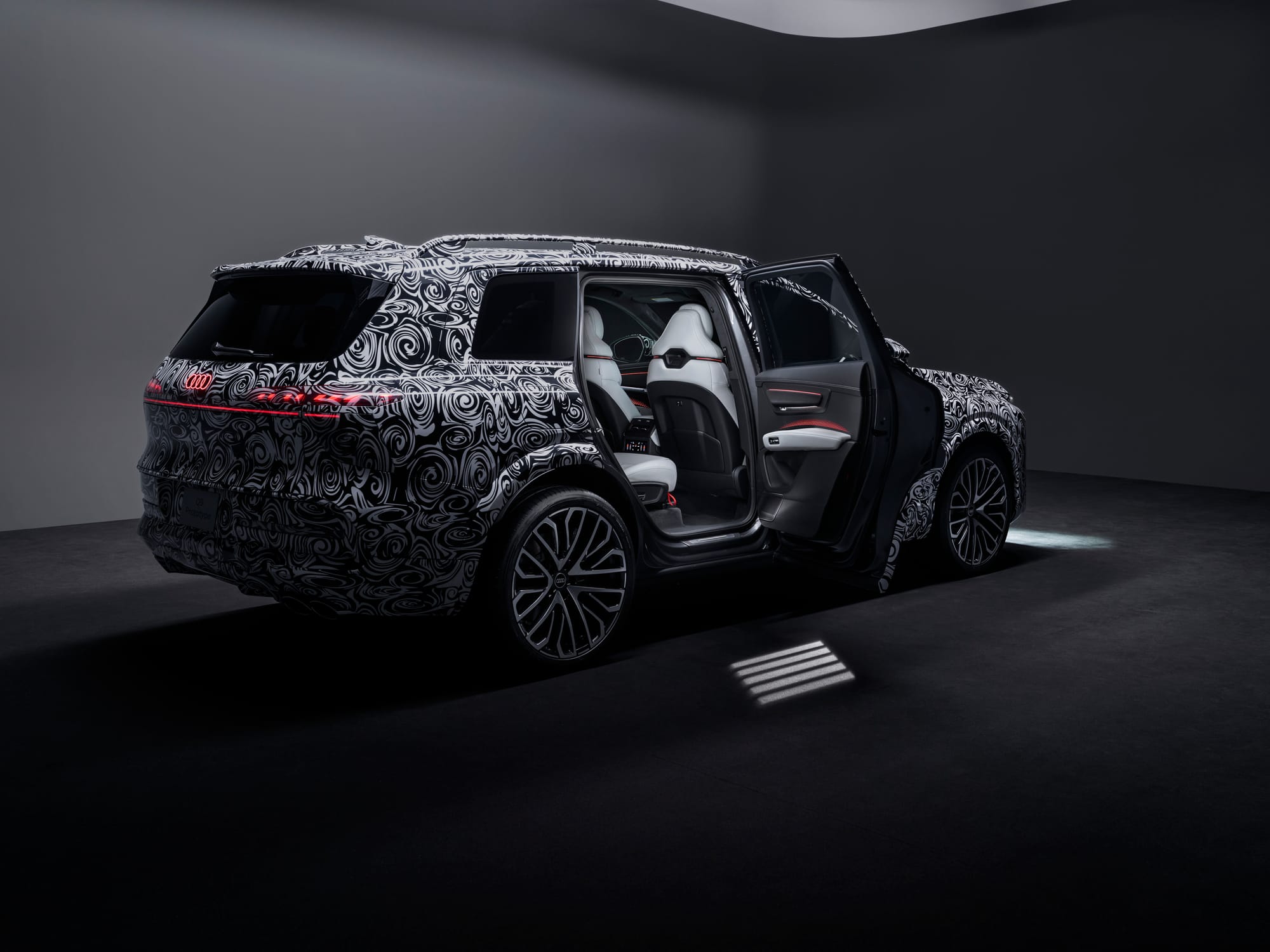
At the rear, the tailgate is left clean with the plate low on the bumper. Illuminated Audi rings front and rear are standard on every US model, and an available lighting package adds an illuminated Singleframe grille and ground projections at the doors.
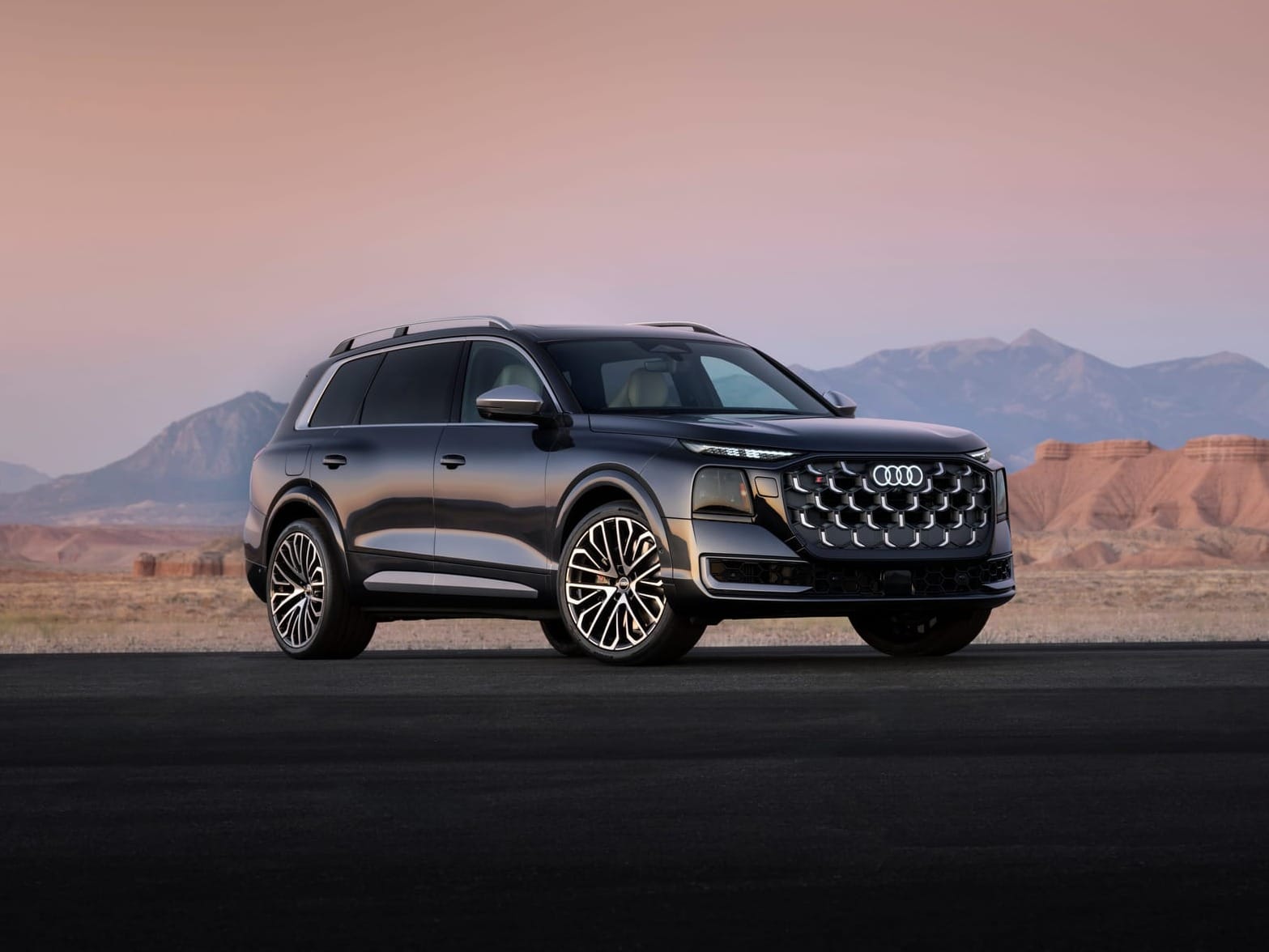
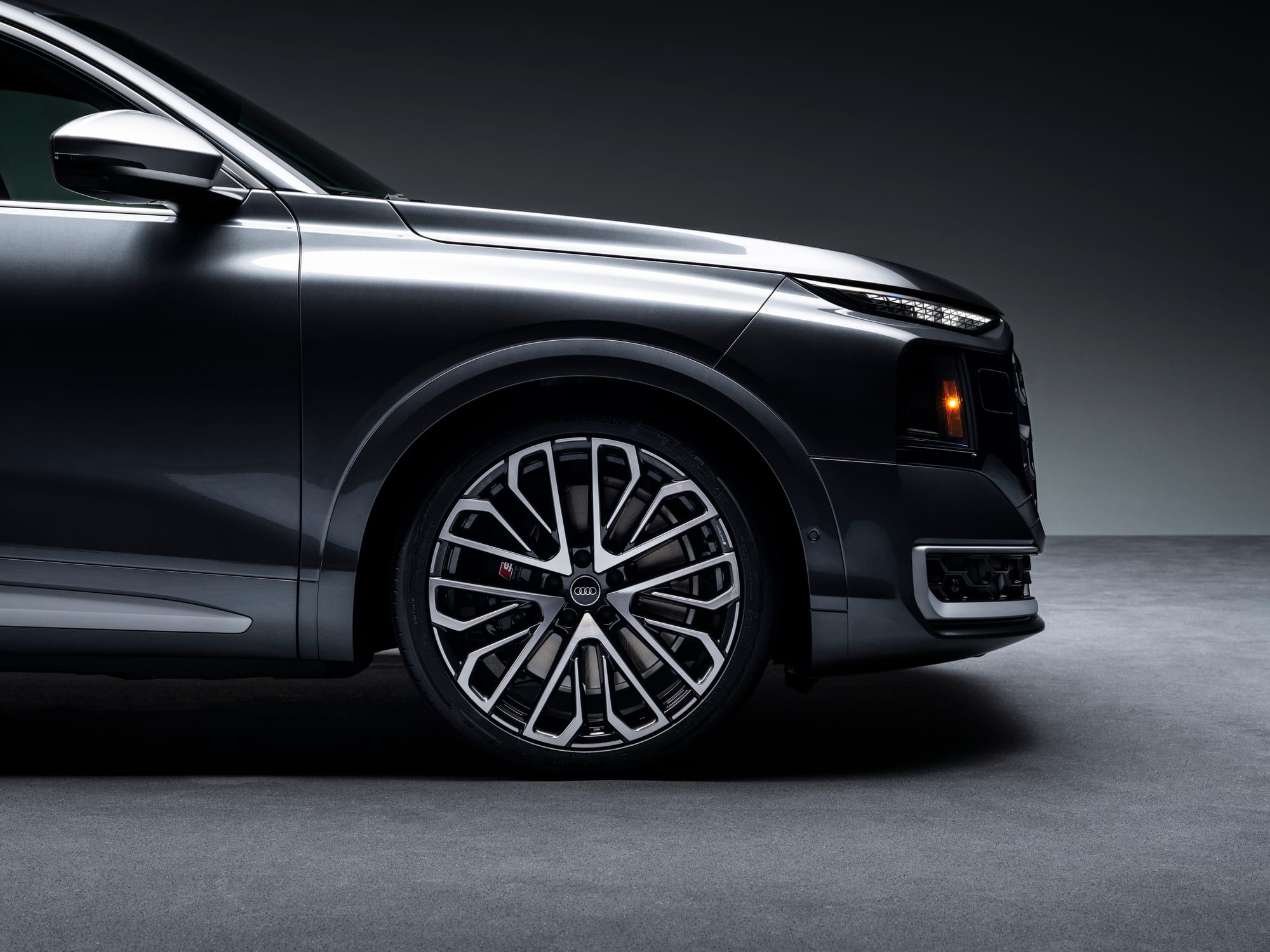
The SQ9 pushes the look further with aluminum exterior accents, a hexagonal grille pattern, flared fenders over its wider rear track, quad exhaust outlets, and a more pronounced two-tier rear spoiler. Its three sportiest wheel designs run up to 23 inches.
Room for Seven and Their Luggage
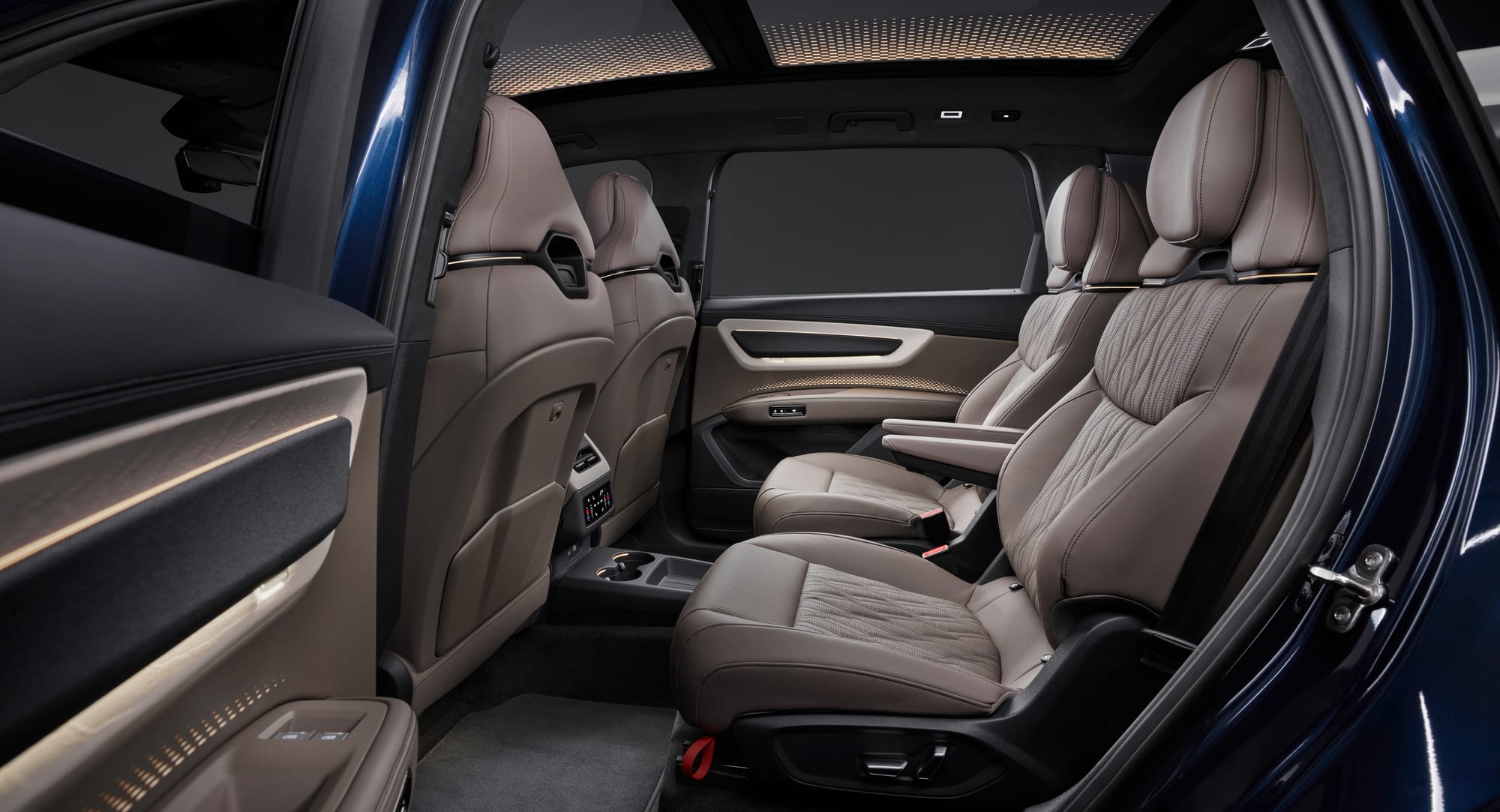
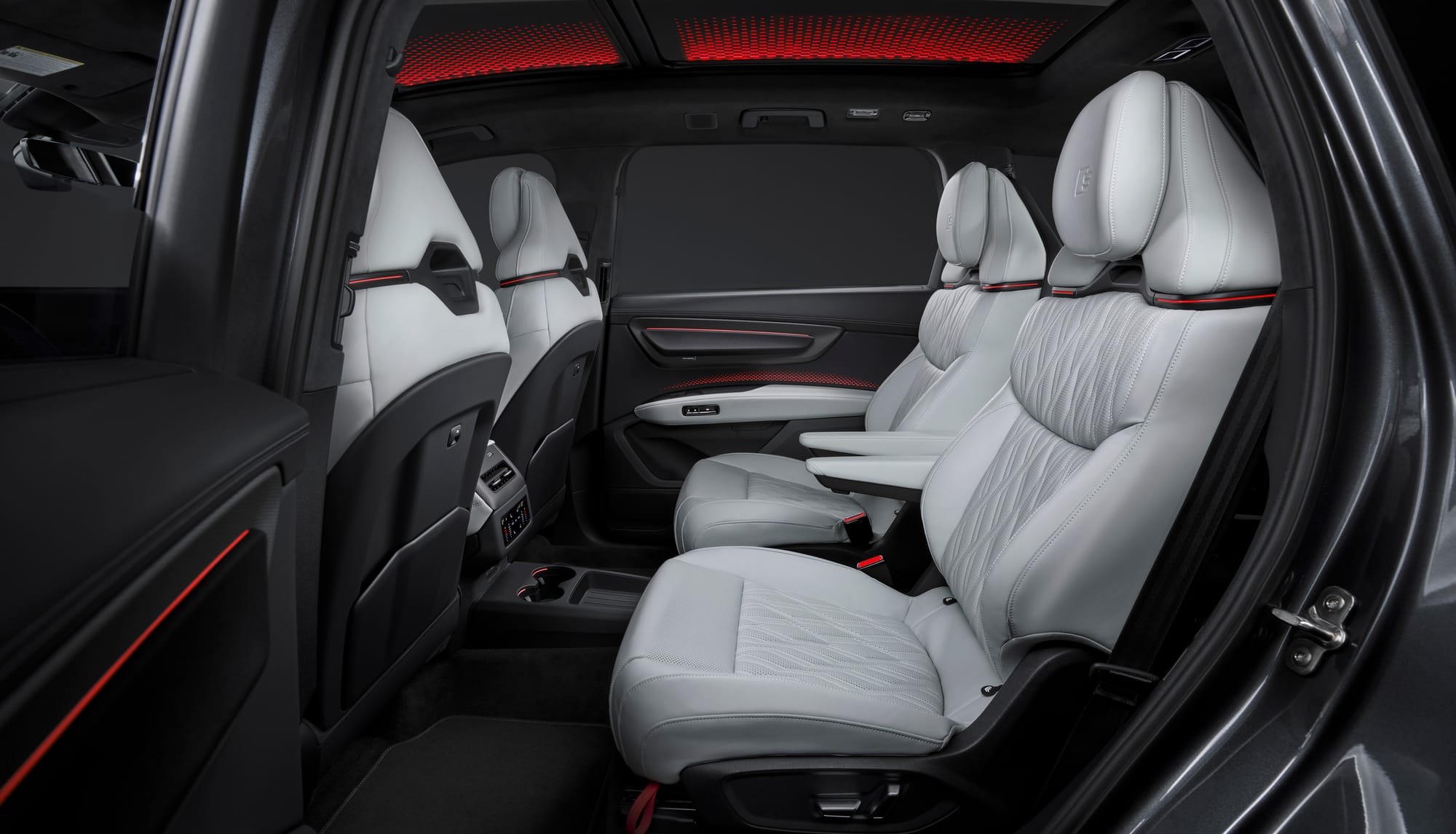
Both models seat seven in a 2-3-2 layout. An optional six-seat setup swaps the middle bench for power captain's chairs, which also ease access to the third row. Audi built the family around adult-usable space in all three rows, pushing the second row rearward and stretching the overhang for knee room.
The second-row seats slide and tilt forward without pulling out a forward-facing child seat. On seven-seaters, the second row splits 35/30/35, with LATCH anchors at all three positions, so three child seats fit side by side. The third row adds two more anchors.
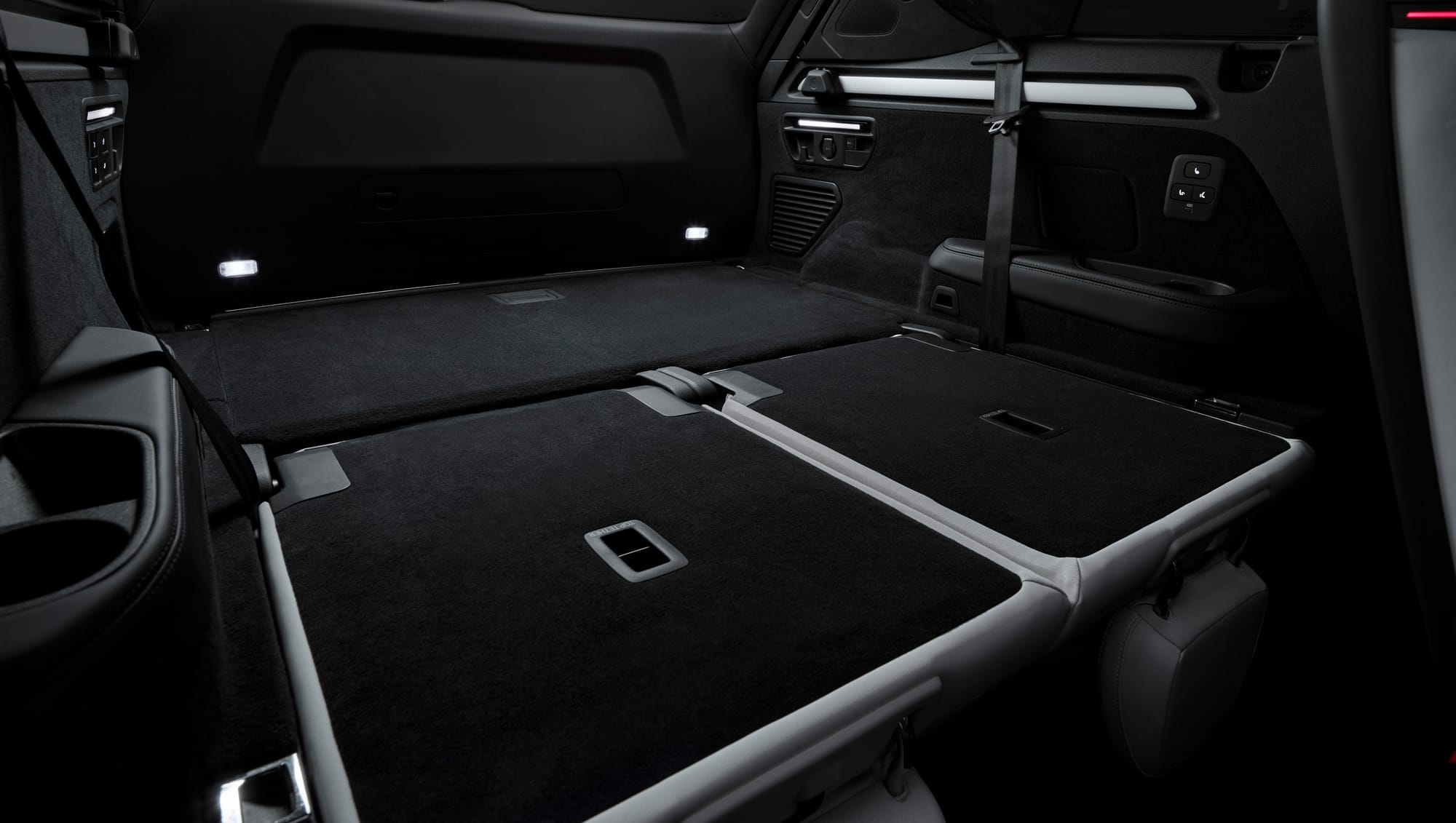
Behind the third row, there is 19.3 cubic feet of space. Fold the second and third rows flat, and it grows to 87.7 cubic feet. That lands between the Mercedes GLS 450 at 84.7 and the BMW X7 at 90.4. In the trunk, an aluminum rail system with sliding hooks secures cargo, and buttons in the rear doors and cargo area fold the seats flat.
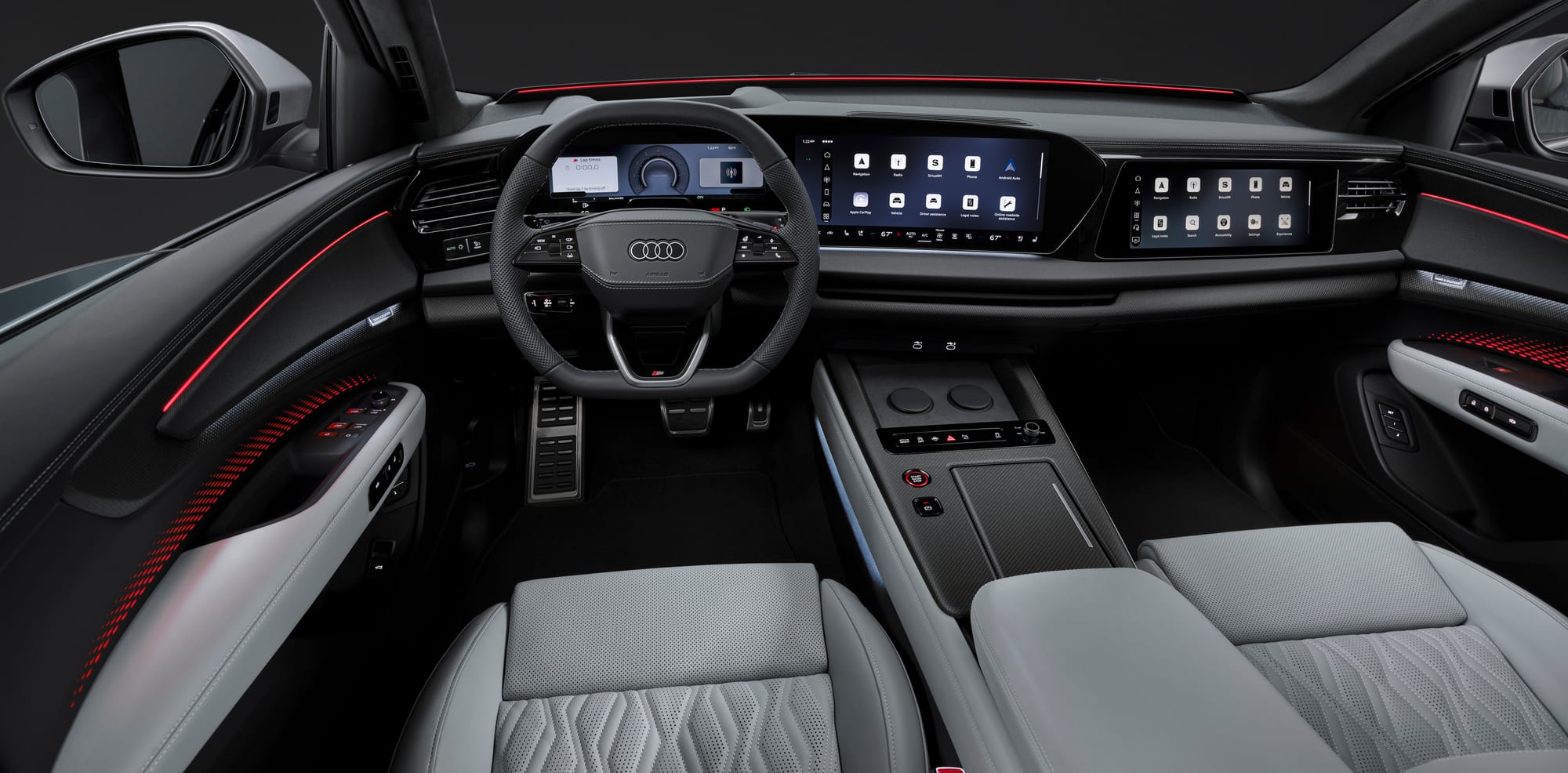
2027 Audi Q9 and SQ9 Cabin
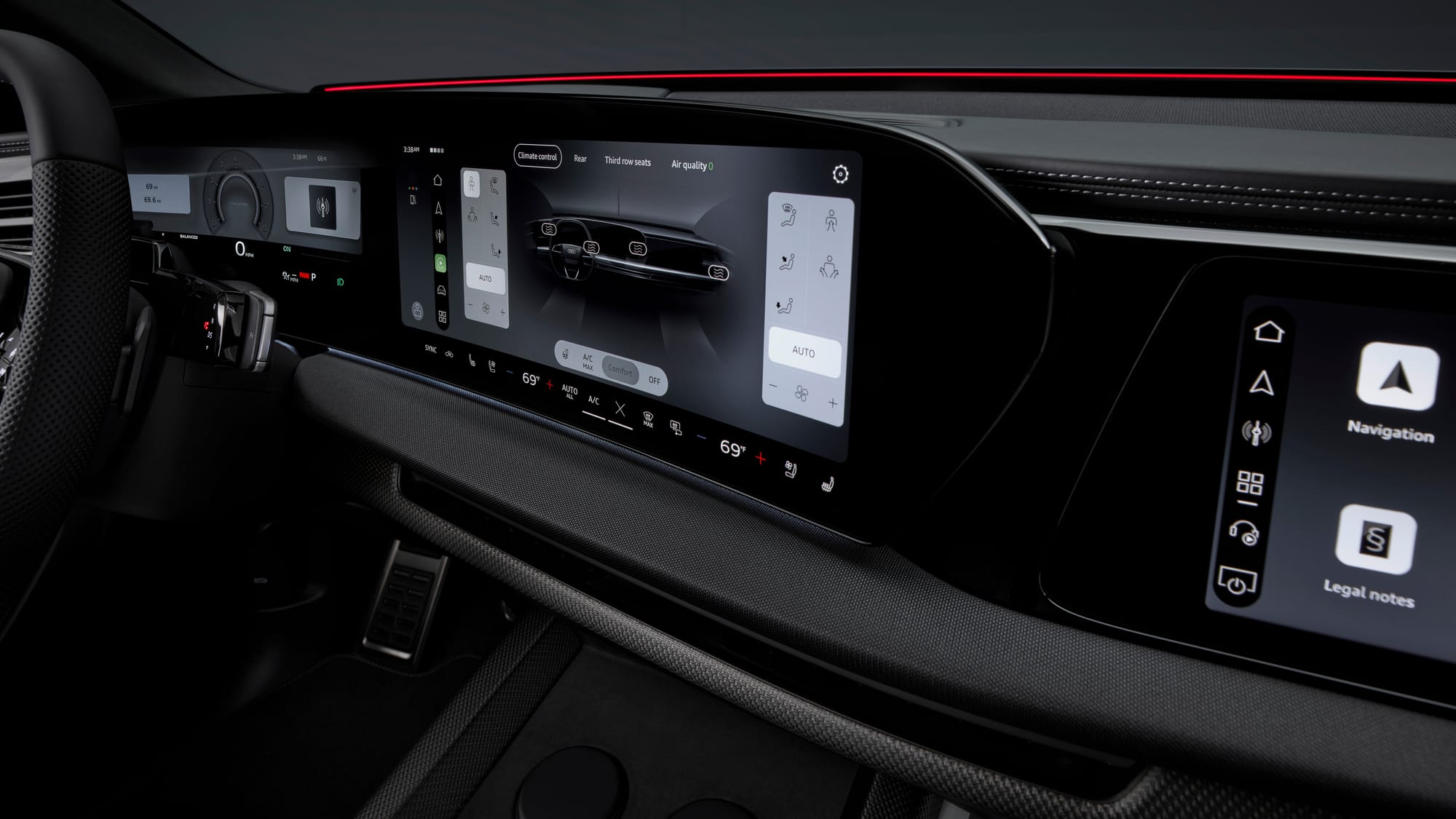
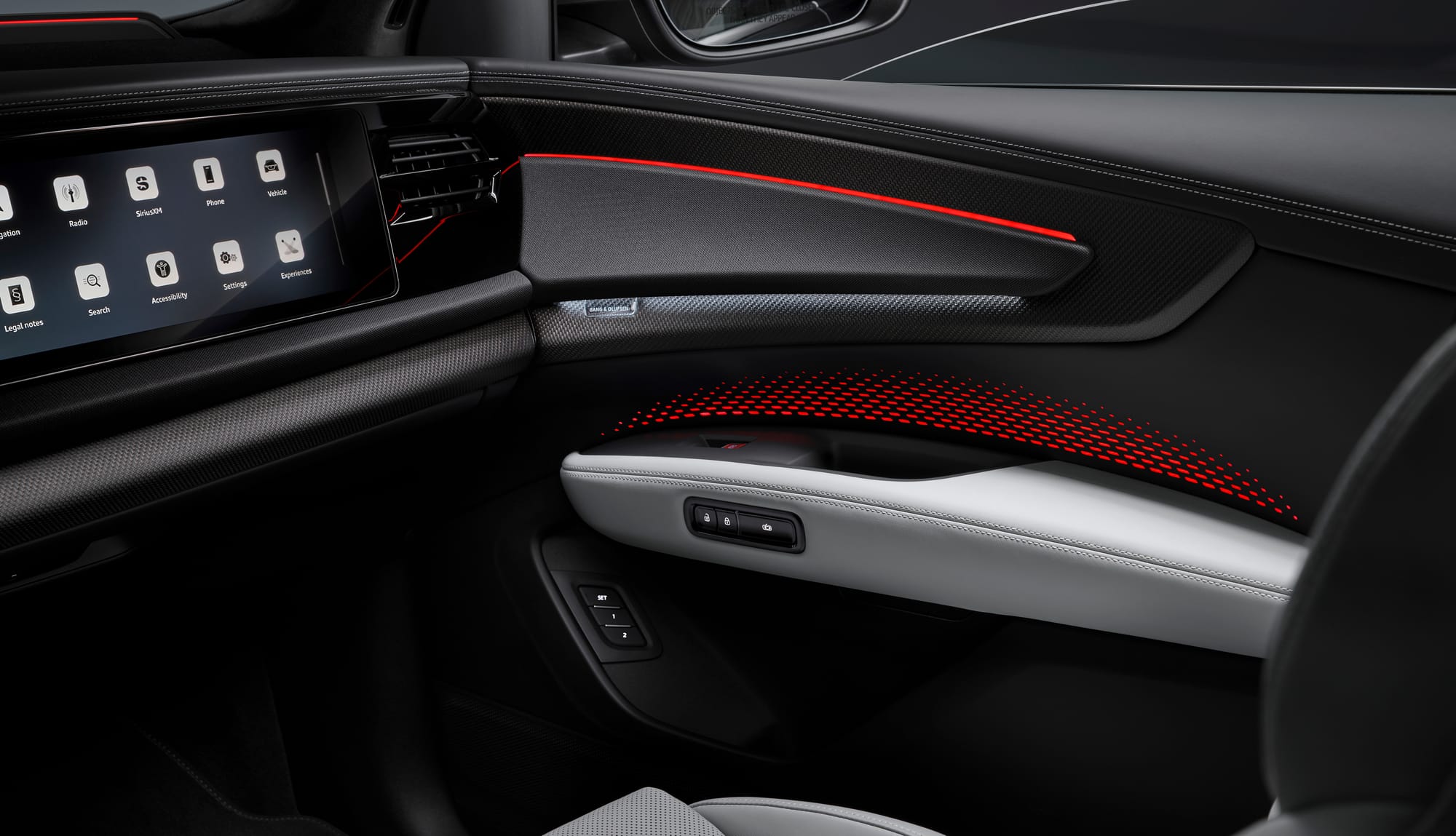
Audi calls the interior a lounge, and it centers on the Digital Stage, a continuous display that runs from the driver's Virtual Cockpit through a 14.5-inch central touchscreen to a 12.3-inch passenger screen. The passenger screen has its own privacy mode so it will not distract the driver, and it runs its own media or navigation. A head-up display is standard. Voice control runs through the ChatGPT-powered Audi Assistant, with Amazon Alexa also integrated.
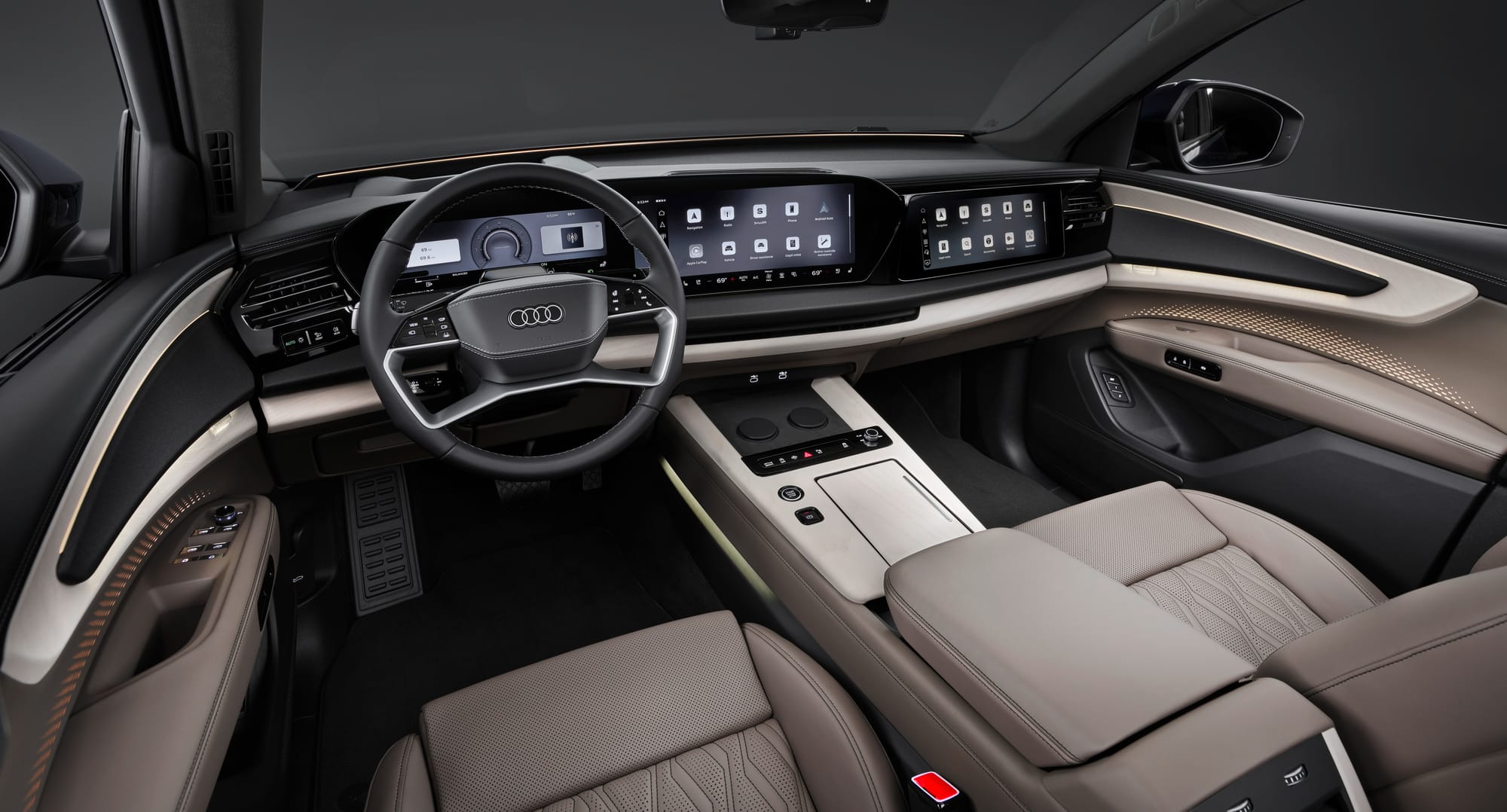
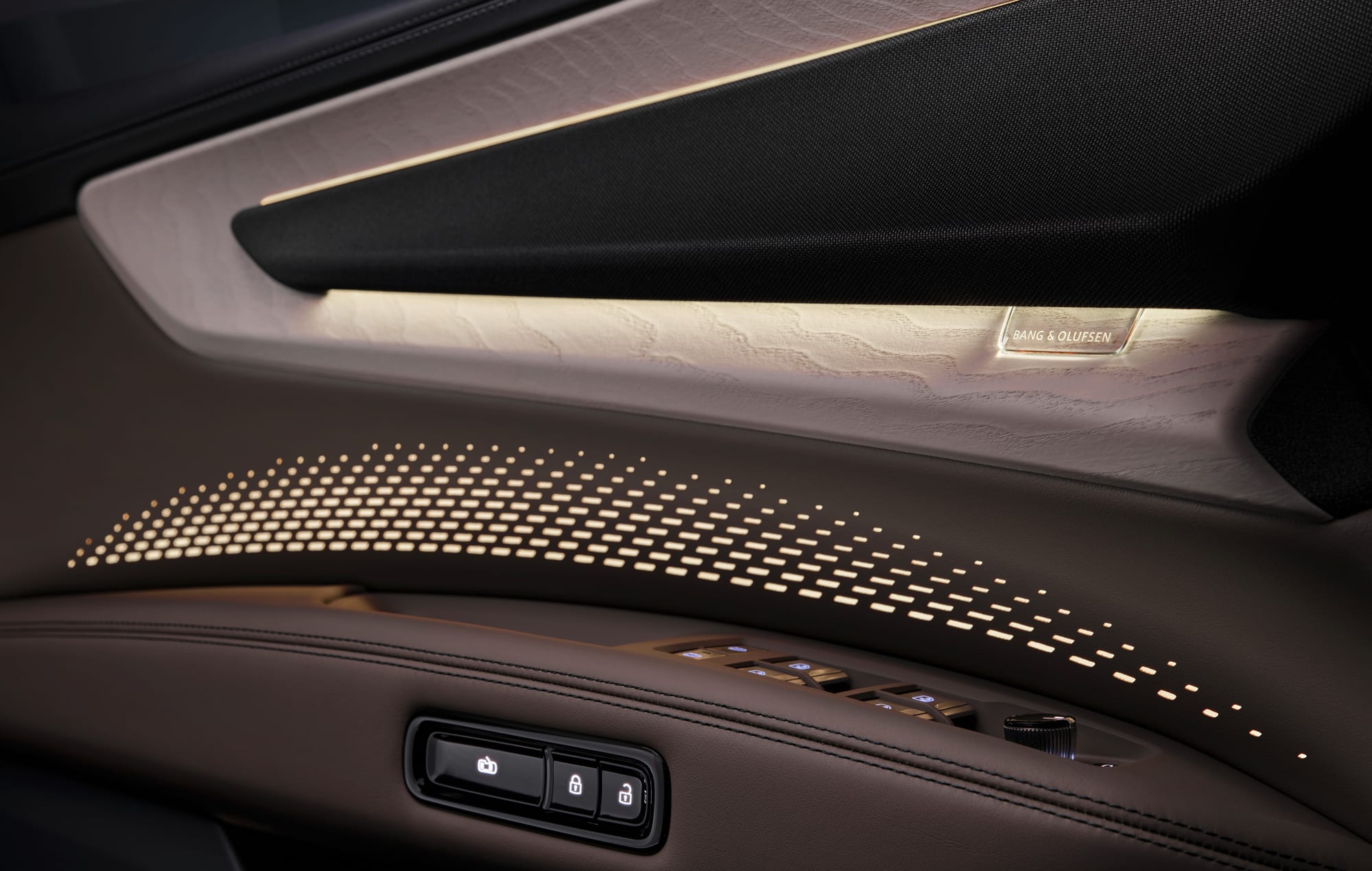
Five-zone climate control is available, with the fifth zone covering the third row. Eight USB charging ports are spread throughout the cabin, and the center console holds a dual wireless charger for two phones, plus oversized cupholders for insulated tumblers. Audi cut back on the fingerprint-heavy piano-black plastic in favor of matte finishes, wood, and Nappa leather. All side glass is dual-pane acoustic glass.
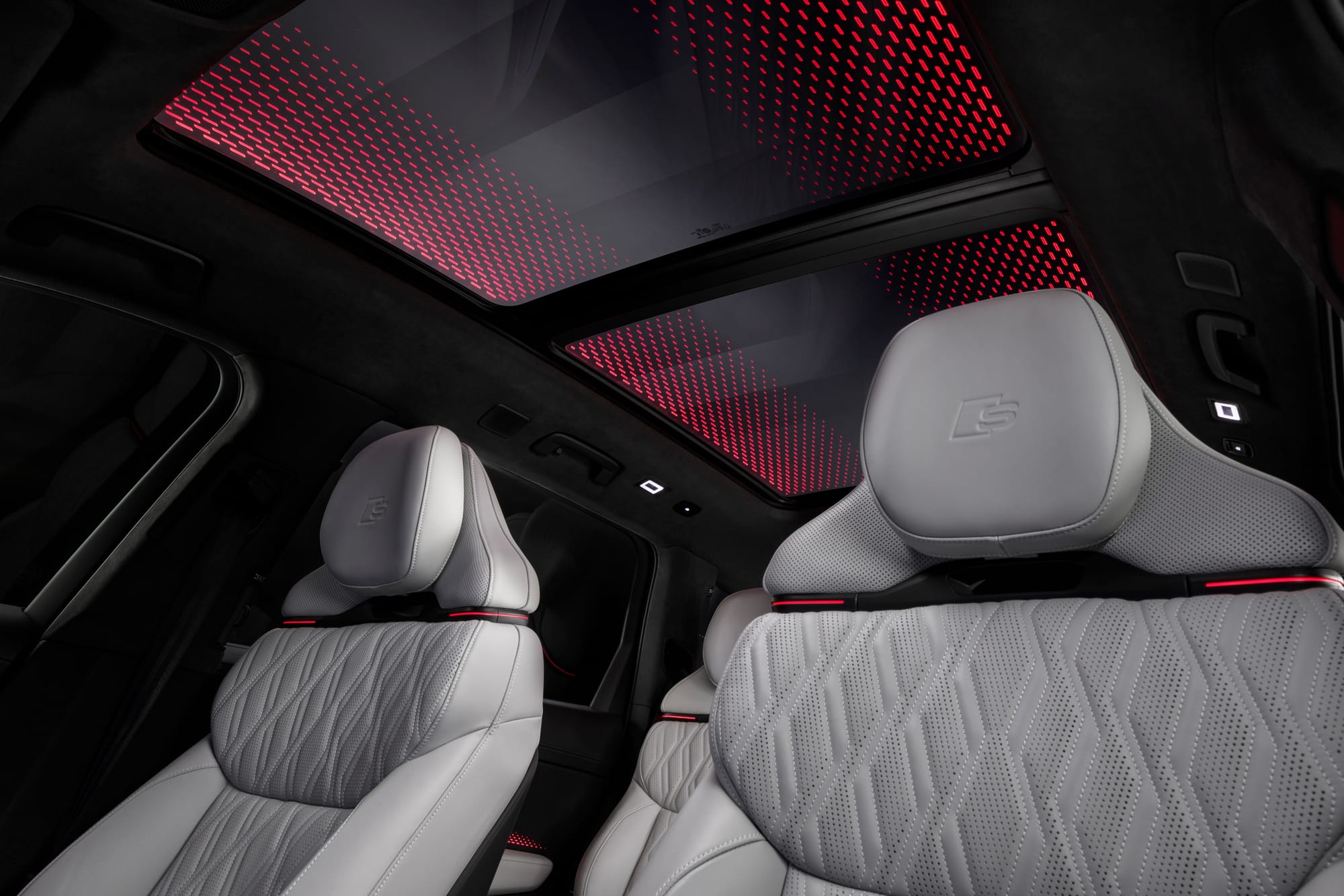
Overhead sits Audi's largest panoramic sunroof, with more than 16 square feet of glass that tilts and slides open. An optional version adds switchable glass, nine segments that dim from clear to opaque on command to double as a built-in shade.
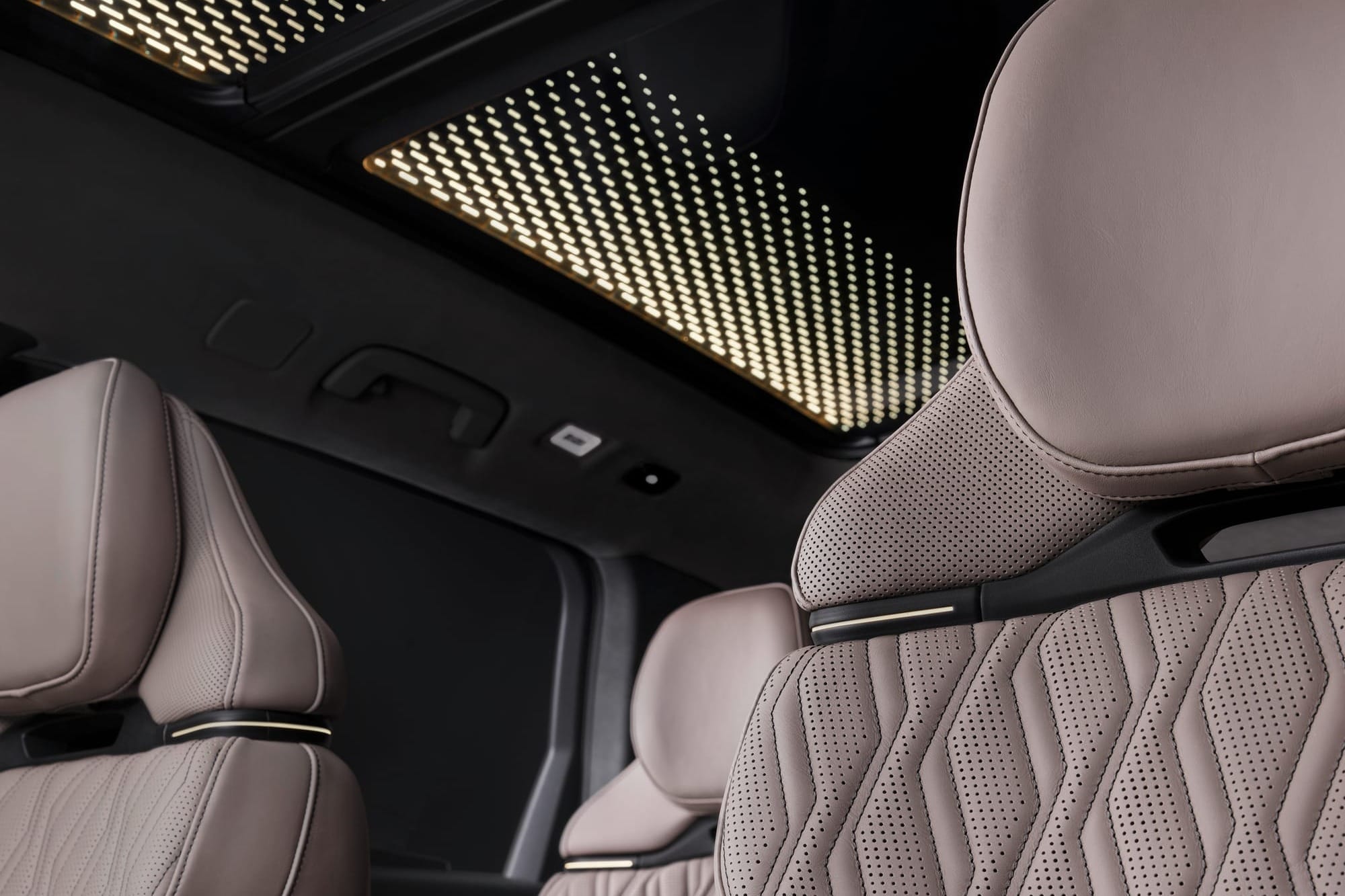
The available Bang & Olufsen 4D sound system is the cabin's highlight feature. It runs a 1,360-watt amp across 24 channels and 22 speakers, plus two actuators built into the front seats that pulse in time with the music, letting you feel the low notes as you hear them. Fraunhofer Symphoria, a spatial audio technology that makes sound seem to surround you rather than come from fixed speakers, spreads the audio across every seat, while headrest speakers keep calls and navigation personal. Preset modes include Concert and Podcast.
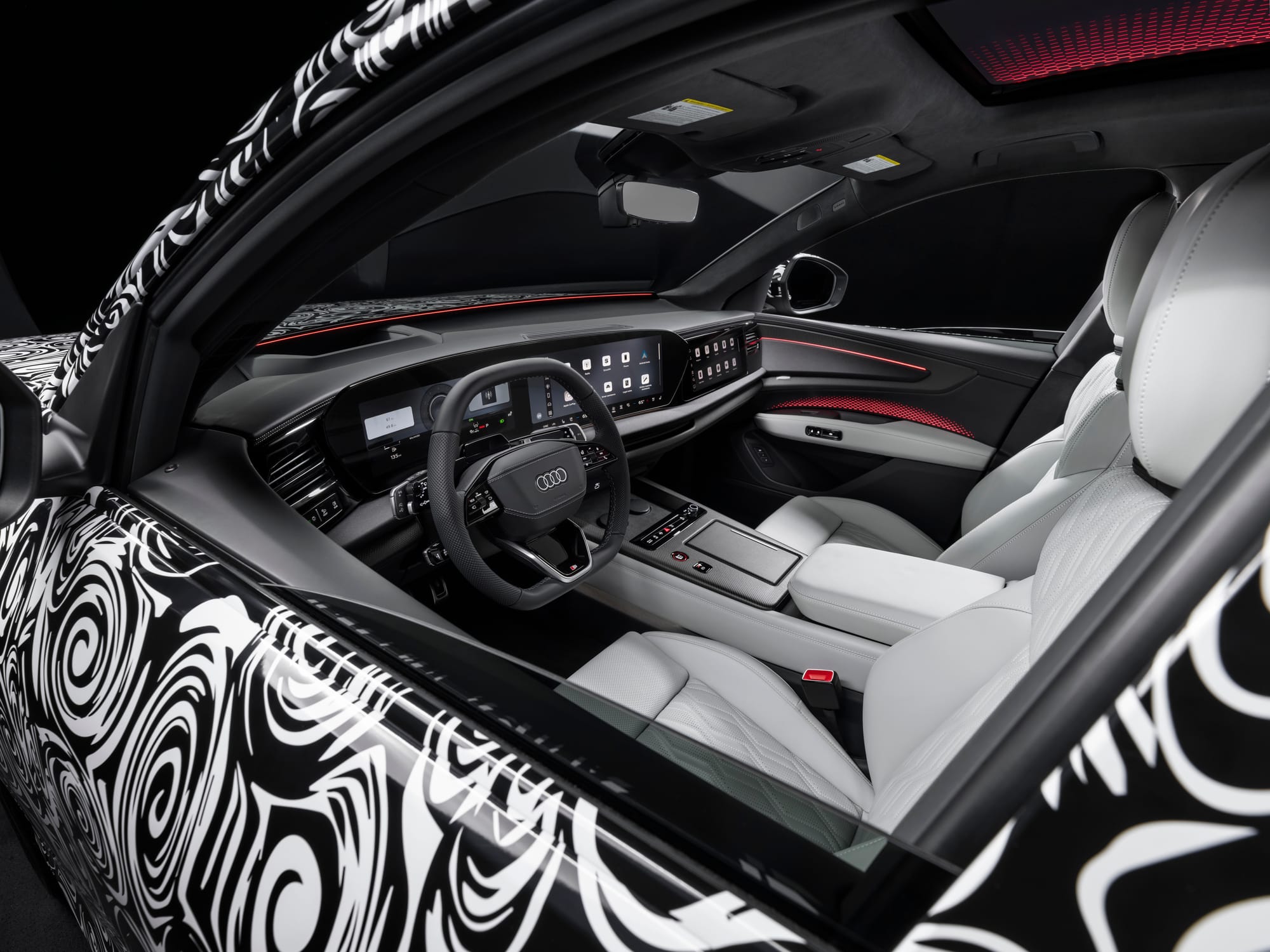
The SQ9 gets heavily bolstered sport seats with welcome lighting, carbon fiber trim, S badging, and optional Arras Red, Pastel Silver, or Baikal Blue leather. Ventilated and massaging front seats are standard on the SQ9, along with heated first, second, and third-row seats. For added driver awareness, the SQ9 receives a factory dashcam under the mirror.
Matrix Headlights Come to the US
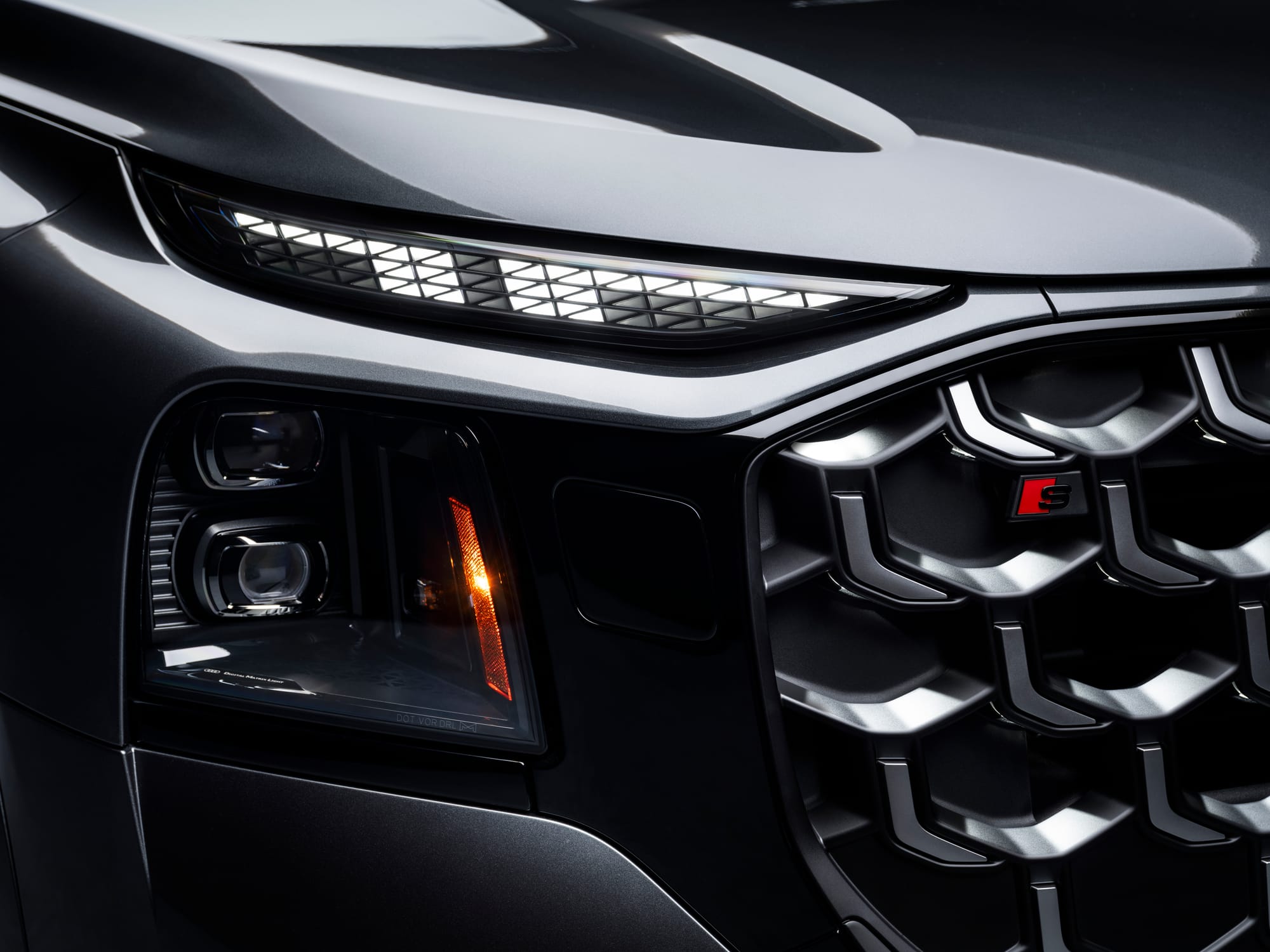
The Q9 family brings Audi's adaptive high beams to the US for the first time. The Digital Matrix LED headlights use a new chip just 13 millimeters wide, packed with 25,600 micro-LEDs each thinner than a human hair. They reshape the beam in real time, dimming only the segments that would blind oncoming traffic while keeping the rest of the road lit, no more flipping between high and low.
The Digital Matrix LED headlights also cast extra light on curves and intersections using steering and navigation data. The tech has been running in Europe for over a decade but was blocked in America until Audi built a version that meets US glare rules. It is standard on the SQ9 and available on the Q9.
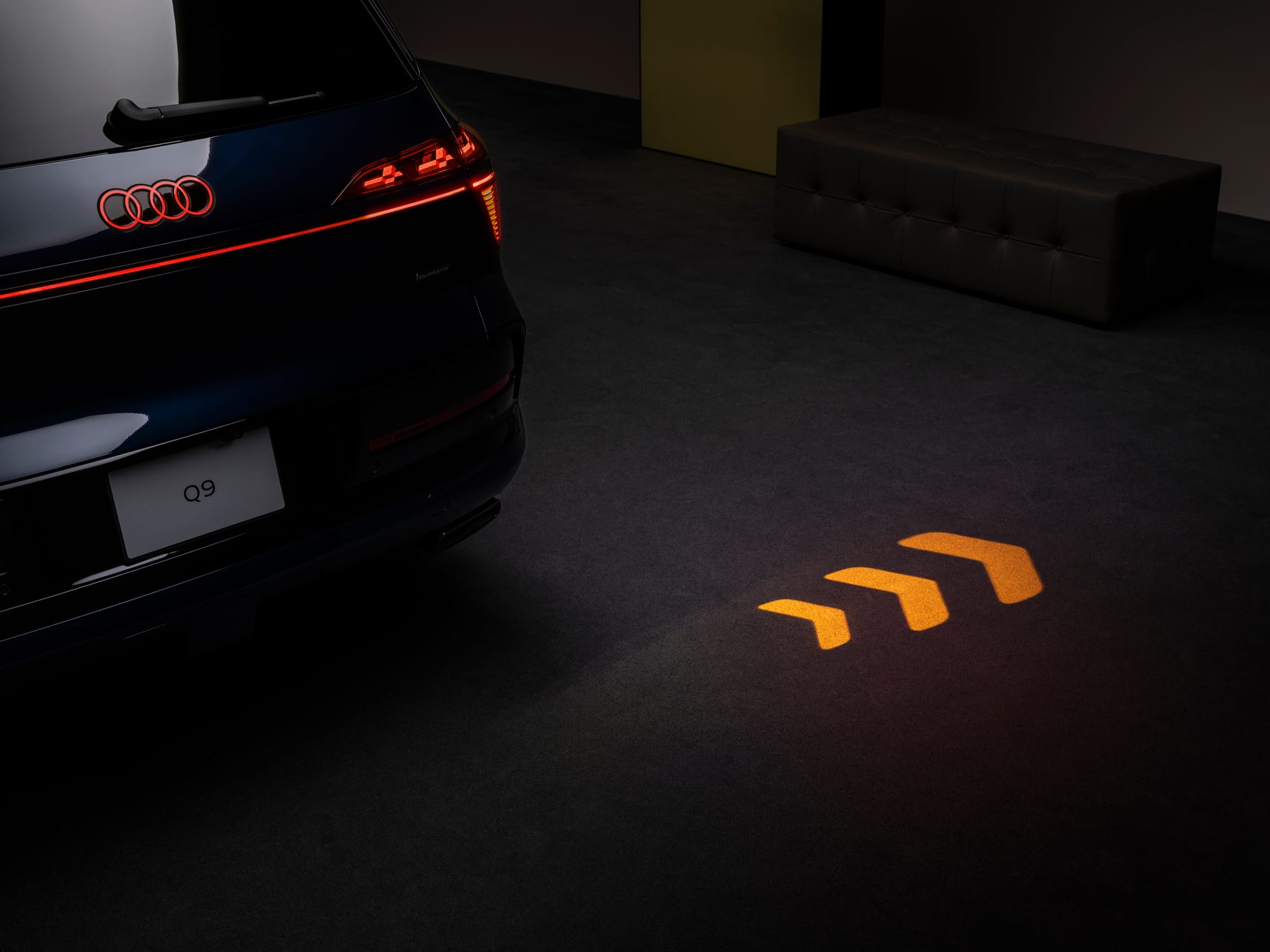
At the rear, the Q9 Prestige and SQ9 get third-generation curved digital OLED taillights, a world first on a production car. The panels sit on glass just 0.1 millimeters thick and bend to follow the body, so they read from more angles. Across six panels, 512 segments build a wide night signature that can flash a warning triangle with the hazards or alert people approaching the car. Lower Q9 trims skip the OLED units. Both front and rear turn signals project a marker onto the ground at night.
Under the Hood
The Audi Q9 runs a twin-turbo 2.9-liter V6 with 429 horsepower and 442 lb-ft. of torque, the same engine as the latest Q7. It pairs with an eight-speed automatic and quattro all-wheel drive, hits 60 mph in 4.9 seconds, and tows up to 7,700 pounds when fitted with the optional hitch. Europe gets a diesel V6 instead. The US goes gas only.
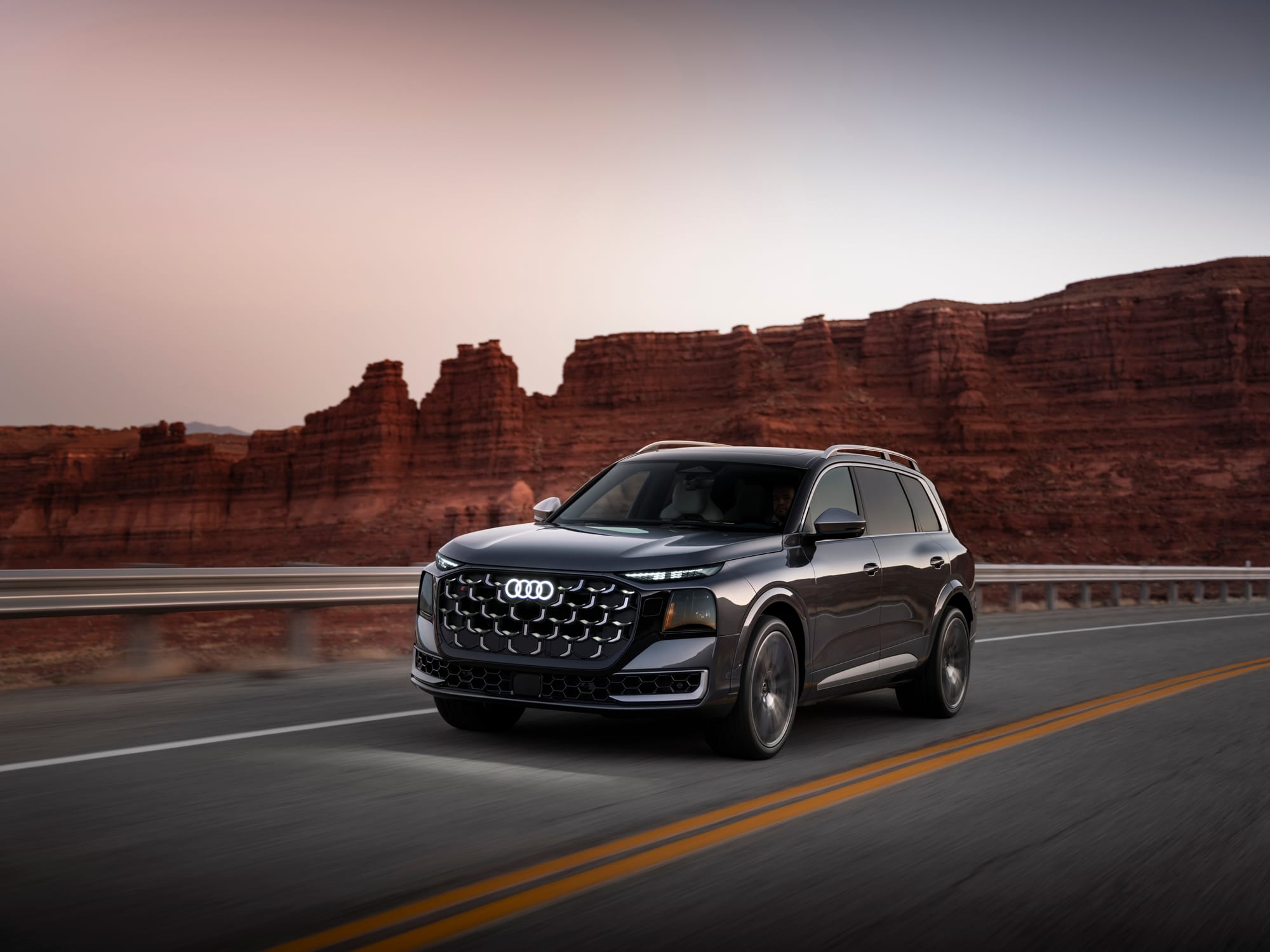
The SQ9 drops in a revised 4.0-liter twin-turbo V8 with 591 horsepower and 590 lb-ft, the same engine as the SQ7. It runs to 60 mph in 3.8 seconds, which Audi benchmarks as the quickest of any three-row SUV in its class, ahead of the X7 M60i, GLS 580, and Range Rover V8. It tows the same 7,700 pounds.
The SQ9 also gets a new rear-biased quattro system. An electromechanical clutch can send almost all the torque to the rear axle when you push it, backed by an electronically locking rear differential, brake torque vectoring, and a staggered tire setup, wider rubber at the rear on wheels up to 23 inches. The SQ9 drives with a rear-wheel-drive feel while keeping all-wheel-drive grip.
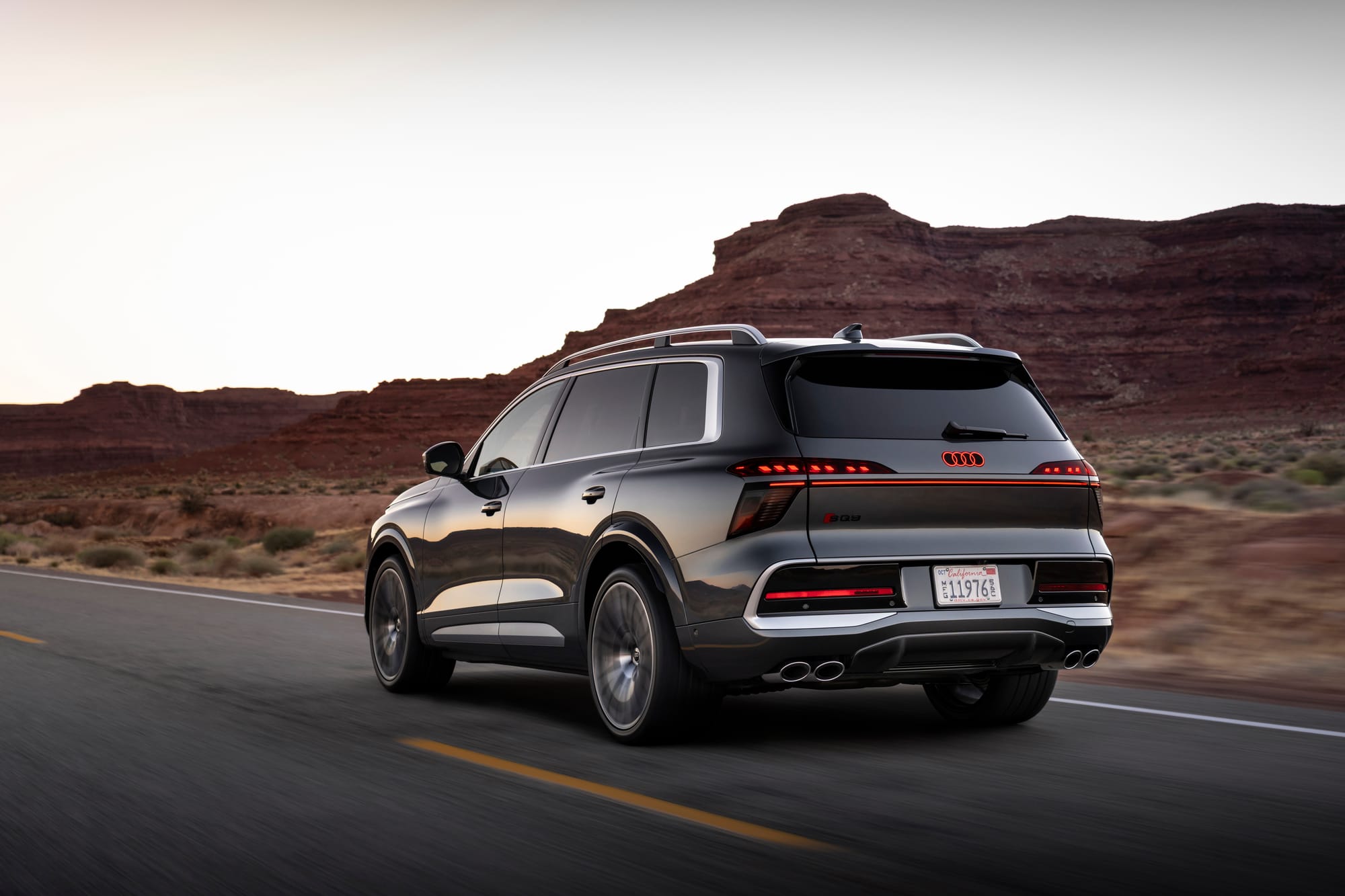
Both models ride on adaptive air suspension that adjusts height by up to 3.5 inches, for a max ground clearance of 10 inches. Rear-wheel steering is standard on the SQ9 and optional on the Q9, turning the rears opposite the fronts at low speed to tighten the turning circle and with them at speed for stability. An optional sport air suspension in the S sport package further sharpens the SQ9.
Driver Assistance
Audi's hands-free highway system, Adaptive Cruise Assist Plus, is standard on the SQ9 and on the Q9 Premium Plus and Prestige. It handles steering, throttle, and braking up to 85 mph on approved divided highways, with a lane change kicked off by the turn signal. A column-mounted camera watches the driver's eyes and head, and if attention fades, the car escalates warnings and can bring itself to a stop. It is SAE Level 2, so the driver stays responsible.
Other standard driver assistance features include automatic emergency braking with pedestrian and cyclist detection, blind spot monitoring, rear cross-traffic assist, a 360-degree camera, park assist, and an exit warning that holds the power doors shut when a cyclist or car is approaching.
Availability and Pricing
The Q9 starts at $87,700 and the SQ9 at $118,000, both before destination. Order books are open now, and deliveries begin in the fourth quarter of 2026. In a reversal of Audi's usual pattern, North America gets the Q9 family first.
2027 Audi Q9 and SQ9 - Media: Audi Newsroom
 Very Driver
 Very Driver